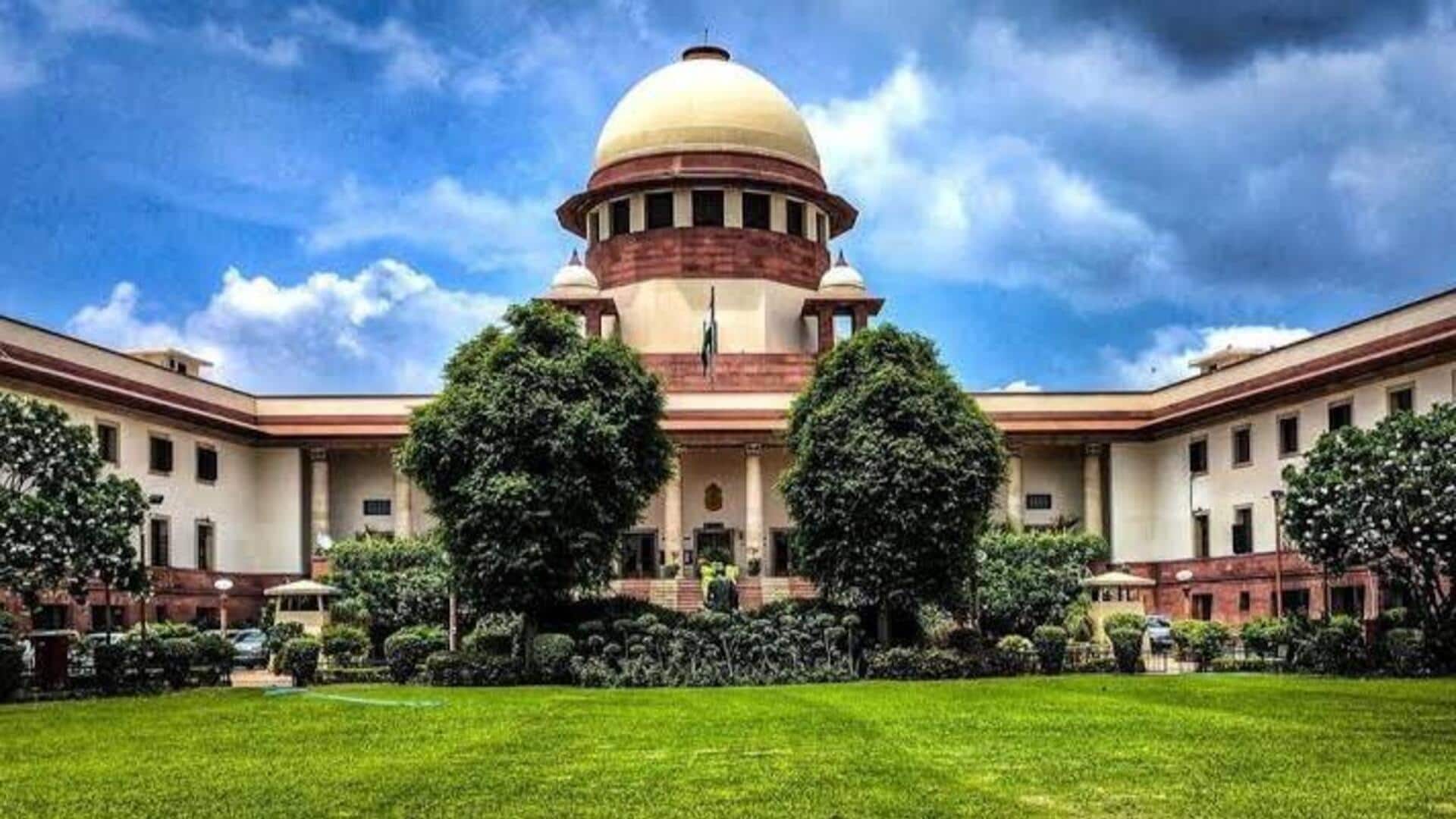
Telecom spectrum cannot be sold to repay lenders: SC
What's the story
The Supreme Court has ruled that telecom spectrum, a vital public resource, cannot be transferred or sold under the Insolvency and Bankruptcy Code (IBC). The ruling came in response to petitions filed by State Bank of India (SBI) and two bankrupt telecom companies against a 2021 National Company Law Appellate Tribunal (NCLAT) order. The NCLAT had said that spectrum could only be transferred under an insolvency resolution plan after clearing all government dues.
Spectrum ownership
Spectrum is a scarce public natural resource: SC
The Supreme Court, led by Justice PS Narasimha and Justice Atul Chandurkar, emphasized that spectrum is a scarce public natural resource.
It belongs to the community and its ownership and control, along with all benefits associated with it, must be secured for citizens.
The court also clarified that the IBC cannot be used as a guiding principle for restructuring or changing ownership of such resources.
Legal implications
Judgment divided into 3 parts
The court's judgment was divided into three parts: defining spectrum's legal character, identifying core legal issues, and examining asset treatment under the IBC.
It concluded that treating spectrum as a corporate asset raised fundamental questions about its ownership, possession, use, and transferability.
The ruling came on appeals by the Centre, SBI-led Committee of Creditors (CoC) of Aircel group among others against an April 2021 NCLAT order.
Asset debate
Dispute over treatment of spectrum under IBC
The dispute revolved around whether spectrum held by insolvent telecom companies could be treated as an asset and passed on to a successful resolution applicant under the IBC.
While lenders argued that the right to use spectrum was an intangible asset that should move with the resolution plan, the Department of Telecommunications (DoT) maintained it must revert to government if dues remain unpaid.