Trump slaps 100% tariffs on drones and aircraft component imports
What's the story
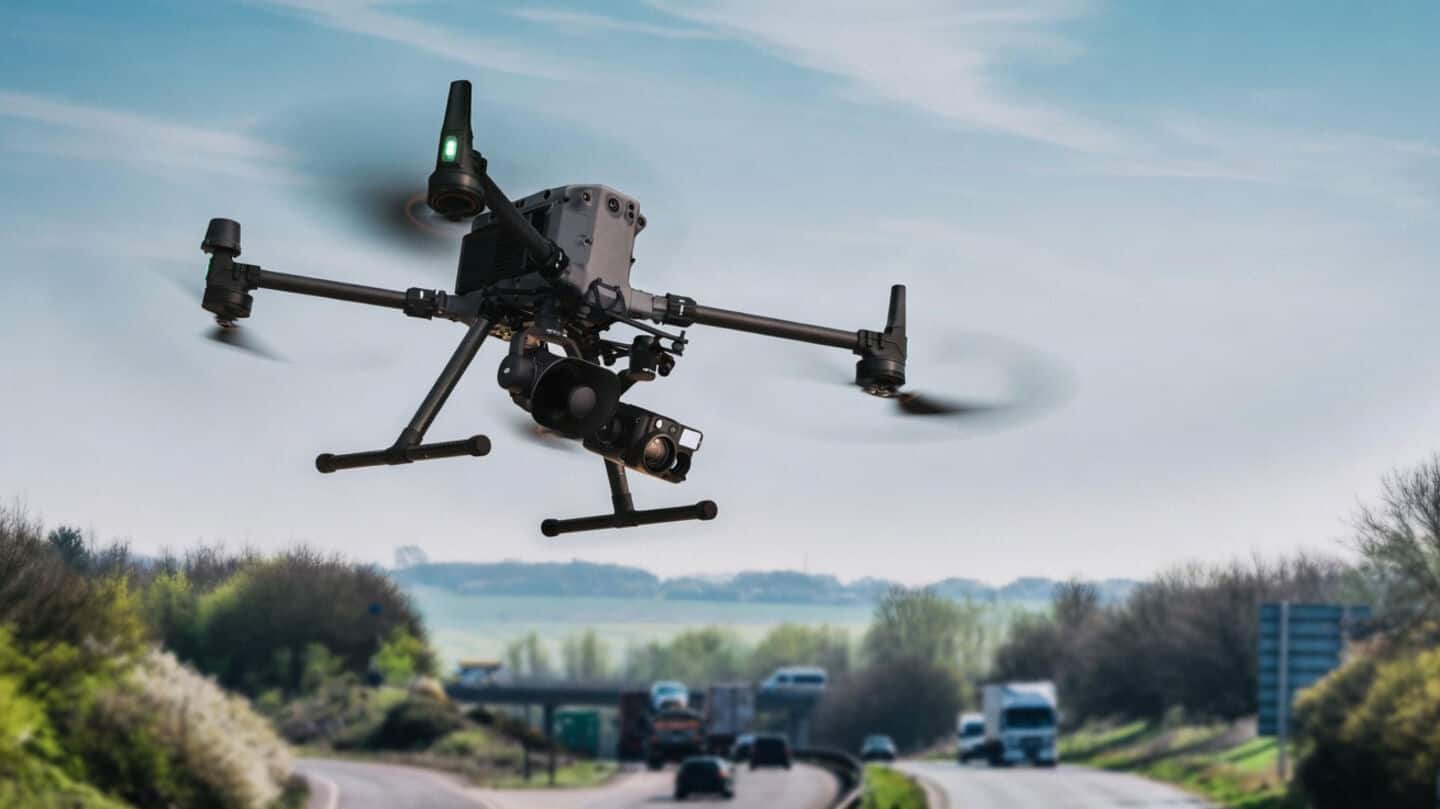
US President Donald Trump has announced a major tariff hike on the existing import of drones and unmanned aircraft systems (UAS) components. The new tariffs include a massive 100% levy on drones equipped with thermal cameras, those weighing over 25kg, and any part for any kind of unmanned aircraft weighing over 25kg. For all other drones, including small sub-250g "Mini" consumer models, a lower tariff of 25% has been imposed.
Exemptions
Loophole in tariffs
The new tariffs come with a major loophole: companies can avoid these levies if they promise to manufacture some of their drones or aircraft parts in the US.
The President has also announced lower rates for EU, Japan, Liechtenstein, South Korea, Switzerland, and Taiwan at 15%, provided that substantially all hardware, software, and technology originates from within these countries and the US, while the UK gets an even lower rate of 10%.
Justification
National security vulnerabilities
The Trump administration has cited national security vulnerabilities as one of the main reasons for these new tariffs.
It said many US commercial manufacturers that produce UAS domestically are heavily reliant on foreign sources for critical components such as motors, electronic speed controllers, lithium-ion batteries, and docking stations.
These dependencies create unacceptable national security risks.
The products also pose an information technology security risk because their software can send data back to manufacturers in foreign countries.
Production capacity
Concerns over economic competitiveness
The Trump administration has also expressed concerns over whether the US industry can produce UAS and their components at the required speed and scale.
This is particularly important for national security operations during wartime or armed conflict.
The administration has also raised questions about long-term economic competitiveness in this sector.
Incentive program
New program to boost domestic production
Along with the tariffs, Trump has also authorized the Secretary of Commerce to establish a new program.
This initiative would be aimed at encouraging new investment in US production facilities for UAS and their components.
However, it remains unclear how effective this measure would be in boosting domestic production in the face of these hefty tariffs.