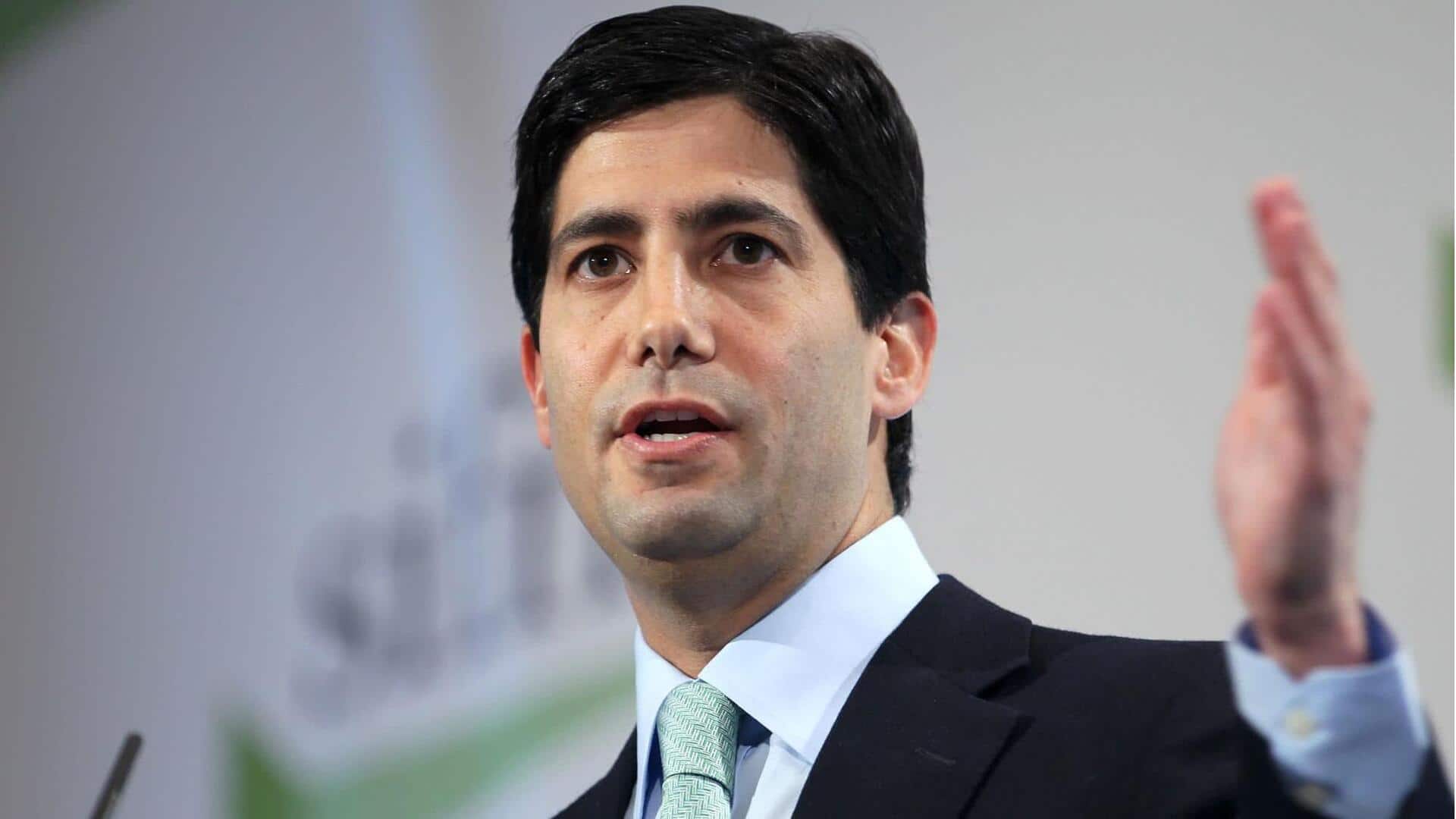
Trump nominates Kevin Warsh as new Federal Reserve chairman
What's the story
US President Donald Trump has announced his decision to nominate Kevin Warsh, a former Federal Reserve official, as the next chair of the Fed. Warsh will succeed Jerome Powell after his term ends in May 2026. This appointment comes despite Trump's previous criticisms of Powell for not reducing interest rates fast enough since he appointed him in 2017.
Economic perspectives
Trump's Fed rate suggestion
Trump has often suggested that the Fed's key rate should be as low as 1%, much lower than its current level of about 3.6%.
This makes Warsh an unlikely choice for Trump, given his history as a hawk who advocates for higher interest rates to keep inflation in check.
Professional journey
Warsh's education and early career
Warsh served as a Federal Reserve governor from 2006 to 2011, during the global financial crisis.
He has been a strong proponent of the US central bank's policy stance focused on price stability.
Warsh studied public policy at Stanford University with a focus on economics and statistics before earning his law degree from Harvard Law School in 1995.
Career highlights
His early career and Bush administration role
Warsh started his career at Morgan Stanley in New York City in 1995, where he served as a financial advisor to several companies across sectors.
He later joined President George W. Bush's administration as the special assistant for economic policy and executive secretary at the National Economic Council.
He advised senior administration officials on key US economy-related issues during this time.
G20 representation
Warsh's post-Fed career and current position
In 2006, Bush nominated Warsh to the Board of Governors, where he represented the Board at the Group of Twenty (G-20) and as an emissary to Asia's emerging and advanced economies.
After leaving this position in 2011, he served on boards for UPS and Coupang and advised the Congressional Budget Office (CBO).
Currently, he is a partner at Duquesne Family Office under investor Stanley Druckenmiller.