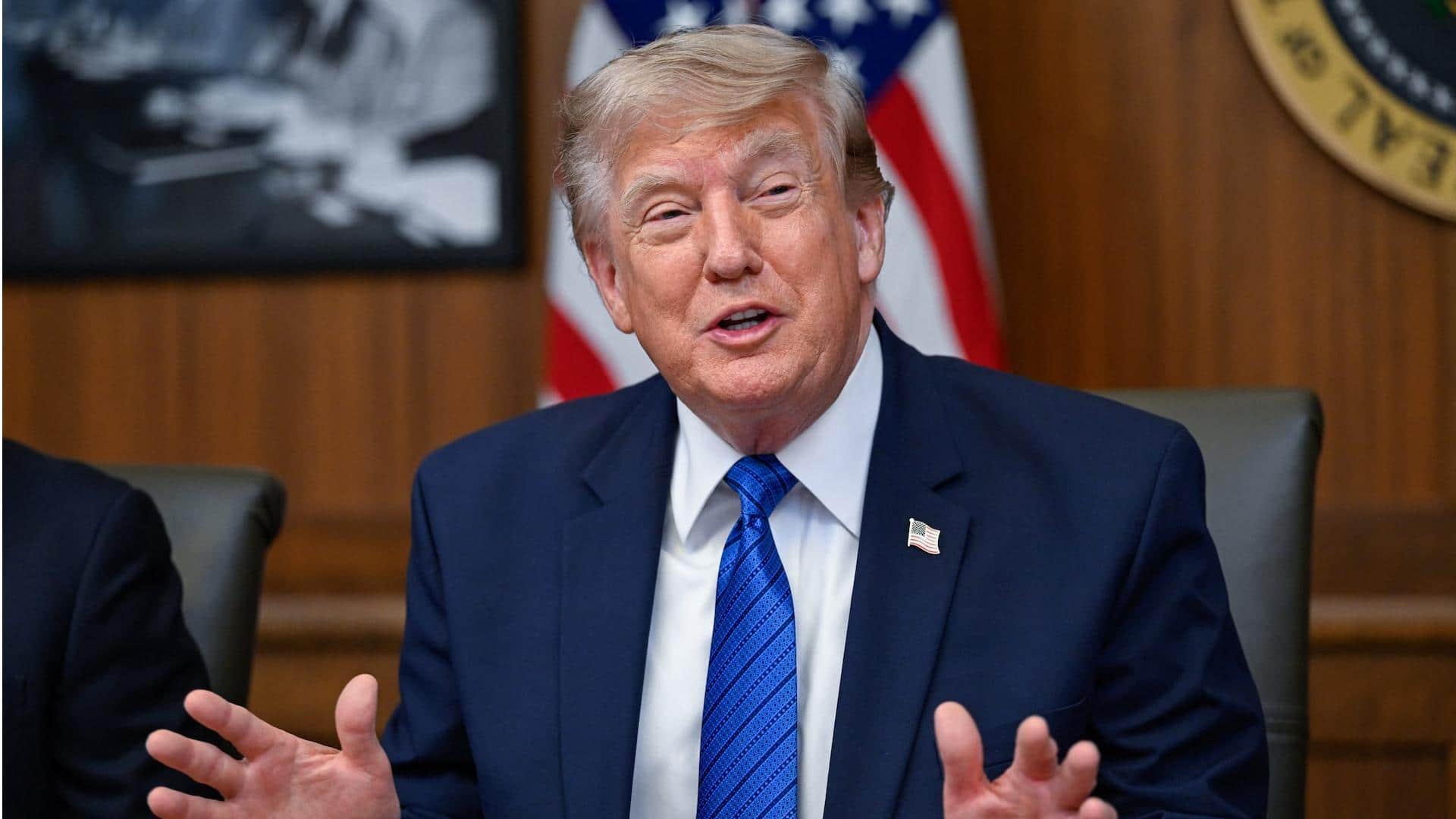
Was Trump Organization involved in money laundering?
What's the story
Capital One Financial has confirmed that it closed the bank accounts of the Trump Organization after an anti-money laundering (AML) review. This is the first time a financial institution has publicly linked money laundering concerns with Donald Trump's family business. The bank is now seeking to dismiss a lawsuit alleging political debanking by the plaintiffs.
Legal defense
Bank's defense against lawsuit
In its defense against the lawsuit, Capital One said the account closures were based on months of analysis by its AML team.
The bank clarified that it has never accused the Trump Organization of illegal money laundering.
However, it contended that "documents and Plaintiffs's own allegations make clear that Capital One closed Plaintiffs's accounts for anti-money laundering ('AML') reasons."
Legal proceedings
Lawsuit filed by Trump Organization, Eric Trump
The Trump Organization and Eric Trump, the president's son, sued Capital One in March 2025.
They claimed that their accounts were closed due to Capital One's "woke" beliefs and its desire to capitalize on the political climate after the January 6 Capitol riot.
The federal court in Miami has dismissed two complaints in this case but allowed plaintiffs to file amended versions each time.
Bank's position
Capital One dismisses allegations of political pretext
Capital One has dismissed the Trump Organization's allegations of political pretext as "misguided."
It argued that these claims are "based on cherry-picked quotations unsupported by the full context" of documents submitted to the court.
The bank also emphasized that "the transaction patterns identified by Capital One are among the types of activity flagged by federal banking guidance."
Policy impact
Trump's administration pressures large banks
Since the start of Trump's second term, his administration has pressured some large banks.
The move echoes conservative complaints that these institutions are intentionally targeting the political right.
In August 2025, Trump signed an executive order barring discriminatory debanking.
Earlier this year, he sued JPMorgan Chase on similar grounds, highlighting the complex policy environment Wall Street is navigating during his presidency.