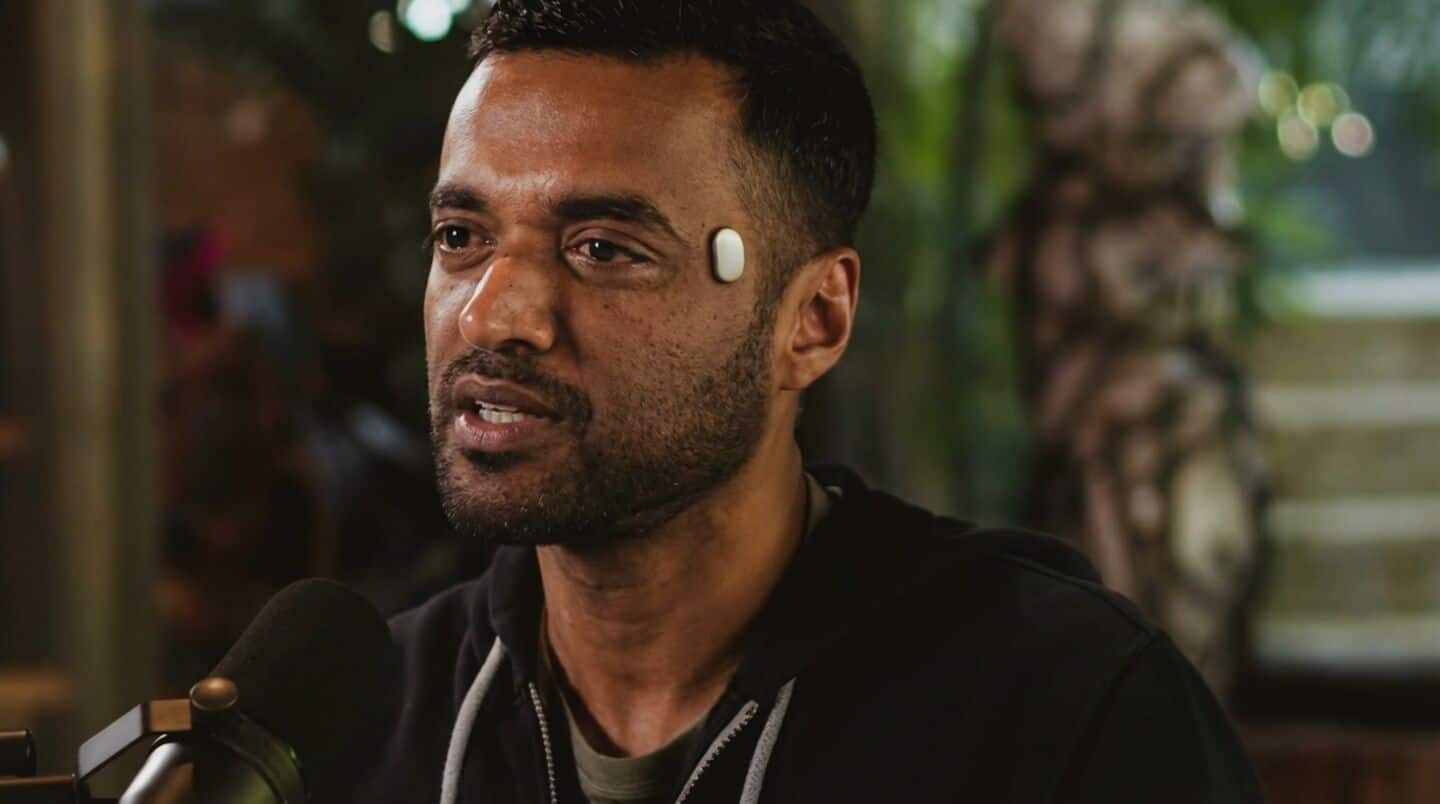
To join Deepinder Goyal's start-up, stay under 16% body fat
What's the story
Deepinder Goyal, the former CEO of Zomato, has set off a storm on social media with his unusual hiring criteria for Temple, a high-performance wearable start-up. The company is looking for engineers and product leaders who are not only passionate about their work but also lead an athletic lifestyle. The job posting explicitly states that applicants must have a body fat percentage below 16% for men and 26% for women or agree to reach these levels within three months.
Job requirements
Roles at Temple include BCI specialists, computational neuroscientists
The job posting from Temple covers a wide range of deep-tech roles, including analog systems and embedded engineers, computational neuroscientists, BCI specialists, computer vision engineers, and neuroimaging ML experts.
Product managers are also expected to be hands-on enough to work independently in Figma.
Goyal's philosophy behind this is that Temple should be built by people who "wear what they build" and "hate it until it's perfect."
Public response
Body-fat thresholds in hiring draw mixed reactions online
Goyal's strict fitness requirements for Temple have received mixed reactions online.
While some users praised the clarity of expectations and the emphasis on founder-product alignment, others questioned whether body-fat thresholds are appropriate in hiring.
One user said, "Rare to see a company align product ambition with personal standards so explicitly. When builders become primary users, iteration becomes ruthless and that's where real breakthroughs happen."
Company vision
What is Temple?
Temple is a next-generation wearable technology company focused on elite performance athletes.
The start-up is developing a device that can capture physiological and neural signals like no other wearable can, using high-precision sensors, embedded AI, computer vision, and brain-computer interface research.
The aim is to create an integrated performance system covering body, brain, and recovery designed by people who push their own physical limits as hard as the athletes they serve.
Twitter Post
Only people who take fitness seriously can join
We're recruiting at @temple.
— Deepinder Goyal (@deepigoyal) February 27, 2026
At Temple, we are building the ultimate wearable for elite performance athletes. A device that measures what no other wearable in the world measures, with a level of precision that doesn't exist yet.
To build it, we need people who are obsessive… pic.twitter.com/iCHaMUwdEw