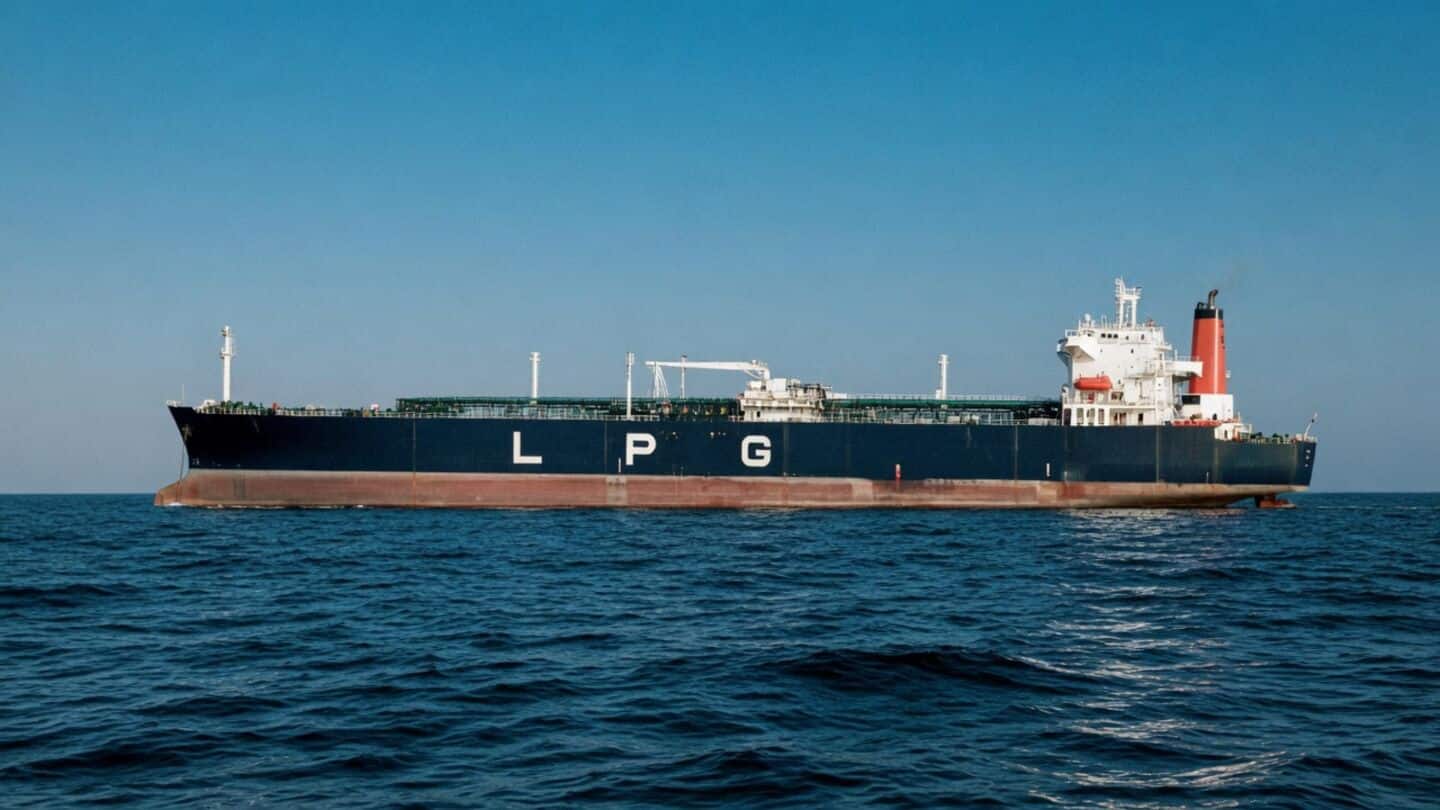
US remains India's largest LPG supplier in June
What's the story
The United States has retained its position as the top supplier of liquefied petroleum gas (LPG) to India for the month of June. According to data from commodity analytics firm Kpler, India's LPG imports from the US stood at 773.78 thousand metric tons (TMT) in June, a whopping 19.4% increase from May. This comes as part of India's efforts to diversify its energy supply sources amid geopolitical tensions in West Asia.
Import trends
UAE 2nd largest supplier after US
In June, India's overall LPG imports rose by 3% to 1,191 TMT from May's figure of 1,155 TMT.
The UAE was the second-largest supplier with an increase of 16.6% in its exports to India, reaching 157 TMT.
Saudi Arabia and Kuwait each contributed equally with their supplies of around 64 TMT each during this period.
This diversification is part of a larger strategy to reduce dependence on a single region for energy supplies amid changing global dynamics.
Energy security
India diversifies LPG, LNG import sources amid West Asia tensions
India has ensured sufficient crude oil and LPG supplies until August, easing concerns over domestic availability.
This comes after the reopening of the Strait of Hormuz allowed Gulf energy supplies back into the market.
The country has also ramped up LNG and LPG imports from a wider range of suppliers such as Oman, Argentina, Nigeria, Algeria, and Egypt.
Before the West Asia conflict began on February 28, about 90% of India's LPG imports transited through this crucial maritime route.
Consumption patterns
India's dependence on imports for LPG consumption
India is the world's second-largest importer of LPG, meeting nearly 60% of its consumption through imports.
The bulk of these imports come from West Asia, with annual demand estimated at 30-32 million tons or roughly 85,000 tons per day.
This data highlights India's reliance on external sources for meeting its domestic energy needs and the importance of diversifying supply chains to ensure stability in times of geopolitical uncertainty.