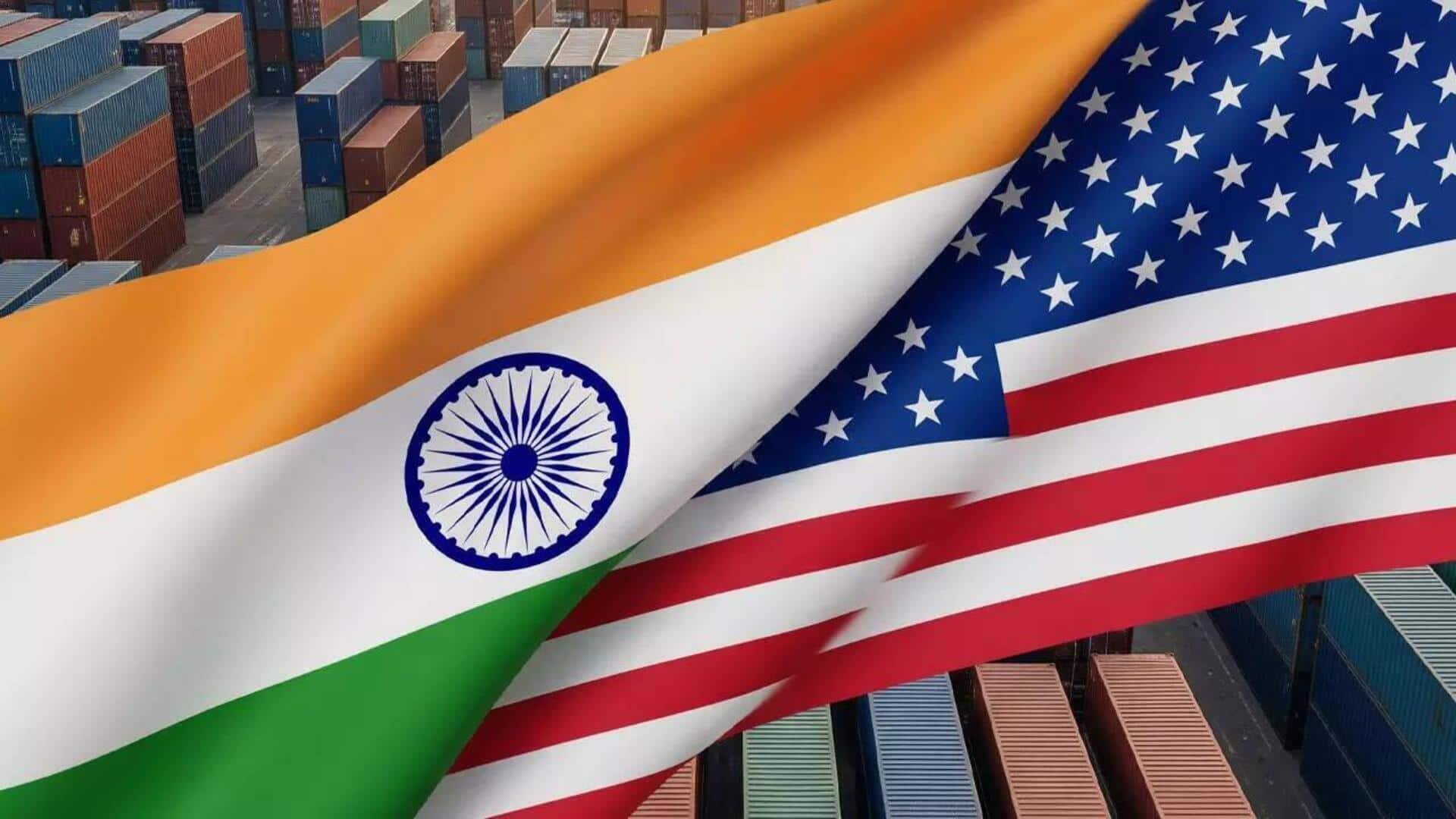
Indian exports to US will now attract a 10% tariff
What's the story
The United States has imposed a 10% global tariff, affecting India. The move follows a US Supreme Court decision that curtailed President Donald Trump's powers under the International Emergency Economic Powers Act (IEEPA). A White House official confirmed to ANI that "yes, 10% until another authority is invoked," when asked if India would have to pay the new tariffs (instead of 18%).
Trade expectations
Trump's protectionist trade policy
The White House official also stressed that all trade partners are expected to comply with US trade agreements.
The new 10% global tariff is part of Trump's protectionist trade policy, aimed at tackling balance-of-payments deficits and unfair trading practices.
This comes after a major legal setback for the Trump administration at the US SC, which ruled 6-3 that it overstepped its authority by using IEEPA to impose broad-based import tariffs.
Tariff implementation
Executive order on global tariff
In response to the Supreme Court's ruling, Trump announced he would sign an executive order for a 10% global tariff under Section 122 of the Trade Act of 1974.
This provision allows for a temporary import surcharge (up to 15%) for up to 150 days to address balance-of-payments deficits.
"Effective immediately, all national security tariffs under Section 232 and existing Section 301 tariffs remain in place," Trump said earlier today.
Legal consequences
Potential $175B refund liability for the government
The Supreme Court's ruling has invalidated billions of dollars in "reciprocal" and emergency tariffs, possibly forcing the government to refund around $130-$175 billion in revenue collected.
The court ruled that the IEEPA does not give explicit authority to the President to impose duties, a power reserved for Congress by the Constitution.
Notably, Justices Samuel Alito, Clarence Thomas, and Brett Kavanaugh dissented with a narrower interpretation of emergency powers.
Presidential reaction
'The India deal is on'
In light of the ruling, Trump said "alternatives will be used" to replace the tariffs that were "incorrectly rejected."
He called the decision "ludicrous," claiming it favors other countries over the US.
Despite this setback, Trump confirmed that "The India deal is on," indicating recent bilateral trade agreements would be maintained through these new legal pathways.
Economic effects
Tariffs and stock market reaction
The financial impact of the ruling is huge.
The tariffs cover trillions of dollars in trade, with the US government having collected nearly $134 billion in tariffs through December 14 under the disputed authority.
US stock indexes rose after the ruling as investors expected a decline in inflationary pressure, although gains were offset by Trump's immediate promise to impose new tariffs.