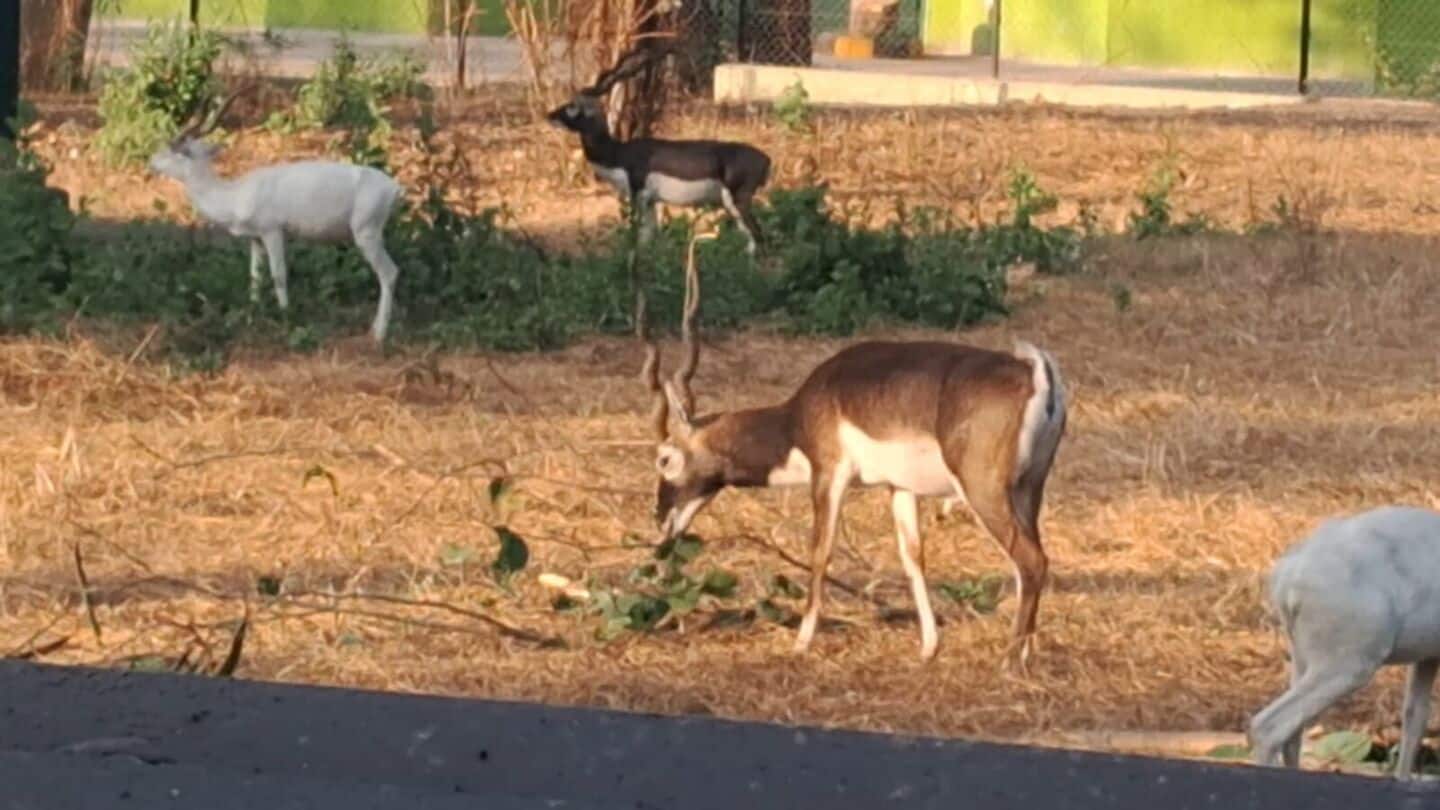
10 blackbucks die at Jamshedpur's Tata zoo; mystery infection suspected
What's the story
The Tata Steel Zoological Park in Jamshedpur is on high alert after the sudden deaths of 10 blackbucks in six days. The first death was reported on December 1 and the last on December 6. The park had housed 18 blackbucks, but now only eight remain. A suspected outbreak of hemorrhagic septicaemia, also known as "galghontu," caused by Pasteurella bacteria is believed to be behind these deaths.
Infection spread
Disease suspected to spread through air, zoo staff alerted
The disease is suspected to be airborne, posing a risk to other species at the zoo.
In light of this, zoo authorities have put their staff on high alert. Staff members have been advised to follow strict hygiene protocols and limit movement around enclosures.
Vulnerable species may also be isolated if necessary as a precautionary measure against the fast-spreading infection.
Testing underway
Post-mortem samples sent for analysis to confirm infection
Dr. Naim Akhtar, Deputy Director of Tata Steel Zoological Park, said post-mortem samples from the deceased blackbucks have been sent to specialized laboratories in Ranchi and Odisha. The final report is awaited.
Dr. Akhtar told the Indian Express that hemorrhagic septicaemia is common in livestock and spreads during seasonal transitions, especially in winter months. Symptoms include pneumonia-like symptoms, breathing distress, fever, and swelling in the neck region.
Previous cases
Similar outbreak in Karnataka raises concerns
Dr. Akhtar also pointed out a similar case where 38 blackbucks died due to the same disease in Belagavi, Karnataka.
He said, "The pattern is identical. It appears the bacteria affects blackbucks more aggressively than many other species."
The bacteria are present in the environment due to cattle and can infect animals if their immunity dips even briefly.
Possible carriers
Crows suspected as carriers of livestock pathogens
Dr. Akhtar said crows are known carriers of livestock pathogens and may have spread the disease by feeding on carcasses left in open areas.
He added that the zoo has contained the situation and treatment is ongoing for remaining blackbucks.
Preventive medication has also been started for other animals, even though they aren't showing symptoms yet.
"It [the deaths] are unfortunate but sometimes unavoidable," he said.