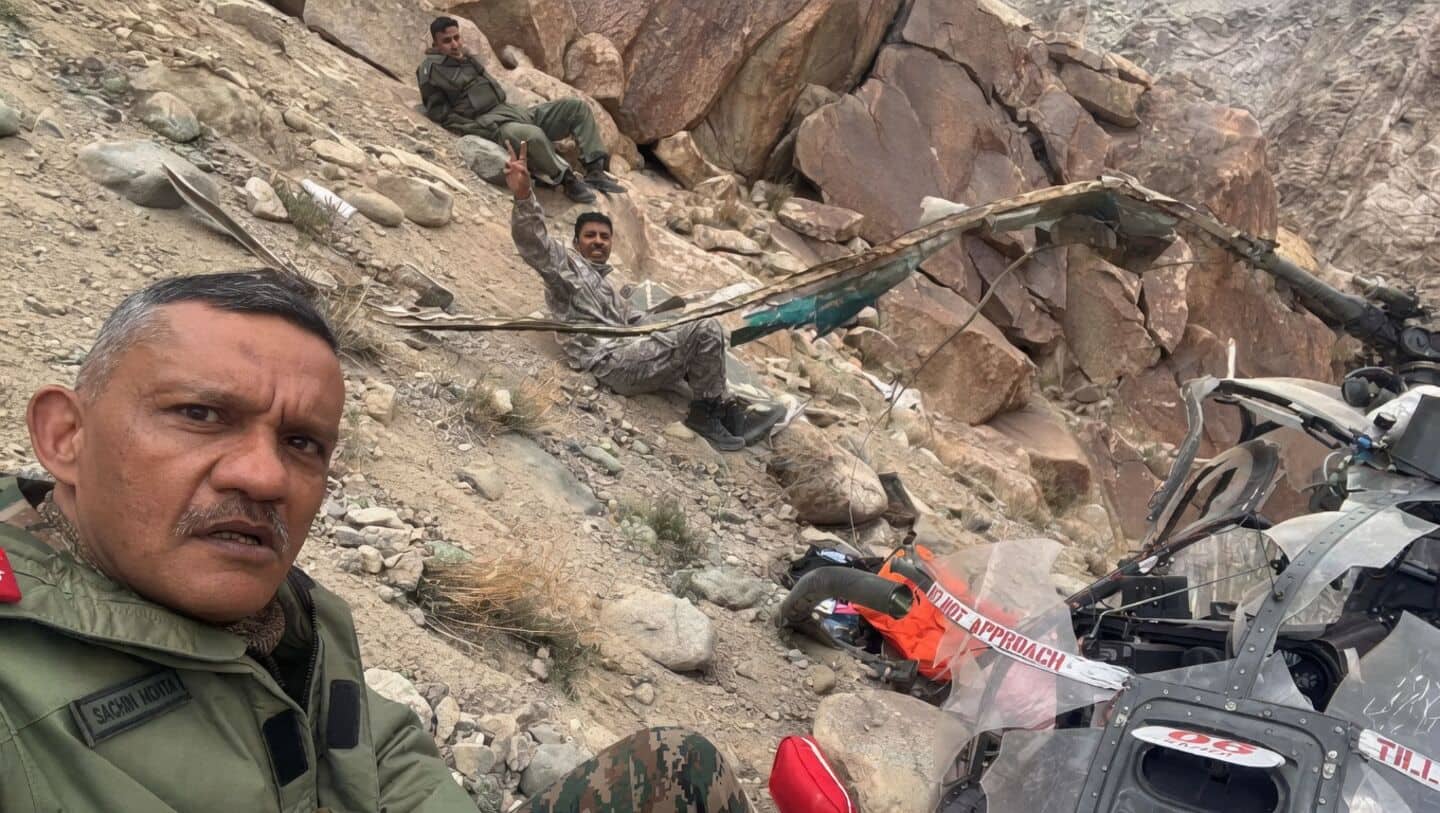
Army Cheetah helicopter crashes in Ladakh, no major injuries reported
What's the story
A Cheetah helicopter of the Indian Army crashed near Tangtse in Ladakh on Wednesday, with all three occupants escaping with minor injuries. The crash involved the GOC of 3 Division, also known as Trishul Division, and two other officers. The incident was reported on Saturday. A Court of Inquiry has been ordered to investigate the cause of the crash.
Fleet concerns
Cheetah's aging fleet
Various reports highlight how the incident brings to light the dangers of India's aging fleet of Cheetah and Chetak helicopters.
The Army plans to phase out these helicopters in the next decade, replacing them with modern Hindustan Aeronautics Limited (HAL) Light Utility Helicopters (LUH).
The Cheetah has been a vital part of operations in the Himalayas since its induction in 1971, serving multiple roles including air ambulance and artillery spotter.
Operational challenges
Operating Cheetah at high altitudes
Operating the Cheetah at altitudes above 18,000 feet, such as posts on the Siachen Glacier, is a challenge due to thin air reducing rotor lift and engine power.
This forces multiple sorties for tasks achievable in one flight at lower altitudes.
Despite these challenges, Cheetahs remain lifelines for remote outposts like Bana Top, Ashok, and Sonam between 19,600 and 21,000 feet.
New developments
What is LUH?
HAL's LUH program, cleared in 2009, is aimed at enhancing helicopter capabilities for high-altitude operations.
The LUH can operate at 21,300 feet and land on the world's highest helipad on Saltoro Ridge.
It can fly at speeds up to 235km/h and carry six soldiers with a crew of two.
The digital glass cockpit is compatible with night-vision devices and supports various roles from medical evacuation to VIP missions.