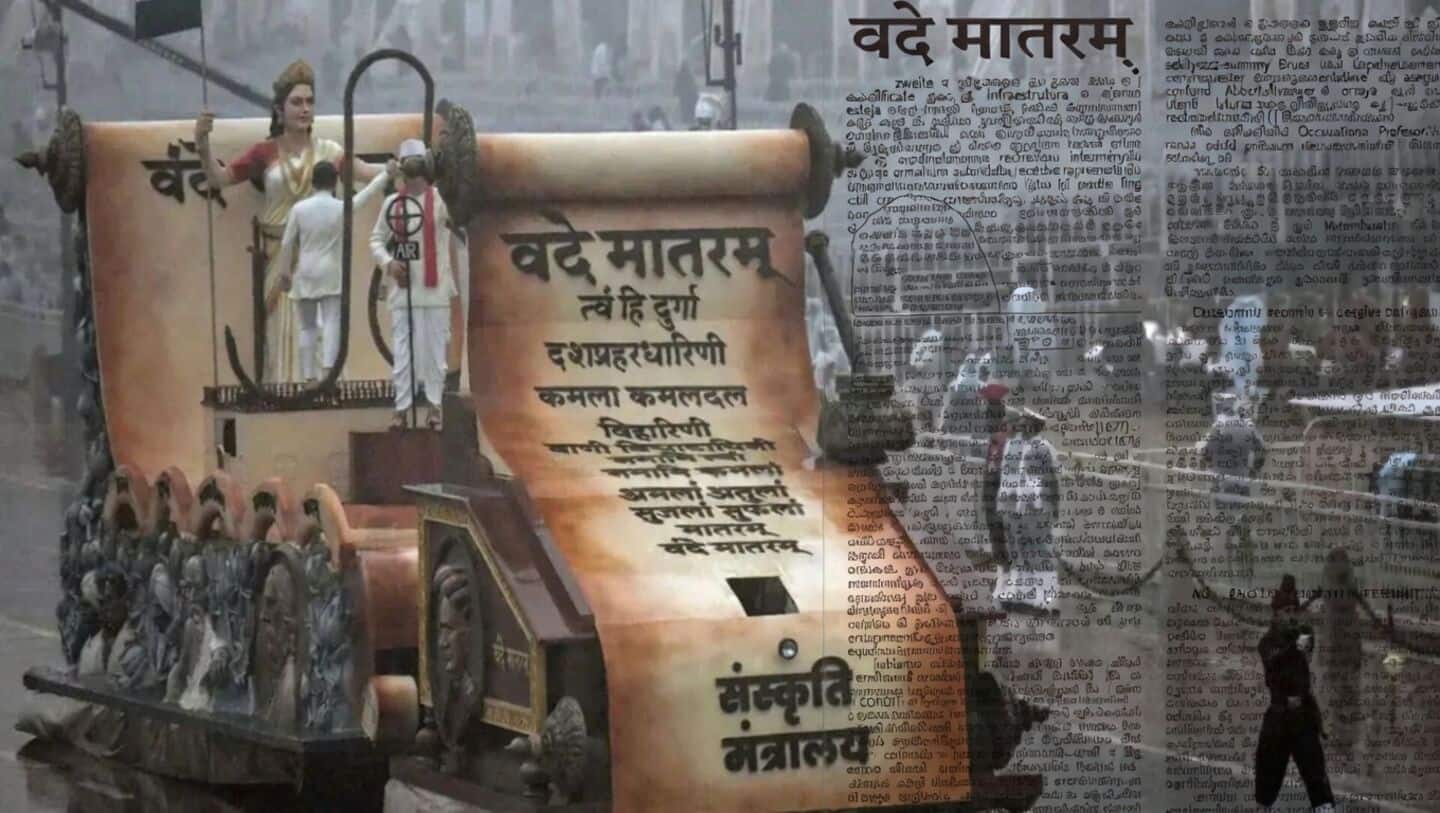
Insulting 'Vande Mataram' could soon be punishable offense
What's the story
The Union Cabinet has approved a proposal to amend the Prevention of Insults to National Honor Act, 1971, a day after the Bharatiya Janata Party (BJP) secured a landslide victory in West Bengal. The amendment will put the national song, Vande Mataram, on par with the national anthem, Jana Gana Mana. The law currently provides for punishment for insults to the Indian National Flag and Constitution of India and the prevention of the singing of the National Anthem.
Legal update
What is the current law?
During a Cabinet meeting presided over by Prime Minister Narendra Modi, a proposal was cleared to amend Section 3 of the Act to add Vande Mataram to the current list, The Times of India reported.
Section 3 currently states, "Whoever intentionally prevents the singing of the Indian National Anthem or causes disturbance to any assembly engaged in such singing shall be punished with imprisonment for a term which may extend to three years, or with fine, or with both."
Historical context
Political significance of the move
The move to amend the law is politically significant given the cultural and historical importance of Vande Mataram.
The song was first published in Bankim Chandra Chatterjee's 1882 novel 'Anandmath' and became a rallying cry during India's freedom struggle.
During the special discussion of Parliament on '150th Year of Vande Mataram' last year, the BJP accused the Congress of disrespecting the hymn by adopting only its first two stanzas as a national song due to "appeasement politics" and "selective secularism."
Official guidelines
Home Ministry's order on singing Vande Mataram
Earlier in January, the Home Ministry issued an order detailing the conduct and protocols for Vande Mataram.
The order mandated that all six stanzas of the official version must be sung first whenever the National Song and Anthem are performed together.
It also specified occasions when this full version should be sung or played, such as the arrival of the President, the unfurling of the National Flag, governors' addresses, the President's address to the nation, among others.