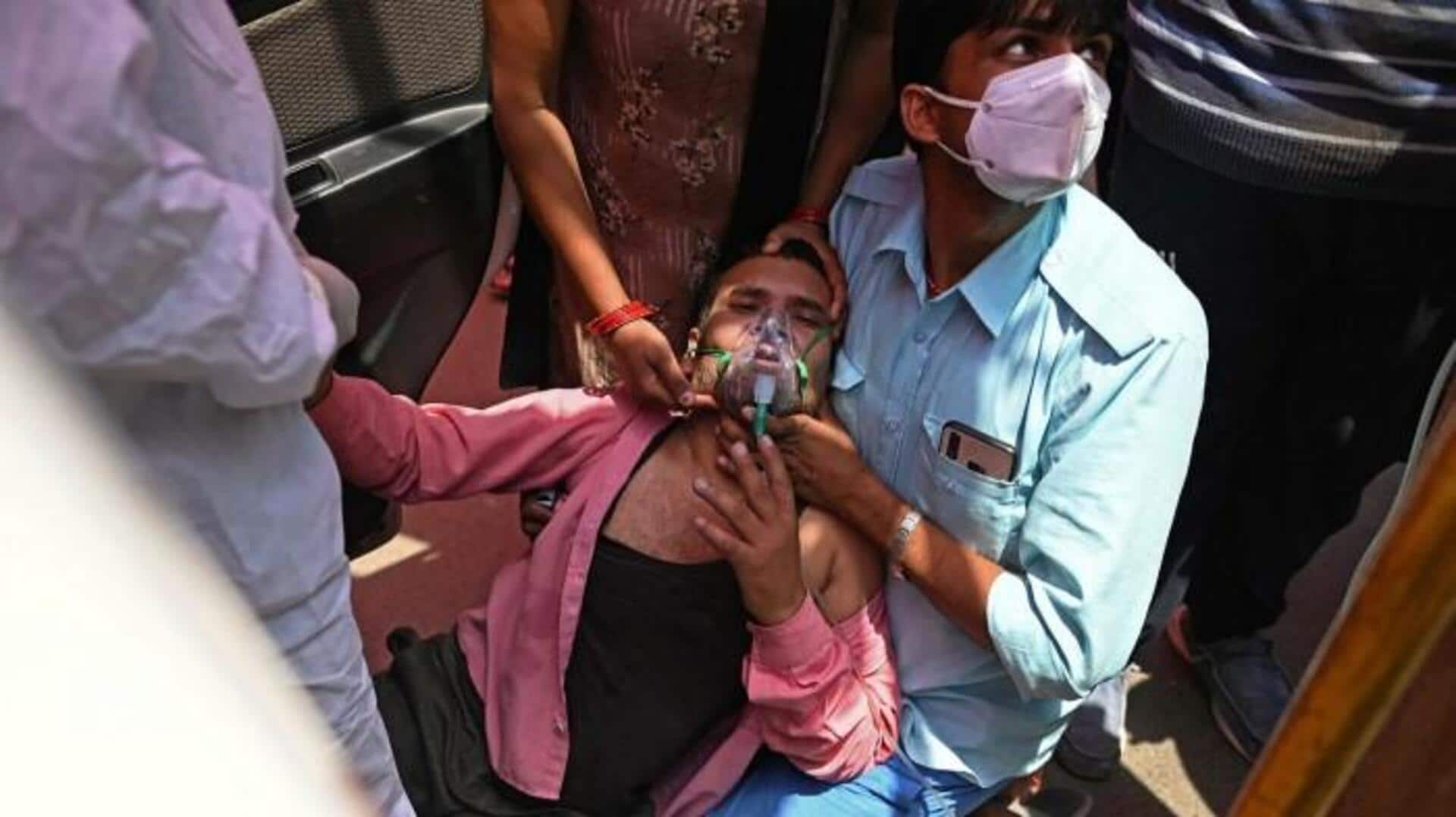
CAG report flags oxygen failures during COVID in Delhi hospitals
What's the story
A recent Comptroller and Auditor General (CAG) report has highlighted major deficiencies in Delhi's public health infrastructure during the COVID-19 pandemic. The report specifically points out issues with oxygen supply, ICU preparedness, and emergency response. These lapses, according to the CAG, worsened distress for hospitals and patients at the height of the crisis.
Health overview
Delhi's health indicators and Ayushman Bharat scheme
Despite performing better than the national average on several health indicators, the report said Delhi faced critical gaps during COVID-19.
Infant Mortality Rate (IMR), Total Fertility Rate (TFR), Birth Rate, and Death Rate were better than the national average.
However, the Ayushman Bharat scheme was not implemented by the Delhi government till December 2023, depriving residents of its benefits.
Staffing issues
Staff shortages and infrastructure gaps in Delhi hospitals
The audit also revealed systemic staff shortages across health departments.
By March 2022, the Department of Health and Family Welfare had a staff shortage of 21%, while the Directorate General of Health Services was short by 37.55%.
There was also an overall nursing staff shortage of 21% with major vacancies in key hospitals such as GB Pant Hospital (34%), GTB Hospital (28%), Lok Nayak Hospital (20%), and Bhagwan Mahavir Hospital (33%).
Service gaps
Inadequate line and support services in Delhi hospitals
The CAG report also noted that essential line and support services were not available in all district-level hospitals.
Three out of four sampled hospitals lacked ambulance services, with many Centralized Accident and Trauma Services ambulances operating without necessary equipment.
Out of 27 audited hospitals, ICU services were missing in 14, blood bank services in 16, oxygen services in eight, mortuary services in 15, and ambulance services in 12 hospitals.
Preparedness issues
Emergency preparedness and hospital amenities during COVID-19
The report also flagged lapses in emergency preparedness. The State Rapid Response Team failed to perform its duties, while a Death Audit Committee did not analyze any cases between January and December 2021.
Beyond COVID-19, the audit highlighted poor hospital amenities such as inadequate drinking water and functional toilets. At Lok Nayak Hospital, toilets were either nonfunctional or unhygienic, impacting patient comfort and hygiene standards.
Procurement issues
Concerns over drug procurement and supply in Delhi hospitals
The report also raised concerns over drug procurement and supply. The Central Procurement Agency failed to meet hospital demands for medicines and equipment, indicating a lax attitude toward drug policy implementation.
Medicines were procured from blacklisted firms such as Jackson Laboratories, Aculife Healthcare, Maan Pharmaceuticals, and Centurian Laboratories.
Additionally, anti-rabies vaccines were supplied to only seven out of 22 hospitals listed in the supply order.
Capacity concerns
Delhi's bed-to-population ratio and reliance on private hospitals
The report also highlighted that Delhi's bed-to-population ratio was only 0.68 in 2021-22, much lower than the National Health Policy's recommendation of two beds per 1,000 population.
Of the total 59,957 beds in Delhi, nearly half (29,348) were in private hospitals. This shows a heavy reliance on private healthcare facilities by a large section of the population.