CJI denies Aravalli panel extension, sets November 30 deadline
What's the story
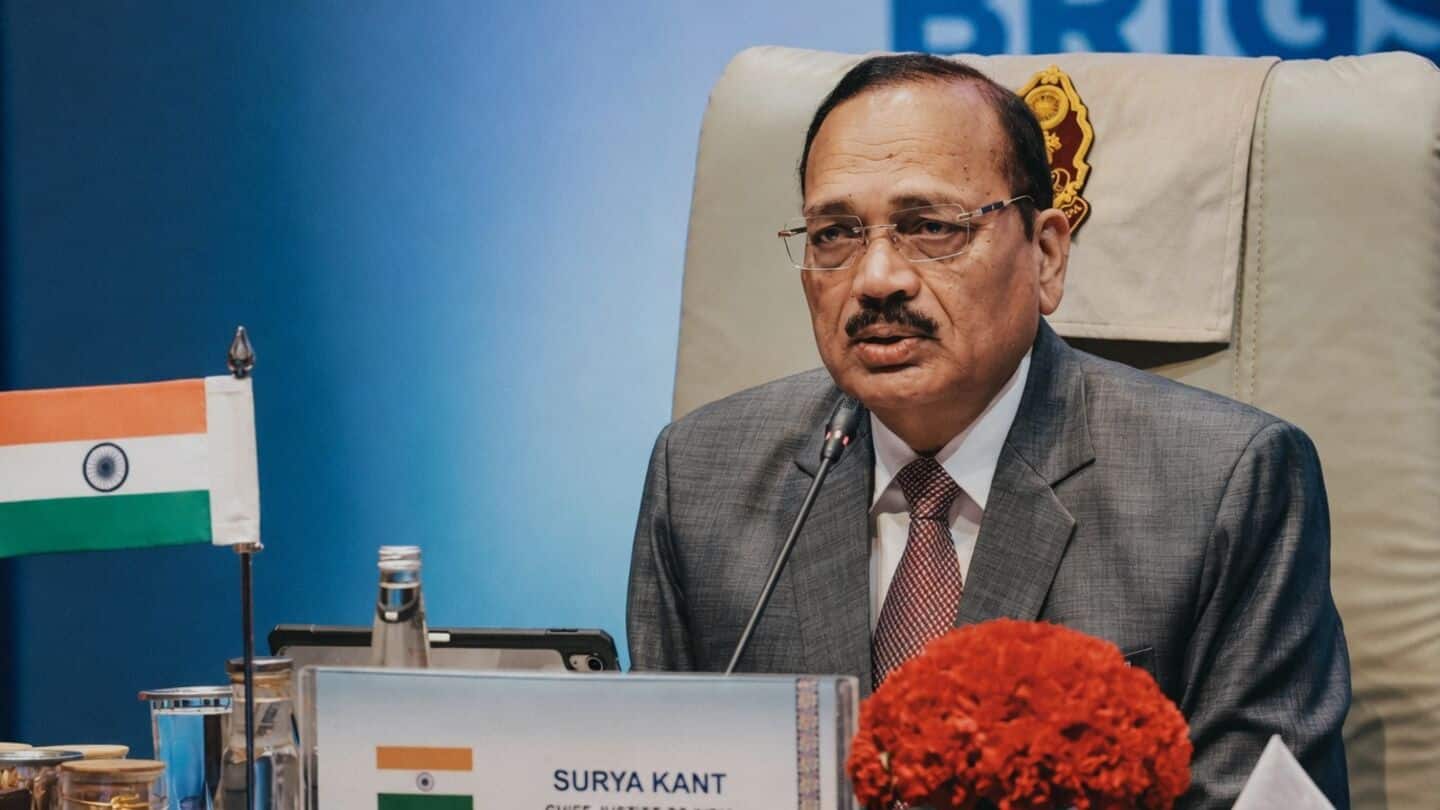
Chief Justice of India (CJI) Surya Kant has rejected a request for an extension by a high-powered committee on the Aravalli hills definition. The committee, set up by the Supreme Court, had sought more time till February 28, 2027. However, CJI Kant directed them to submit their final report by November 30 this year. "They should have clearly asked for a date after my retirement...appears they are waiting for my retirement," he said.
Deadline set
'Work day and night'
The Supreme Court bench, headed by CJI Kant and comprising Justices Joymalya Bagchi and V Mohana, rejected the committee's request for an extension.
The court directed the five-member panel to "work day and night" to meet the new deadline.
The bench made it clear that no further extensions would be granted. However, it also acknowledged the complexity of defining the Aravalli hills and directed interim reports on specific issues as they progress.
Definition complexities
Committee's interim report
The committee had sought a six-month extension, stating that the Aravalli landscape cannot be defined by a single terrain-based or elevation criterion.
In its interim report filed on August 31, it examined various factors such as spatial, ecological, geological, and socio-economic evidence.
The panel's field visits raised questions about ecosystem health and land-use change, among other issues.
Controversial definition
Controversy over earlier definition
The previous definition of the Aravalli hills, accepted by the Supreme Court in November 2025, had faced criticism.
An earlier committee had defined an Aravalli hill as a landform with an elevation of at least 100 meters from local relief.
Environmentalists warned this could leave large areas vulnerable to mining and other activities.
The Supreme Court took suo motu cognizance of the controversy and ordered a fresh examination by a high-powered expert panel in December 2025.
Scientific approach
Stakeholder consultations, scientific evidence critical
The court has stressed that the committee must hear all affected stakeholders, including tribal communities, governments of Delhi, Rajasthan, and Haryana, environmentalists, and local communities.
The eventual course of action must be based on scientific evidence consistent with environmental protection and sustainable development.
The panel's interim assessment describes the Aravallis as a connected landscape with interlinked ecological values.
Broader mandate
Broader mandate for committee
The committee's mandate goes beyond drawing technical boundaries around hills to examining wider ecological and socio-economic character.
It has suggested assessing the Aravallis alongside forests, protected areas and wetlands.
The panel is undertaking geospatial assessments and comparing methodologies with previous works.
The court has fixed December 2 for further consideration, by which time the committee is expected to have begun submitting its issue-specific interim findings.