Japanese engineer flags policy concerns over India's bullet train project
What's the story
Isao Tsujimura, a senior Japanese railway engineer and metro vehicle consultant based in Delhi, has raised concerns over India's first bullet train project. In an opinion piece for Yahoo News Japan, Tsujimura said the Mumbai-Ahmedabad High Speed Rail (MAHSR) project has strayed from its original Shinkansen blueprint. He criticized Indian policy decisions and Japan's diplomatic response to these changes.
Project overview
MAHSR corridor and its significance
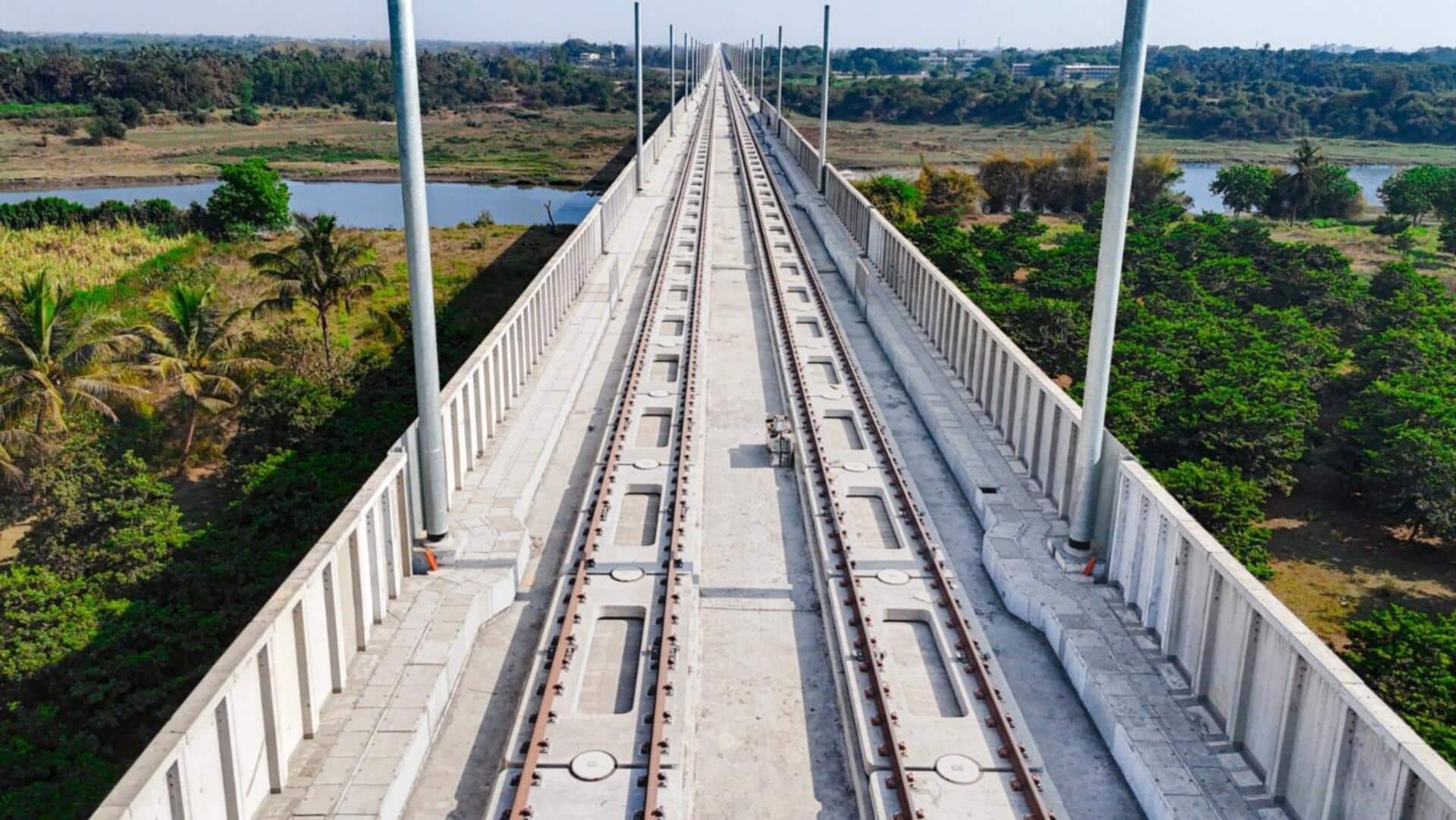
The 508km Mumbai-Ahmedabad High Speed Rail corridor is India's first bullet train project. It was conceived under a 2015 cooperation agreement between India and Japan.
Prime Minister Narendra Modi and then-Japanese PM Shinzo Abe laid the foundation stone in September 2017.
The project was originally scheduled for completion in 2023 but has been delayed, with partial operations now slated to begin in 2027.
Financial details
Japan is funding the project
The line will connect Mumbai and Ahmedabad through 12 stations, with trains running at speeds of up to 320km/h.
Japan is funding about 81% of the project through a concessional yen loan worth around 880 billion yen, repayable over 50 years at low interest rates.
However, Tsujimura's biggest concern is India's shift from Japan's DS-ATC signaling system to the European Train Control System Level-2 (ETCS-L2).
Safety issues
Tsujimura warns about safety issues
Tsujimura argues that signaling is the backbone of high-speed rail safety.
He points out that Shinkansen's record of over six decades without a passenger fatality due to operational failure is linked to its integrated signaling technology.
The engineer claims that NHSRCL's signaling tender issued in January 2025 effectively excluded Japanese technology, making it nearly impossible for Japanese signaling or Shinkansen rolling stock to be part of the project.
Policy change
Procurement process criticized
Tsujimura also criticizes the procurement process, saying negotiations over Japanese trains stalled due to India's preference for international competitive bidding.
He says only two Japanese manufacturers could supply the E5-series Shinkansen originally planned for the corridor.
The initial roadmap envisaged Japanese trains operating first, followed by technology transfer under the "Make in India" program to localize production. However, India shifted toward developing indigenous high-speed trains after the Vande Bharat Express's rapid expansion.
Capability concerns
India insisted on internationally certified signaling standards, says Tsujimura
Tsujimura questions whether Indian industry currently has the experience required to build, test, and certify trains capable of operating at true high-speed rail standards.
He also argues that India insisted on internationally certified signaling standards and third-party verification, which Japan's DS-ATC system didn't meet in their existing form.
According to him, Japan failed to challenge this shift forcefully, a strategic mistake that could influence future bullet train projects across India.