'Used graded response': Delhi Police defends actions in Parliament protest
What's the story
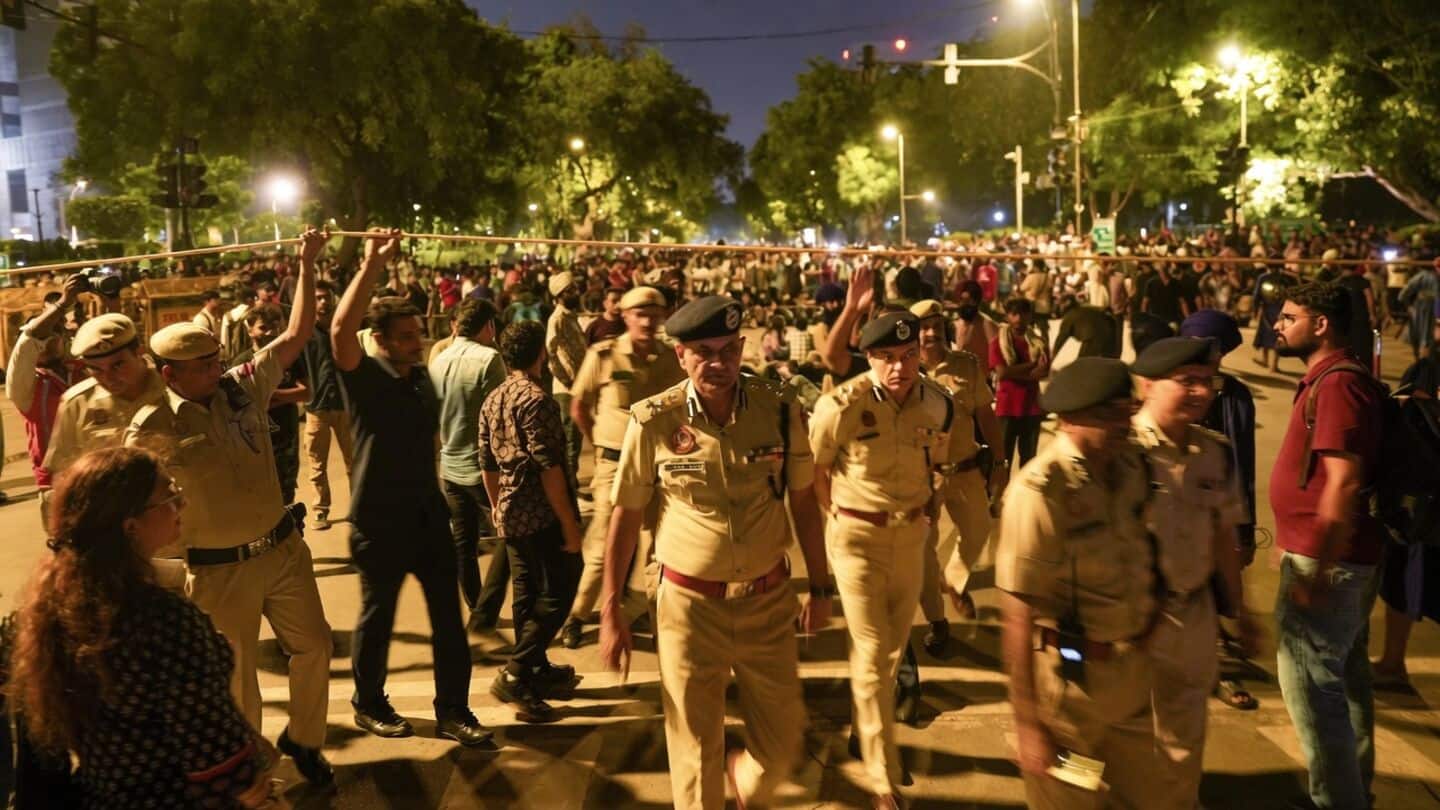
The Delhi Police has defended its actions during the July 20 "Sansad Chalo" protest march, telling the Supreme Court that it only used a "graded" response after protesters breached barricades and tried to reach Parliament. In a counter-affidavit, Deputy Commissioner of Police Sachin Sharma said around 5,000 police personnel were deployed to manage over 30,000 protesters spread across nearly 3km. The clash left over 240 police personnel and around 200 protesters injured.
Unlawful assembly
Police claim protesters breached barricades
The police claimed that despite not having permission for a Parliament march, protesters breached barricades.
The police said this made the gathering an unlawful assembly, with the attempt to proceed towards Parliament itself unlawful.
They also countered allegations of excessive force by saying videos and reports were selective, incomplete and not independently verified.
The affidavit also denied the allegation that police personnel used lathis fitted with nails.
Plainclothes deployment
Plainclothes personnel were 'spotters': affidavit
The police also defended the presence of plainclothes personnel with lathis, calling them "spotters" from various branches.
They said such deployments are neither illegal nor unusual, instead being common during large public events like Independence Day and Republic Day celebrations.
The affidavit clarified that these personnel were not an independent force against protesters but part of crowd-control operations.
Surveillance defense
Facial recognition technology identified people with serious criminal records
The police also defended their use of facial recognition technology at the protest site as a "proportionate policing measure."
They denied it was indiscriminate surveillance and said it was used to identify people with serious criminal records.
The software did not automatically create profiles or collect personal data of peaceful protesters, they added.
Regulatory framework
Protest regulations near Jantar Mantar, Central Vista
The affidavit also referred to regulations for protests near Jantar Mantar and Central Vista.
According to these rules, prior police permission is needed for demonstrations at Jantar Mantar, with a cap of 1,000 persons.
The police said the protesters' attempt to march toward Parliament was outside this regulated framework.
The matter will be heard by a Chief Justice of India-led bench on Tuesday.