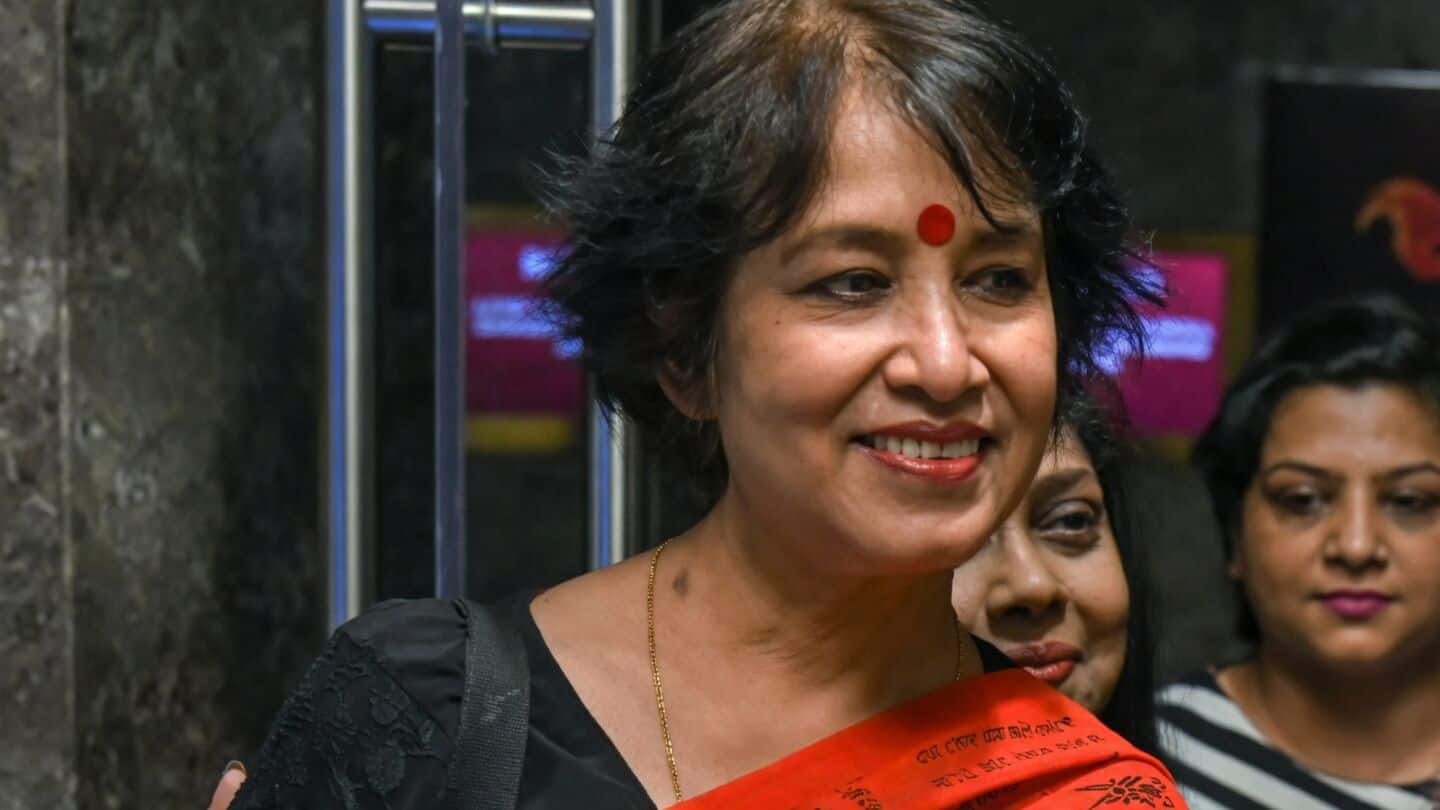
Exiled Bangladeshi writer Taslima Nasreen returns to Kolkata after 19yrs
What's the story
Exiled Bangladeshi writer and activist Taslima Nasreen returned to Kolkata on Friday, nearly two decades after she was forced to leave the city. "I am really liking it here," she said upon landing at Netaji Subhash Chandra Bose International Airport. She was forced to leave the city in November 2007 following violent protests against her book "Dwikhandito" (Split in Two). The book was banned by the then Left Front government in West Bengal in 2003 for allegedly hurting religious sentiments.
Emotional return
My personal homecoming: Nasreen
Describing her return as a "personal homecoming," Nasreen said she never left Kolkata willingly. She said she always hoped to return one day, despite the circumstances that forced her departure.
"I never left Kolkata willingly; the then West Bengal government forced me to leave the state. Yet I never stopped hoping that one day I would return," she told PTI.
Future plans
Nasreen to attend event in Kolkata on Saturday
Currently, Nasreen resides in Delhi on a long-term residence permit.
She will be attending an event protesting fundamentalism at Rabindra Sadan on Saturday.
The event is expected to be attended by West Bengal Chief Minister Suvendu Adhikari and noted author Shirshendu Mukhopadhyay.
"She will speak about her years in exile, recount the circumstances under which she had to leave Kolkata, and read her poems," Osman Mallick of Secular Mission, which is one of the organizers, told IE earlier.
Books
What are Nasreen's writings about?
Nasreen has written over 40 books in Bangla, including poetry, novels, essays, and a multi-volume autobiography. Her works have been translated into more than 30 languages.
She focuses on women's rights, gender equality, challenging patriarchal norms, and exposing domestic violence in her writing.
Her best-known novel Lajja (Shame) was published in 1993 and chronicles the persecution of a fictitious Hindu family in Bangladesh after the Babri Masjid demolition.