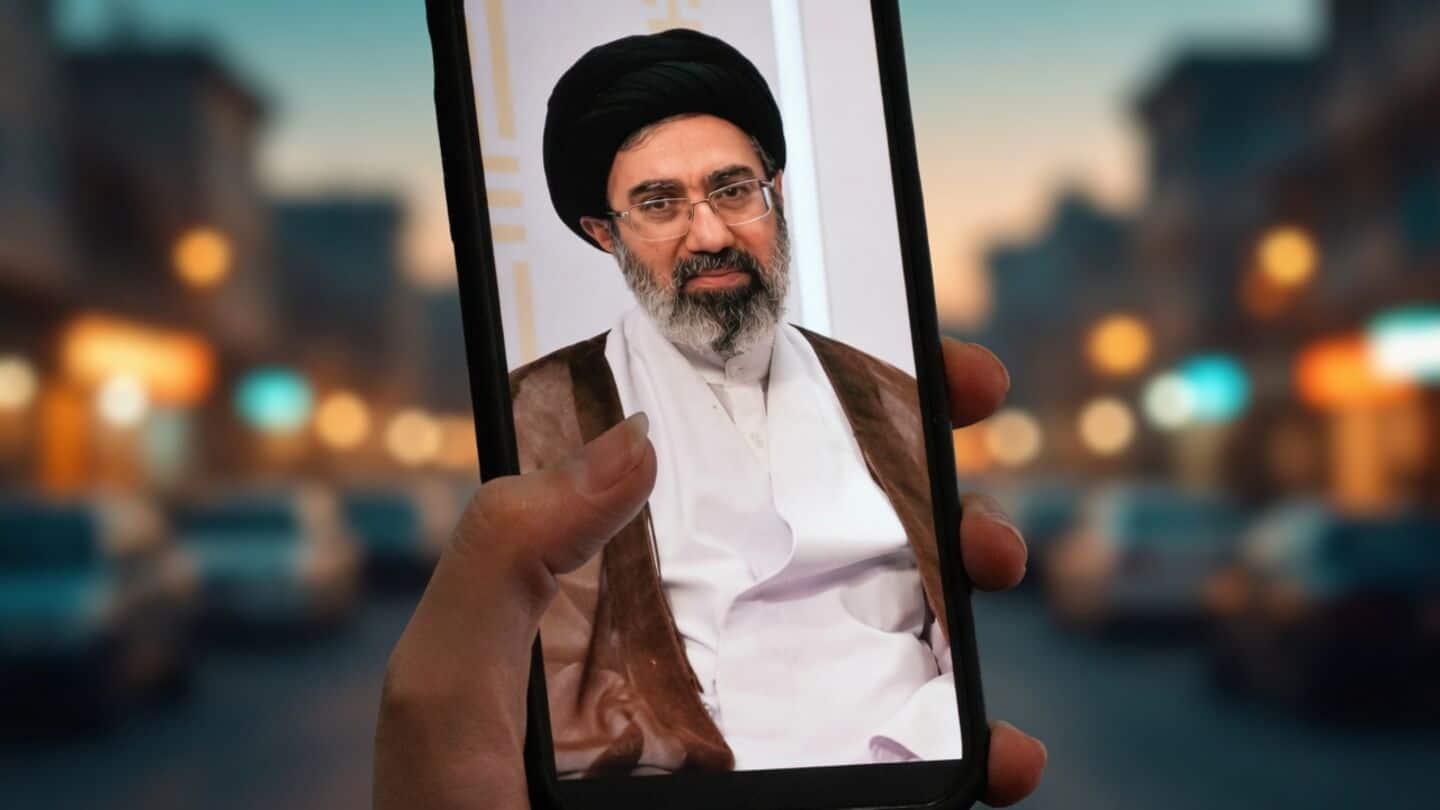
CIA, Mossad hunting Iran's unseen Supreme Leader: Report
What's the story
The Central Intelligence Agency (CIA) and Israel's Mossad are reportedly on a high-stakes mission to find Mojtaba Khamenei, Iran's new Supreme Leader. Since his appointment on March 8, following his father Ayatollah Ali Khamenei's reported death in a US-Israeli strike, the 56-year-old has not been seen in public or given any speeches. His communications blackout has raised concerns among foreign intelligence agencies about his whereabouts and grip on power.
Security measures
Khamenei's extreme security measures thwart efforts to track him
Reportedly, Khamenei has taken extreme security measures to avoid detection.
He is believed to use only handwritten messages via trusted couriers linked to the Islamic Revolutionary Guard Corps (IRGC), avoiding digital devices altogether.
A senior Western intelligence source told The Times, "No phone, no laptop, no digital footprint for five months."
This has made it nearly impossible for agencies like the CIA and Mossad to track his movements or intercept communications.
Location theories
Speculations about Khamenei's whereabouts and possible decoys
Intelligence analysts speculate that Khamenei might be hiding in a heavily fortified underground facility in Tehran or a tunnel network near Qom.
There are also concerns that Iran could be using decoys to protect him.
His absence has raised questions about his physical condition after the strike that reportedly killed his father.
Although US intelligence reportedly believes he is alive and functioning, rumors of serious injuries persist.
Rising tensions
Geopolitical tensions in Iran during Khamenei's absence
The Supreme Leader's absence has fueled speculation about his health and control over Iran's leadership.
His absence was particularly noted when he skipped the Nowruz New Year address, opting for a brief written message on Telegram instead.
Geopolitical tensions in Iran have continued during his disappearance. This includes a temporary ceasefire and renewed clashes over nuclear infrastructure and shipping routes in the Strait of Hormuz.
Power shift
Implications of the power shift in Iran
Mojtaba's rise to power was reportedly backed by the IRGC, and he is seen as more hardline than his father.
With the Supreme Leader out of sight, the IRGC has assumed a bigger role in military decisions and domestic security operations.
This development has raised concerns in Washington and Tel Aviv about who is really calling the shots in Iran's strategic decisions.