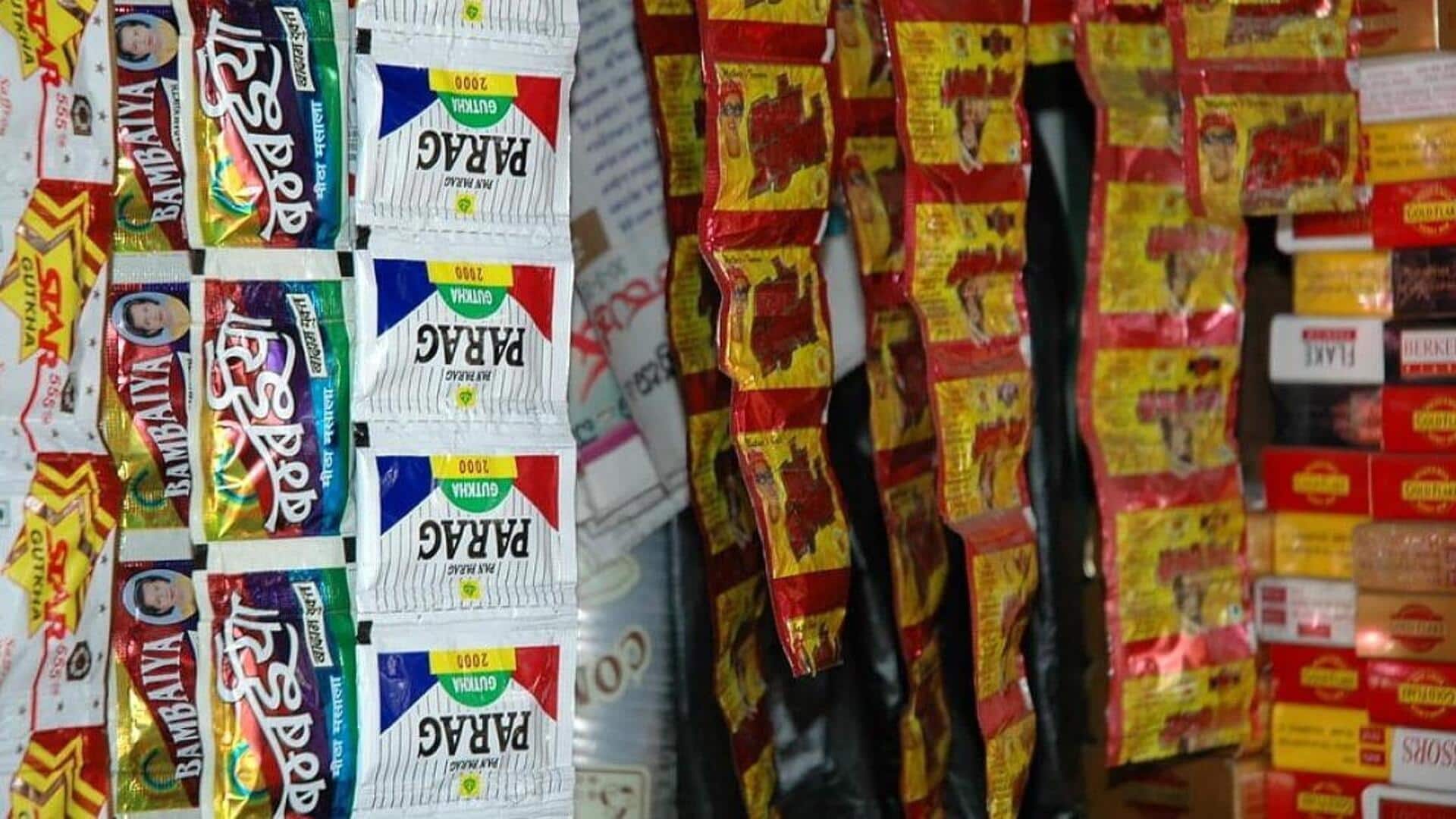
FSSAI's pan masala packaging rules: What's banned and what's allowed
What's the story
The Food Safety and Standards Authority of India (FSSAI) has announced a ban on the use of plastic and aluminum foil in pan masala packaging. The new regulations were issued on Monday through the Food Safety and Standards (Packaging) Amendment Regulations, 2026, and came into effect immediately. The move is part of a larger effort to promote environmentally friendly practices within the food industry.
Regulation details
Approved materials for pan masala packaging
The revised rules amend the Food Safety and Standards (Packaging) Regulations, 2018, by adding pan masala to Schedule 4. This schedule lists approved packaging materials for specific food products.
Under these new guidelines, manufacturers can use paper, paperboard, cellulose, and other natural materials for pan masala packaging.
However, FSSAI has mandated that these materials should be completely free of plastic content.
Packaging restrictions
Major shift for manufacturers
The FSSAI's ban on plastic and aluminum foil in pan masala packaging is a major blow to manufacturers who rely on flexible and multi-layered formats.
The new regulations explicitly prohibit materials like polyethylene, polypropylene, polyester, polyvinyl chloride (PVC), and other synthetic polymers or laminates.
This effectively ends the use of multi-layered flexible packaging that uses plastic or metallic barriers for moisture control, aroma retention, and shelf-life extension.
Alternative materials
Compliance options for manufacturers
Along with paper-based materials, the FSSAI has also approved tin and glass containers for pan masala.
This gives manufacturers a clear set of compliant options: either fully plastic-free, naturally derived packaging materials, or rigid containers made of tin or glass.
The new rules also address a common gray area in packaging design - paper-based wrappers concealing plastic or metallic layers.
Such composite structures will not be permitted if they contain any prohibited materials, regardless of their outer appearance.
Environmental alignment
Integration of Plastic Waste Management Rules
The amendment also incorporates relevant provisions of the Plastic Waste Management Rules, 2016, under the Environment (Protection) Act, 1986.
These provisions reinforce existing restrictions on plastic sachets used for storing, packing, or selling gutkha, tobacco and pan masala.
By embedding these rules within FSSAI's packaging regulations, the government has effectively aligned food safety norms with environmental compliance requirements.
Production impact
No ban on pan masala production or sale
It's important to note that the amendment does not prohibit the manufacture or sale of pan masala. The regulatory focus is strictly on packaging standards.
Manufacturers can continue production and distribution as long as their packaging complies with the revised material specifications.
This move is part of a larger trend toward stricter regulations against plastic-heavy packaging, especially in tobacco and related products.