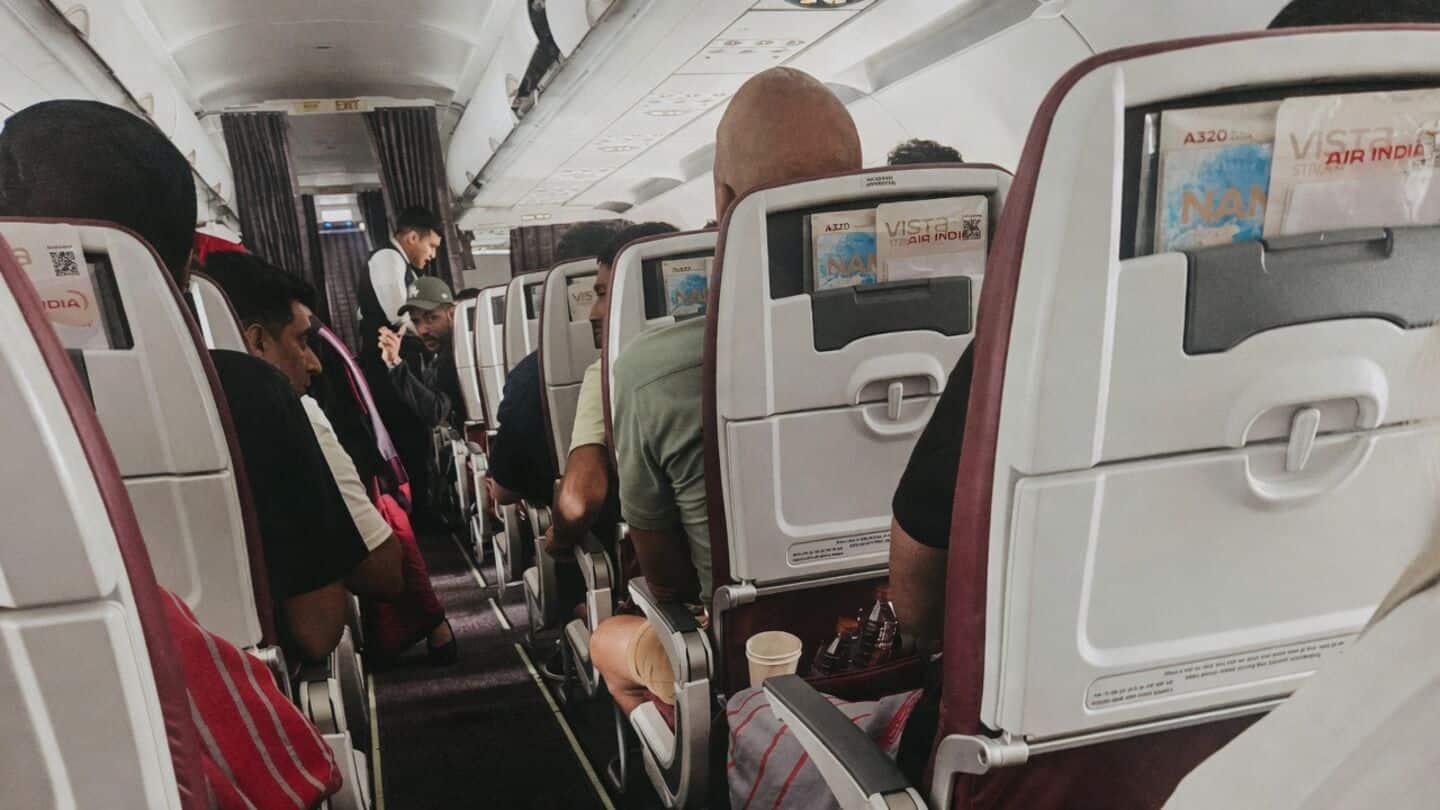
Air India flight incident: Airbus reveals aircraft lost hydraulic pressure
What's the story
An Air India flight from Phuket to Delhi experienced a major technical glitch on August 4, leading to a sudden drop of 300 feet in altitude. According to Hindustan Times, the incident left 24 people injured and has come under investigation by the Aircraft Accident Investigation Bureau (AAIB). A preliminary report by Airbus revealed that all three hydraulic systems of the aircraft briefly failed, causing a loss of control for four seconds.
Technical findings
Aircraft lost hydraulic pressure, says report
The Airbus report stated that the aircraft lost hydraulic pressure, resulting in the unavailability of flight-control actuators and elevators.
The autopilot system was also disengaged during this period.
The first officer flying the aircraft applied nose-down input, which was initially unresponsive but recovered after four seconds when hydraulic pressure returned.
Ongoing investigation
Investigation into aircraft systems ongoing
The AAIB is currently looking into the aircraft's systems, recorded flight data, maintenance records, and medical information. France's Bureau of Enquiry and Analysis for Civil Aviation Safety (BEA) is also providing technical assistance in this investigation.
The pilots of flight AI2379 have been off-rostered pending the outcome of the probe.
Pilot scrutiny
Pilot-in-command tested positive for marijuana
Notably, the pilot-in-command of flight AI2379 tested "non-negative" for a psychoactive substance after a post-flight screening, as per an earlier government release.
An official aware of the details in the report told HT: "The pilot in question has tested positive in the confirmatory test. He has tested positive for Marijuana."
However, there is no direct link between this result and the altitude incident, as per reports.
Manufacturer's request
Airbus asks Air India to provide more detailed pilot reports
Meanwhile, Airbus has asked Air India to provide more detailed pilot reports from the incident.
The manufacturer stressed that a thorough analysis is needed to understand if the aircraft's airframe was affected by the sudden movement.
Furthermore, it would continue the event assessment and that additional inspections may be required based on ongoing assessments.