NCERT revises textbook: New perspectives explored on India's partition, freedom
What's the story
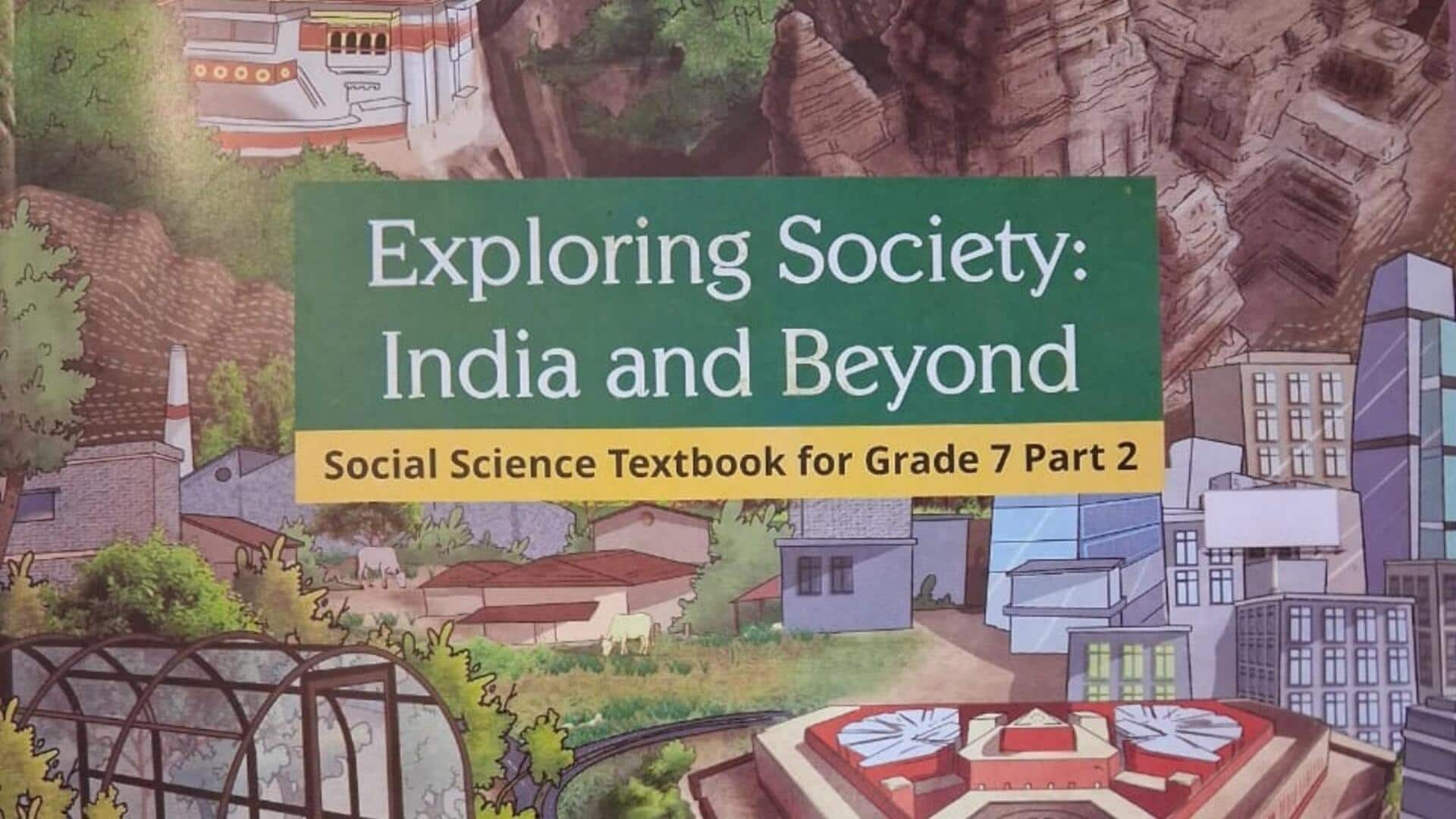
The National Council of Educational Research and Training (NCERT) has released a revised version of its Class 8 Social Science textbook. The updated book, "Exploring Society: India and Beyond Part 2," includes new perspectives on the 1947 India-Pakistan partition. It states that while Mahatma Gandhi and most Congress leaders opposed the partition, they eventually accepted it as "the only way forward."
Textbook updates
New chapters on Jallianwala Bagh massacre, Direct Action Day
The revised textbook also introduces new chapters on the Jallianwala Bagh massacre of 1919 and the Direct Action Day of 1946.
The old Class 8 NCERT history book had mentioned that a British cabinet mission to Delhi couldn't get Congress and the Muslim League to agree on a political framework for free India.
It stated that "Partition now became more or less inevitable," mixing joy of independence with pain and violence of partition.
Historical perspectives
Britain, other factors in India's independence
The new textbook challenges the earlier view that Gandhi and Congress were solely responsible for Britain's exit from India.
It acknowledges other factors such as popular uprisings, revolutionary attempts, and mutinies in the Royal Indian Air Force and Navy.
The book also highlights Britain's diminished status after World War II and global decolonization trends as contributing factors to India's independence.
Nationalist sentiment
Cultural influences, Jallianwala Bagh massacre
The textbook also introduces a section on cultural influences that fueled nationalist sentiments, referring to Bankim Chandra Chattopadhyay's Bande Mataram. It asks students to decipher its meaning.
On the Jallianwala Bagh massacre, it notes that despite requests for an apology from the British government, they only called it a "deeply shameful event in British history."
The old book did not mention these requests.
Communal violence
Communal violence on Direct Action Day
The new book describes the communal violence on Direct Action Day in August 1946, which led to thousands of deaths and displacement in Calcutta.
It states, "The violence created a deep sense of fear, making peaceful coexistence seemingly impossible and Partition unavoidable."
This is different from the old book's brief mention of riots without elaborating on their impact.
Educational alignment
Updated textbooks under NEP 2020 initiative
The NCERT's textbook revision is in line with the National Education Policy (NEP) 2020 and the National Curriculum Framework for School Education 2023.
Textbooks for Classes 1-8 have been developed under this initiative so far.
The changes reflect an effort to provide a more comprehensive understanding of India's history and its impact on contemporary society through updated educational materials.