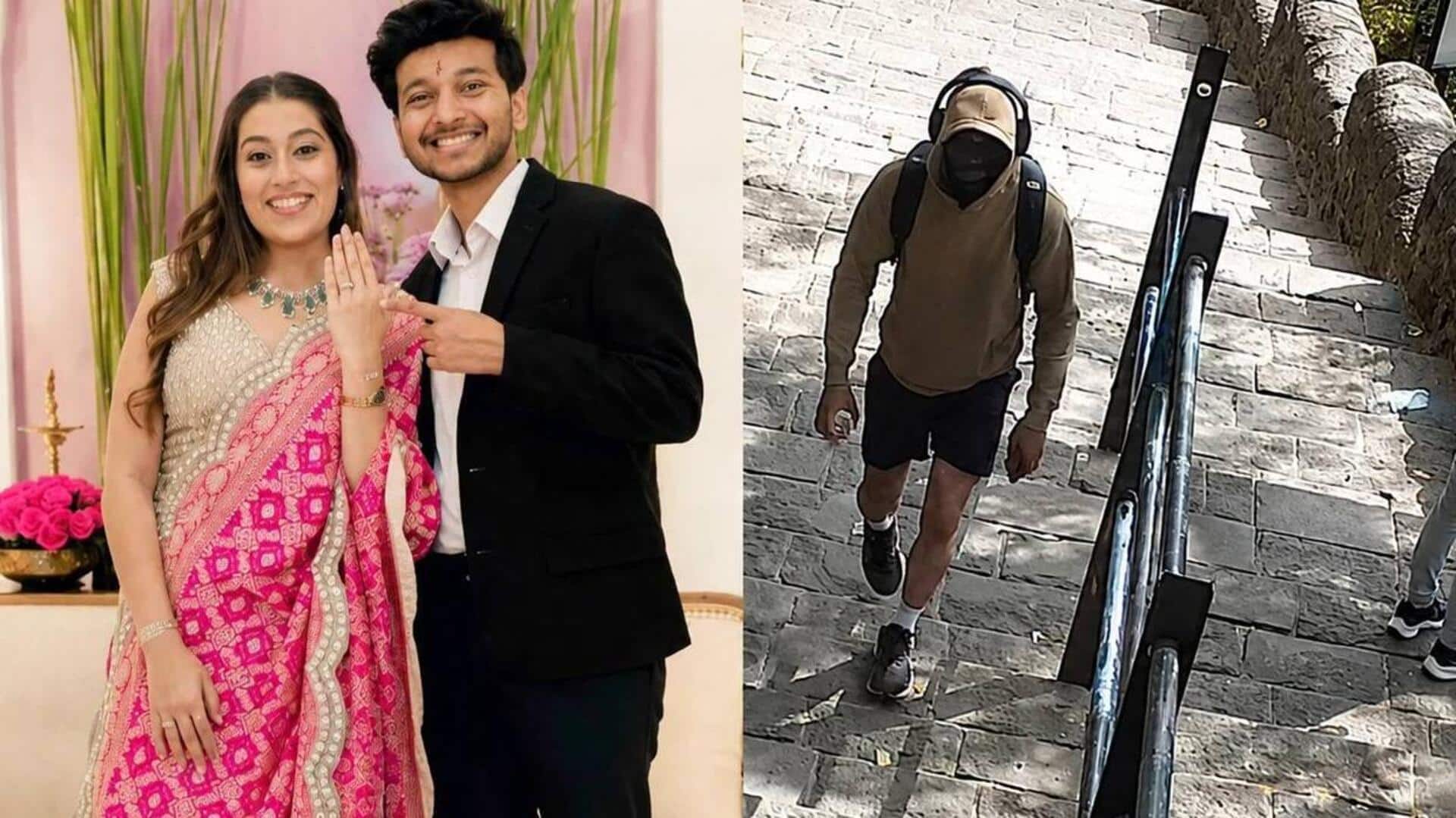
No eyewitness to murder, police seek Siya Goyal's lie-detector test
What's the story
The Pune Police have approached a court to conduct a polygraph test on Siya Goyal, accused in the murder of her fiance Ketan Agarwal. The police said there is no direct eyewitness or conclusive evidence to establish if it was Siya or her lover Chetan Chaudhary who pushed Ketan into a gorge at Lohagad Fort on June 18. They believe that a polygraph examination could help generate fresh investigative leads and further the investigation.
Test purpose
Details of the police's application to the court
The police's application to the court stated that Goyal's and co-accused Chetan Chaudhary's statements have been recorded. However, they argued a polygraph examination is necessary to further the investigation, as it could help generate fresh investigative leads.
It's important to note that while polygraph tests are often sought in such cases, their results are not admissible as substantive evidence in court. They are used only to assist investigators in developing leads during the course of a probe.
Case details
Agarwal murder case details
According to reports, the investigation is largely based on circumstantial and technical evidence, as there were no direct witnesses to the crime nor were there any CCTV cameras covering the exact spot where the incident took place.
The accused also allegedly deleted call records and files from their phones, including from the recycle bin, before and after June 18 (the day of murder) in an alleged attempt to destroy evidence, as per News18.
Legal implications
Legal position on polygraph tests
In its 2010 Selvi v/s State of Karnataka judgment, the Supreme Court ruled that polygraph tests cannot be conducted without voluntary consent.
Forcing someone to undergo such tests violates constitutional protections against self-incrimination and the right to personal liberty and privacy.
The National Human Rights Commission (NHRC) has also laid down guidelines governing such tests.
If Goyal refuses the polygraph test, she can't be legally compelled to undergo it.
Evidence value
What do the results mean?
Even if Goyal agrees to take the polygraph test, its results can't be treated as direct evidence.
However, any statement made during the examination that leads investigators to new facts or physical evidence may be admissible under Section 27 of Indian Evidence Act.
Siya's lawyer, Vipul Dushing, said that while the investigating agency had approached the court for permission, "several legal and technical procedures must be completed before such...test can be conducted."
He added that the accused's consent is mandatory.