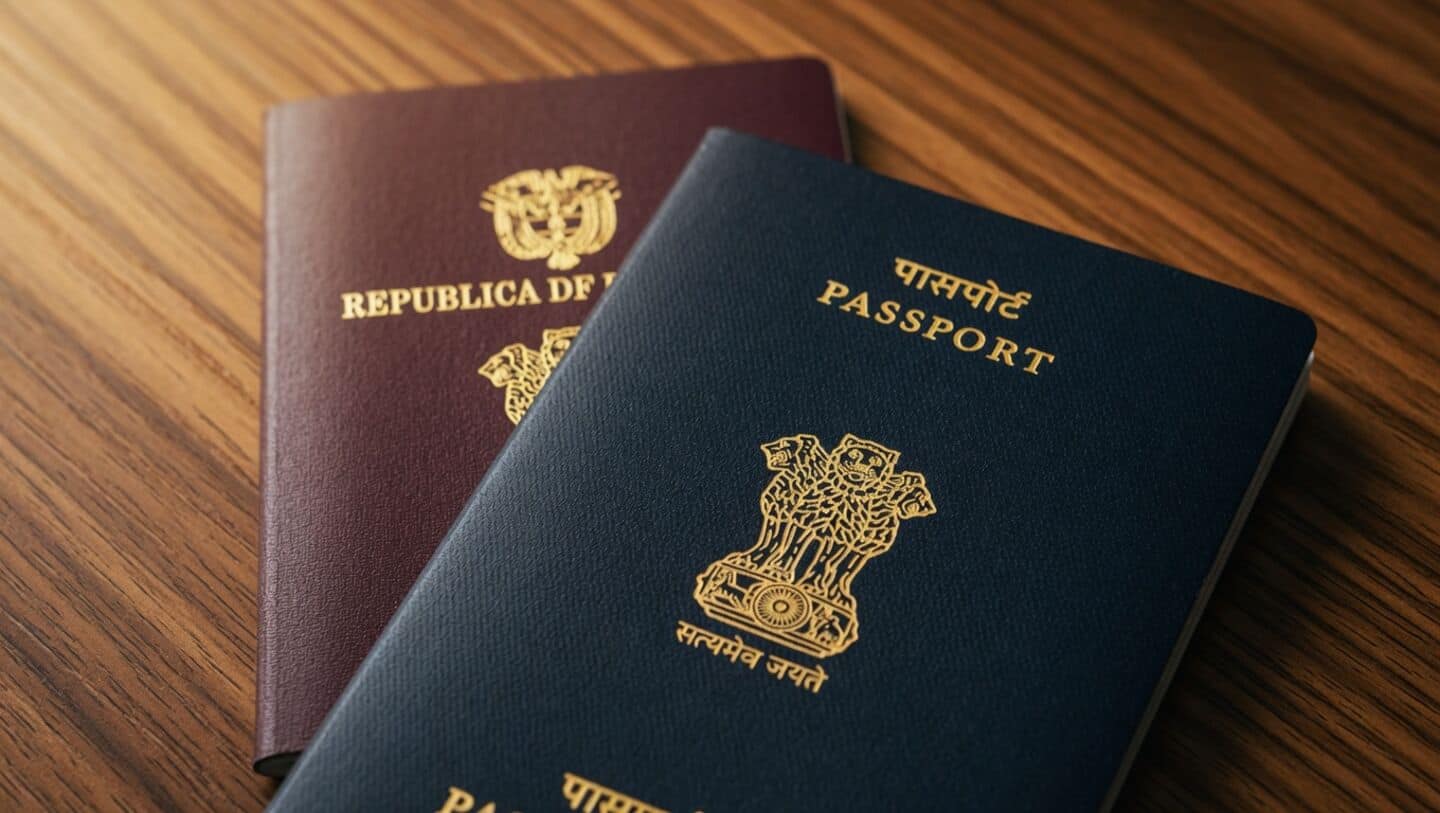
'Passport merely travel document': What then constitutes proof of citizenship
What's the story
A recent clarification by the Ministry of External Affairs (MEA) regarding the passport has reignited the debate on what constitutes proof of citizenship in India. The MEA's statement that a passport is not conclusive proof of citizenship but a travel document has raised questions about which documents can definitively establish a person's nationality. This comes amid ongoing controversies over electoral roll revisions and citizenship verification exercises.
Legal implications
Are passports conclusive proof of citizenship?
The remark appears counterintuitive because the Passports Act, 1967, assumes that passport holders are Indian citizens.
Section 5 of the Act allows passport authorities to issue passports only after verifying applicants' citizenship status.
However, the MEA's clarification suggests a distinction between "evidence" and "conclusive proof" of citizenship.
This means that while passports are strong evidence of citizenship, they can be revoked if citizenship was obtained through misrepresentation or error.
Electoral registration
Can voter ID be considered proof of citizenship?
In the recent special intensive revision (SIR) of electoral rolls, a key legal question was if existing electors needed to provide new documents to prove their eligibility.
The Representation of the People Act, 1950, allows only citizens to be registered as voters. However, electoral registration agencies maintain the authority to investigate whether a person's inclusion on the registers meets the statutory requirements.
As such, simply having an old voter card did not necessarily answer citizenship-related questions during the SIR exercise.
Document diversity
Which document is considered definitive proof of citizenship?
The MEA clarification takes the argument farther. If voter cards and passports are not conclusive proof of citizenship, which document conveys that status?
The answer is complex, as India does not have a single universally recognized citizenship certificate.
The Ministry of Home Affairs previously declined to identify any document, including Aadhaar, passports, voter IDs, PAN cards, or birth certificates as definitive proof of citizenship.
Instead, it stated that acquisition and determination of citizenship are governed by the Citizenship Act, 1955.
Legal relationship
How does India's legal system view citizenship presumption?
Proof of citizenship often depends on routes through which it is claimed: birth certificates for some, while others may rely on passports or citizenship certificates issued upon registration or naturalization.
The ministry stated the eligibility criteria would be assessed under the Citizenship Act.
India's legal system presumes most people are citizens unless disputes arise.
This model has worked well, as citizens rarely had to prove their status.
However, citizenship verification exercises have exposed the lack of a universally accepted document.