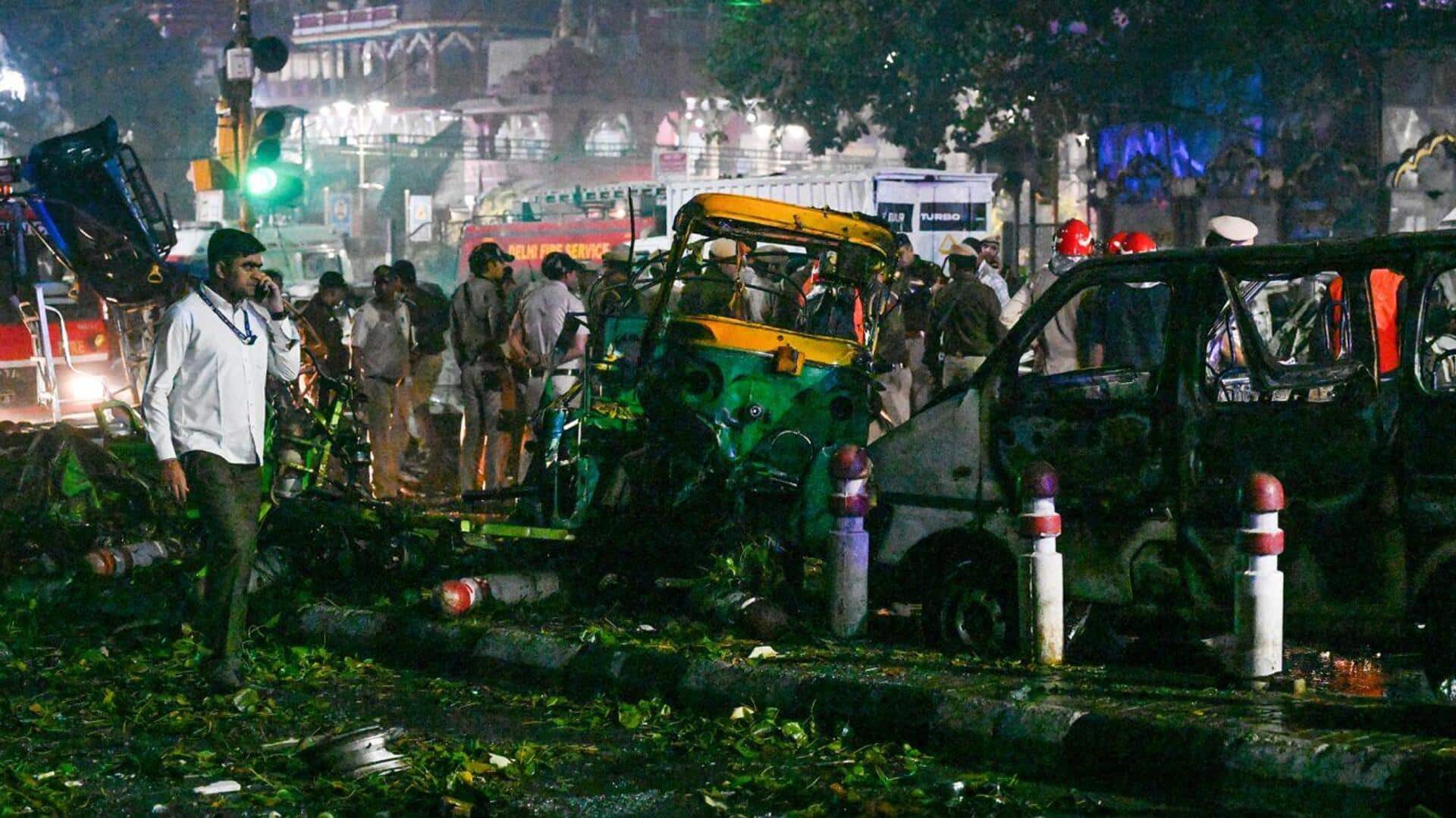
Red Fort blast accused allegedly used ChatGPT for 'terror engineering'
What's the story
The National Investigation Agency (NIA) has filed a 7,500-page chargesheet in connection with the November 2025 Delhi Red Fort car blast. The chargesheet accuses members of an Al-Qaida-linked group, including medical professionals, of using artificial intelligence platforms like ChatGPT and YouTube for "terror engineering." The explosion killed 11 people and injured many others.
Online investigation
In-house engineer of the terror module
The chargesheet reveals that Jasir Bilal Wani, one of the accused, was the "in-house engineer" of the terror module. He allegedly used digital platforms to learn about making rocket IEDs.
Investigators said he searched YouTube and ChatGPT for information on "how to make a rocket and in what proportion should the mixture be."
Professional involvement
Medical professionals involved in making rocket IEDs
The chargesheet also names Dr. Umer un Nabi, Dr. Muzammil Shakeel, and Dr. Adeel Ahmed Rather as co-accused. They allegedly helped prepare and test rocket IEDs in Jammu and Kashmir's Anantnag district.
Investigators said Dr Adeel supplied IED ingredients like powdered sugar and potassium nitrate while Jasir made the devices with commercially available materials.
Drone experiments
Accused experimented with weaponizing drones
The NIA also found that the accused experimented with weaponizing drones. Dr. Umer is said to have given Jasir two drones and asked him to increase their flying range for possible attacks on security installations.
The chargesheet details online purchases made through Jasir's Flipkart account for components used in trigger mechanisms. These included proximity switches, relay transmitters, soldering kits, piezo plates, and electronic kits funded by Dr. Umer via cash-on-delivery orders.
Simulation demonstration
Controlled simulation conducted to demonstrate fabrication of rocket IEDs
As part of the investigation, a controlled simulation was conducted where Jasir demonstrated how to fabricate functional rocket IEDs using commercially available materials.
The explosive used in the attack was Triacetone Triperoxide (TATP), allegedly manufactured after repeated experimentation.
The NIA's findings highlight the misuse of AI tools for terror-related activities and the involvement of medical professionals in planning and executing such attacks.