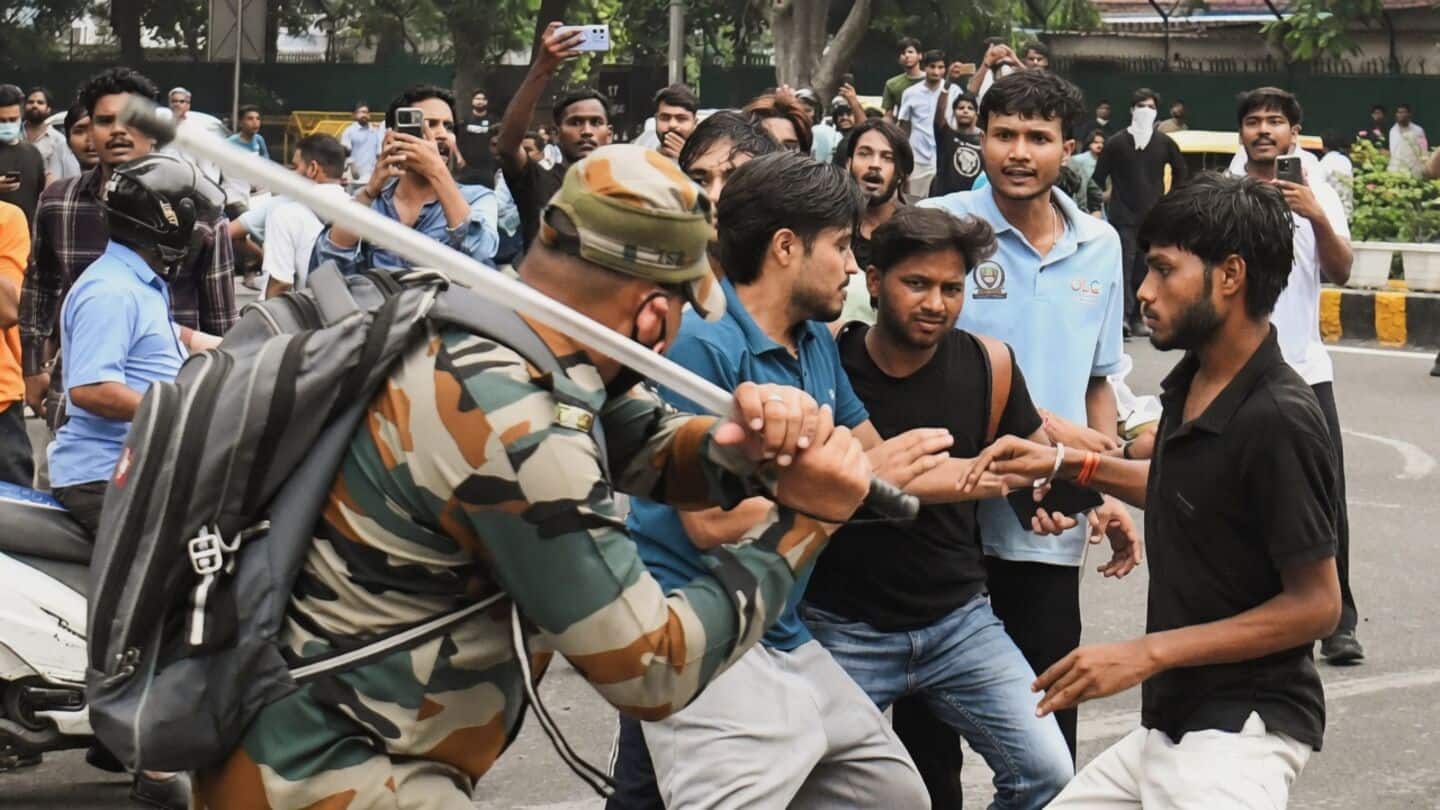
SC rejects need for separate inquiry into women protesters' assault
What's the story
The Supreme Court of India has rejected the need for a separate suo motu inquiry into sexual assault allegations against women protesters during the July 20 student protests in Delhi. The court said that these issues are already being investigated by a high-powered enquiry committee (HPEC) headed by former judge R Subhash Reddy. The HPEC was formed last week to look into complaints of targeted violence, harassment, molestation, and secondary victimization of women protesters on priority.
Committee details
HPEC to probe all allegations of violence
The HPEC was constituted to conduct an independent inquiry into allegations of violence during the protests. It will look into allegations of police brutality and violence against police personnel.
The committee comprises retired judges, former police officials, and a retired CBI director. Its members include Justice (retd) Ravi Shankar Jha, Justice (retd) Shalinder Kaur, Rishi Kumar Shukla and LR Bishnoi.
Reporting process
Court clarifies process for women complainants
Senior advocate Shobha Gupta had raised concerns about how women protesters could report their complaints.
The court clarified that the committee chairperson can appoint nodal officers to facilitate this process.
The HPEC has been given a broad mandate, including examining the use of pellet guns, electric batons, lathis, and tear gas by police during the protests.
Evidence preservation
Court asks to preserve evidence related to protests
The court has also directed authorities to preserve evidence related to the protests, including CCTV footage, drone videos, bodycam footage, communication records and PCR call logs.
The HPEC can accept documentary evidence and representations from affected persons and allow anonymous complaints.
It is required to submit interim findings periodically, with its first report covering allegations of grievous injuries caused by police and security personnel and complaints concerning targeted violence, harassment and molestation of women protesters.