'India strongly condemns...': Modi's first indirect comment on Iran-US conflict
What's the story
In what could be seen as New Delhi's first comments following the massive US-Israel air strikes on Iran, Prime Minister Narendra Modi said India strongly condemned the attacks on the UAE and condoled the loss of lives in these attacks. The PM's comments came after a Cabinet Committee on Security meeting in New Delhi. He said he spoke to UAE President Sheikh Mohamed bin Zayed Al Nahyan, expressing India's solidarity with the Gulf nation during these challenging times.
Meeting
Committee was briefed on air strikes in Iran
At the meeting, the committee was briefed on the air strikes in Iran on February 28 and the subsequent escalation, including attacks in several Gulf countries.
It expressed serious concern over the safety and security of the large Indian expatriate community in the region.
The CCS also reviewed the difficulties faced by Indian travellers transiting the region and students appearing for scheduled examinations, as well as the broader implications for regional security and economic and commercial activities.
Diplomatic communication
PM Modi thanks UAE for taking care of Indian community
"The CCS directed all concerned departments to take necessary and feasible measures to assist Indian nationals affected by the developments," PIB said in a statement.
PM Modi also thanked President Al Nahyan for taking care of the Indian community in the UAE.
The Indian diaspora makes up 35% of the UAE's population, making them its largest ethnic group.
However, New Delhi has not yet released an official statement on Iran's Supreme Leader Ayatollah Ali Khamenei's killing.
Twitter Post
Read the statement here
The Cabinet Committee on Security (CCS) met last evening under the chairmanship of Prime Minister Narendra Modi to review the evolving situation in West Asia.
— ANI (@ANI) March 2, 2026
The Committee was briefed on the air strikes in Iran on 28 February and the subsequent escalation, including attacks in… pic.twitter.com/ViKb3he9EJ
Diplomatic response
Iranian embassy warns US, Israel will face 'grave consequences'
Meanwhile, the Iranian embassy in Delhi has called on countries worldwide to condemn the US-Israel attack on Iran and Khamenei's killing.
They warned that the US and Israel would face "grave consequences" for this "unforgivable crime."
The Indian government is now faced with a delicate diplomatic situation, balancing its interests with both Iran and the UAE while maintaining regional peace and stability.
Diplomatic navigation
India navigates delicate diplomatic situation
India has been trying to navigate the current crisis in West Asia, including a recent visit by PM Modi to Israel and calls made by External Affairs Minister S Jaishankar to regional partners.
The last official statement from New Delhi did not mention the US-Israel attacks or Iran's counter-attacks but called for "dialogue and diplomacy."
This was seen as diplomatically distant and neutral, though some Gulf nations perceived it as non-acknowledgment of international law violations.
Historical context
Complicated history with Iran under Khamenei
India's relationship with Iran under Khamenei has been complicated.
He was critical of India's treatment of minorities, especially after the Babri mosque demolition in 1992 and the Delhi riots in 2020.
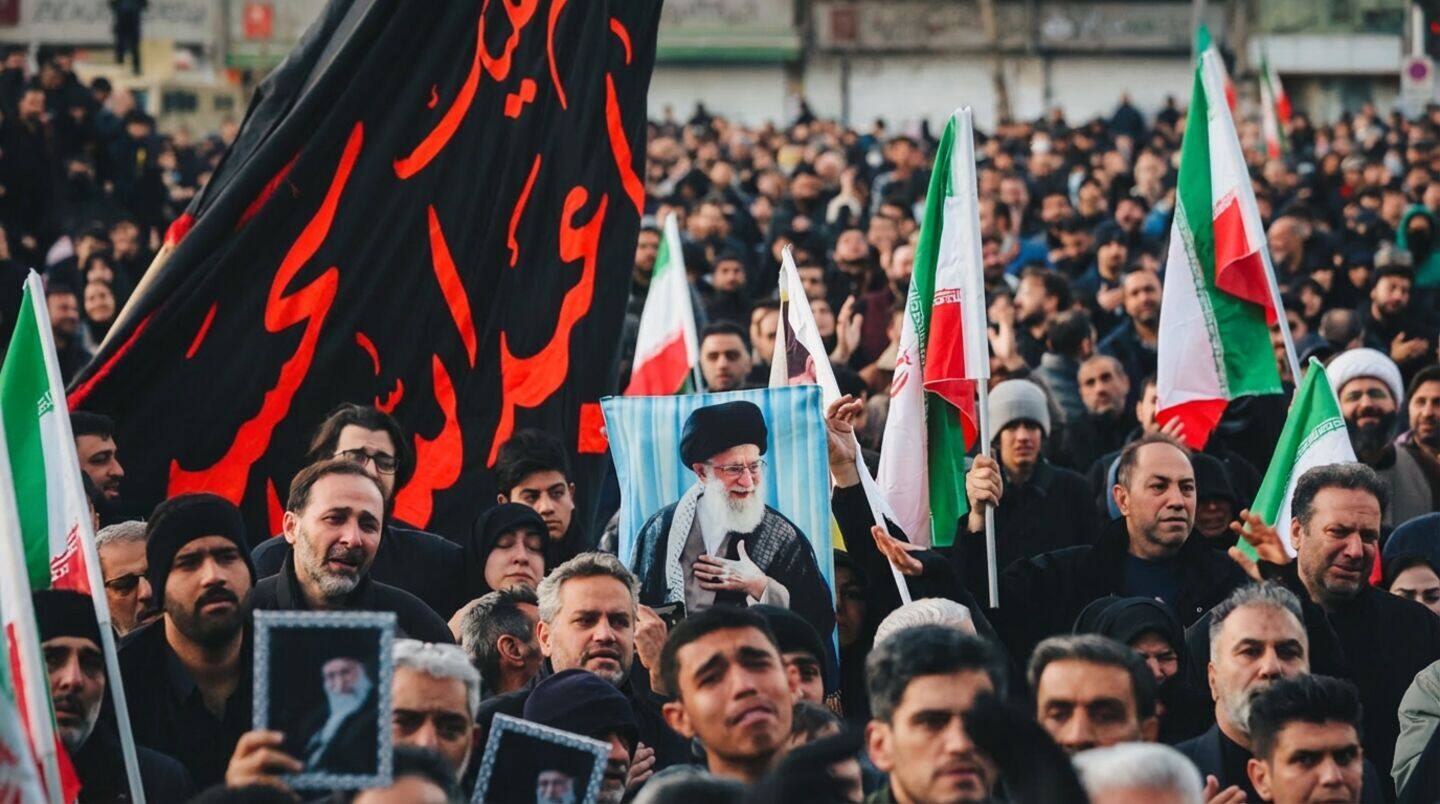
However, Tehran supported India at the UN Human Rights Commission in March 1994 over Kashmir, where protests have erupted over his killing.
The J&K Police have sealed the famous Lal Chowk and decided to put restrictions on civilian movement on Monday, following protests across the Union Territory on Sunday.