No footpaths near Delhi HC, SC warns of dharna
What's the story
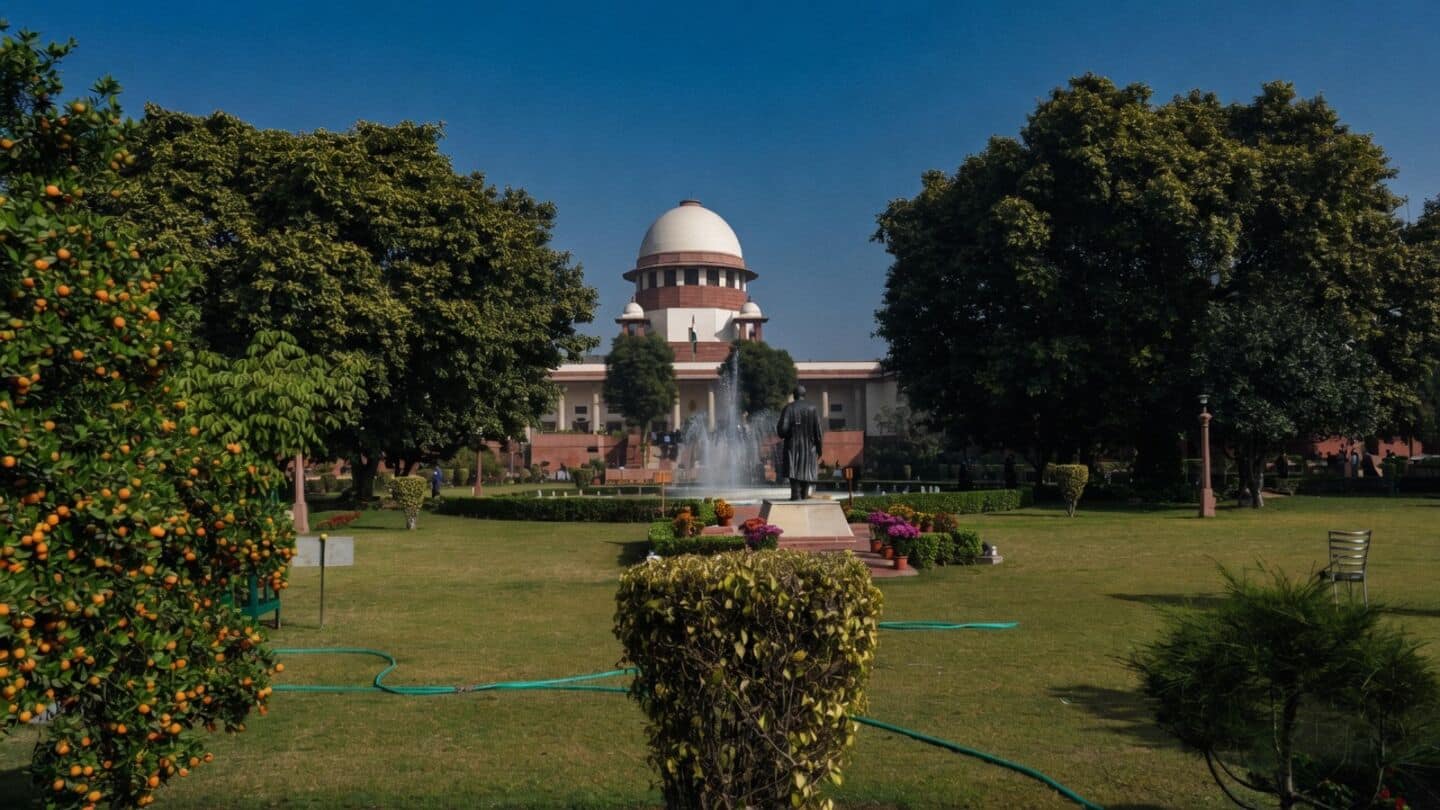
The Supreme Court has expressed its displeasure over the absence of proper footpaths and pedestrian crossings near the Delhi High Court. The court warned that its judges may stage a dharna (sit-in protest) at the court's main gate if no action is taken. A bench comprising Justices JB Pardiwala and KV Vinod Chandran voiced their concerns during a hearing on Friday.
Legal emphasis
Pedestrians' rights primary: Supreme Court
The Supreme Court reiterated that safe pedestrian access is a fundamental right under Article 21 (right to life) and Article 19(1)(d) (freedom of movement).
The court said, "Pedestrians' rights are primary and will override the movement of motorized vehicles."
It also directed all states and Union Territories to ensure roads have safe, clearly marked footpaths free from encroachments.
Infrastructure directive
Designate central authority to ensure compliance: SC
The court also directed governments and local authorities to construct and maintain footpaths alongside roads.
It ordered the removal of encroachments and obstructions such as unauthorized stalls, electricity poles, garbage, and illegal parking.
To ensure compliance with these directions, the Supreme Court asked the Centre to set up or designate a central authority.
Project proposal
Pilot project for footpath development in 5 cities
For the initial phase, the court has also called for a pilot project to develop footpaths in five cities.
It directed authorities to follow the Indian Roads Congress' guidelines for footpath design and safety.
Regular safety audits of footpaths and pedestrian crossings in major cities are also mandated by the court.
Urban planning
Court mandates stricter rules for regulating pedestrian movement
The Supreme Court's message is clear: urban development can't just be about wider roads and smoother traffic movement. Authorities must ensure that people can walk safely and with dignity.
The court has also directed states/UTs to frame stricter rules under the Motor Vehicles Act for regulating pedestrian movement and non-motorized transport like bicycles.