Nagaland: 9 dead after consuming spurious liquor, state on alert
What's the story
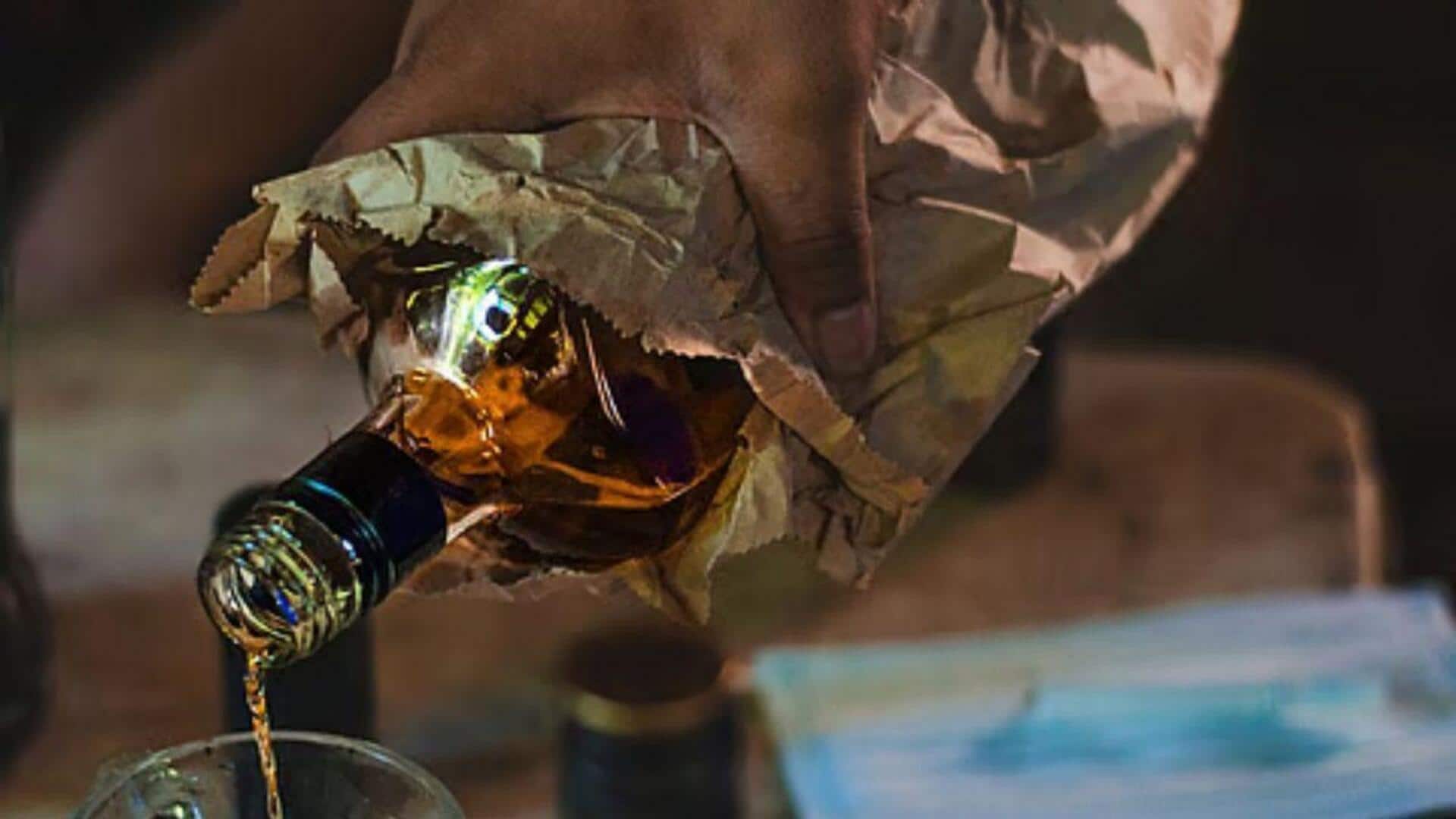
At least nine people have died at the Civil Hospital in Tuensang, Nagaland, after allegedly consuming spurious liquor, NDTV reported. The incident has led to a state-wide red alert issued by the Director General of Police (DGP), Rupin Sharma. The DGP said that the deaths are suspected to be caused by spurious liquor and an investigation is underway. Sharma has advised people not to consume liquor in Mon, Mokokchung, Tuensang, Longleng, Kiphire, Shamator, and Noklak districts.
Advisory issued
DGP issues warning to avoid liquor consumption
Sharma also urged residents of other districts to refrain from drinking until the situation is clarified.
The incident has once again brought attention to the Nagaland Liquor Total Prohibition Act, 1989, which was implemented in 1990.
The Act was intended to bring about social change and curb domestic violence and crime related to alcohol, following demands from the church and civil societies.
Law review
Questions over Nagaland Liquor Total Prohibition Act
However, after 35 years of enforcement, NLTP is widely viewed as having failed to achieve its intended objectives.
Advisor for Excise Moatoshi Longkumer admitted in the State Assembly that illegal liquor outlets thrive in Dimapur and Kohima under the guise of cold drink and pan shops.
A survey found over 500 such outlets in Kohima's 19 wards.
Black market
Illegal liquor outlets thrive in Dimapur and Kohima
The Excise Department report presented in the Assembly highlighted serious negative consequences of spurious liquor.
Without quality control, spurious, adulterated, and inferior-quality liquor floods the market, leading to early deaths of youth.
Liquor mafias take advantage of Nagaland's porous border with Assam, setting up bases in border towns like Lahorijan, whose economy thrives on supply to Nagaland.
With liquor going underground and becoming expensive, many youths have turned to cheaper but deadlier substitutes like drugs and narcotics.
System overhaul
NLTP has failed to achieve its intended objectives
The state also loses hundreds of crores in excise revenue annually due to this.
Chief Minister Neiphiu Rio had said that while the government can regulate the sale and flow of liquor, it cannot prohibit individuals from drinking as it's a personal choice.
Several organizations have demanded scrapping NLTP in its current form for a tightly regulated licensing system with district-wise capping, ward veto power near schools/religious places, age verification restrictions, high excise duty earmarked for de-addiction/rehabilitation programs.