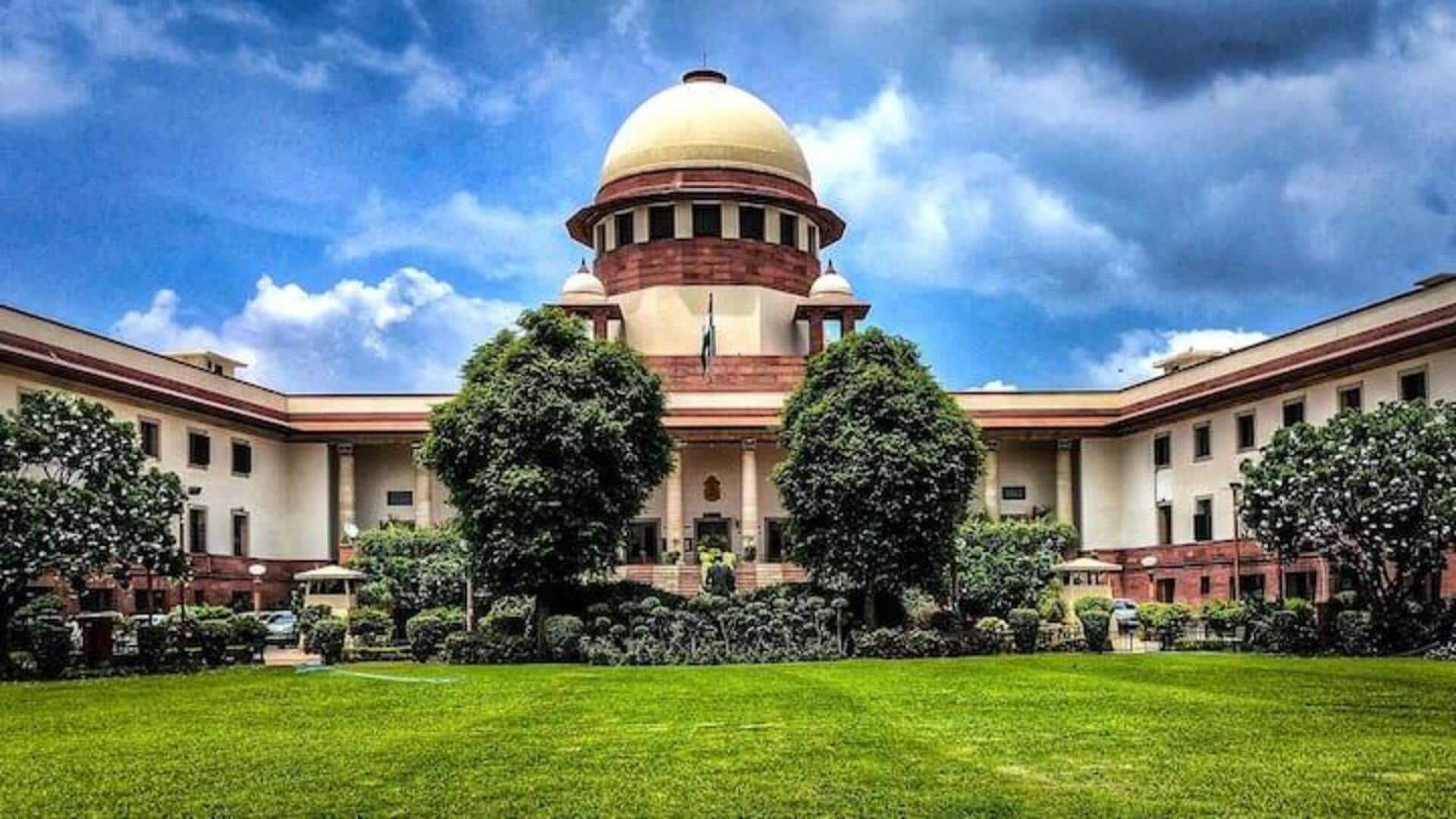
Scheduled Caste status restricted to Hindus, Sikhs, and Buddhists: SC
What's the story
The Supreme Court has ruled that once a person converts to Christianity and actively professes and practices the faith, he cannot continue to be a member of the Scheduled Caste community. The ruling was pronounced while upholding an Andhra Pradesh High Court order. The court held that no one who practices a religion other than Hinduism, Sikhism, or Buddhism can be considered a member of a Scheduled Caste.
Legal proceedings
Case filed under SC/ST Act
The case was related to a pastor who converted to Christianity and filed a complaint under the Scheduled Caste, Scheduled Tribe (Prevention of Atrocities) Act. He alleged assault by certain persons but was challenged on his SC status due to his conversion.
The Andhra Pradesh High Court had earlier ruled that caste is not applicable in Christianity, thus barring protection under the SC/ST Act for converts.
Court ruling
Pastor had been practicing Christianity for over a decade
Today, a bench of Justices Prashant Kumar Mishra and NV Anjaria observed that the pastor had not reconverted to his original religion or been accepted back into the Madika community.
The court noted that he had been practicing Christianity for over a decade and was conducting regular Sunday prayers and prayer meetings at the house.
"These concurrent facts leave no room of doubt that he continued to remain a Christian on the date of the occurrence," the bench said.
Legal argument
Petitioner and respondents' arguments
The petitioner had argued that the SC/ST Act's applicability was wrong, as the complainant had converted to Christianity.
He cited the Constitution (Scheduled Castes) Order, 1950, which states no one professing a religion other than Hinduism is considered a Scheduled Caste member.
However, respondents argued against this by presenting witness statements and a caste certificate issued by Pittalavanipalem Mandal's Tahsildar.