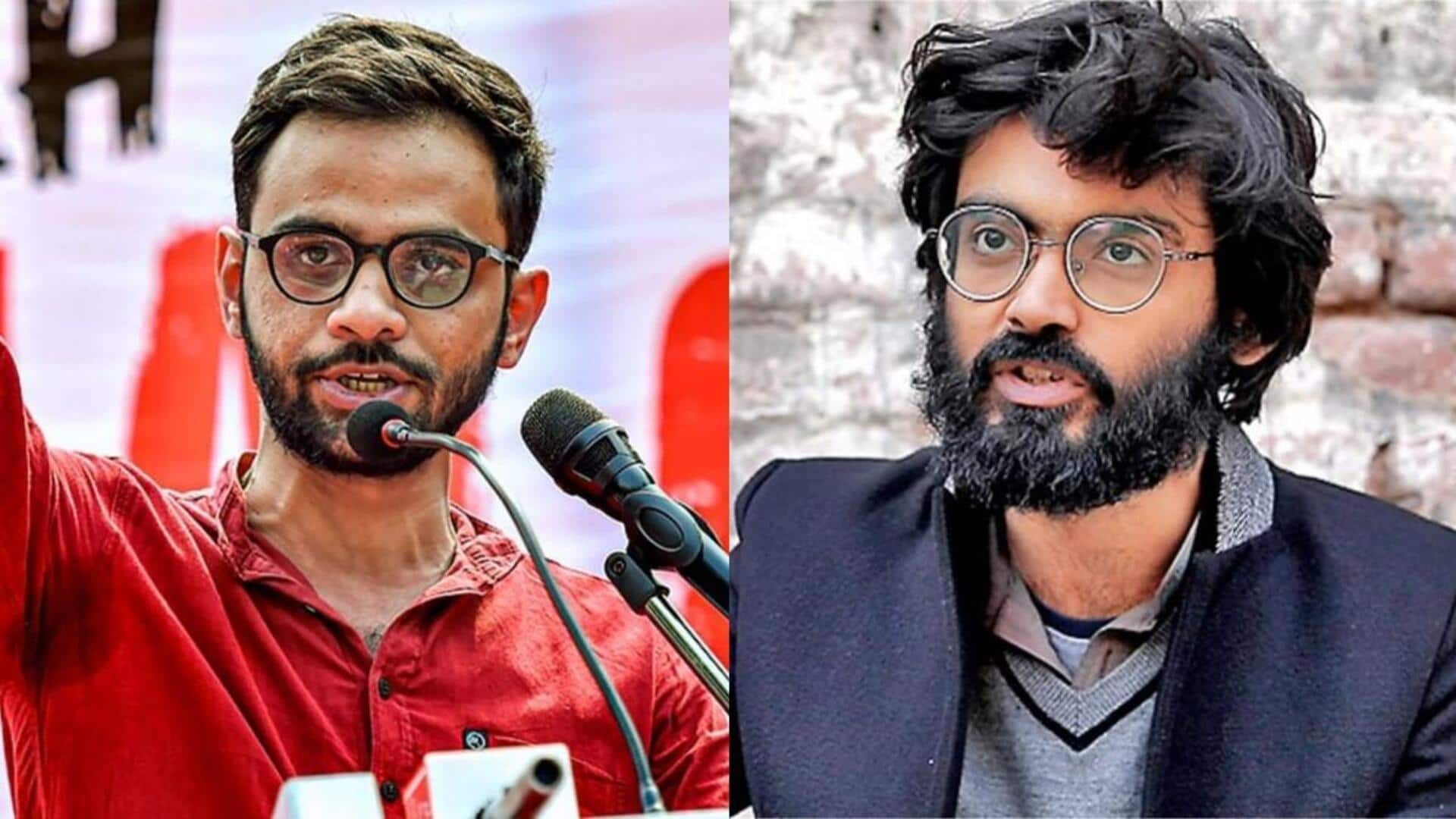
Why SC denied bail to Umar Khalid, Sharjeel Imam
What's the story
The Supreme Court on Monday denied bail to 2020 Delhi riots accused Umar Khalid and Sharjeel Imam, who have been in custody for over five years. The court ruled that a delay in trial cannot be used as a "trump card" for granting bail. Justices Aravind Kumar and NV Anjaria observed that both Khalid and Imam played a "central role" in the alleged conspiracy behind the riots.
Court
What prosecution materials disclosed
The court observed that prosecution materials prima facie disclosed "a central and formative role" and "involvement in the level of planning, mobilization and strategic direction extending beyond episodic and localized acts."
The court, however, granted bail to five other accused in the case: Gulfisha Fatima, Meeran Haider, Mohammad Saleem Khan, Shadab Ahmed and Shifa ur Rehman.
At the same time, the court stressed that granting them bail doesn't dilute allegations against them.
Bail conditions
Court grants bail to 5 co-accused
The five will be released on around 12 conditions and any violation may lead to cancellation of their bail.
The court noted that all the defendants are not on the same footing because their roles differ.
The bench said, "Umar Khalid and Sharjeel Imam stand on a qualitatively different footing as compared to other accused."
The court allowed Khalid and Imam to apply for bail again after the examination of protected witnesses or after one year from the present order.
Legal perspective
Court's stance on trial delays and national security
The Supreme Court also examined issues related to prolonged incarceration and the Unlawful Activities (Prevention) Act (UAPA).
It reiterated that while the right to a speedy trial is constitutional, delays in prosecution cannot be treated as punishment.
The court emphasized that national security allegations require heightened judicial scrutiny and each accused's role under UAPA must be carefully evaluated.
Case background
Accused's charges and Supreme Court challenge
Khalid, Imam and others are accused of masterminding the 2020 northeast Delhi riots, which left 53 dead and over 700 injured.
The violence erupted during protests against the Citizenship (Amendment) Act (CAA) and National Register of Citizens (NRC).
The accused moved the SC after the Delhi High Court denied them bail on September 2.
On December 10, the apex court reserved its verdict after detailed arguments from all parties involved in the case.