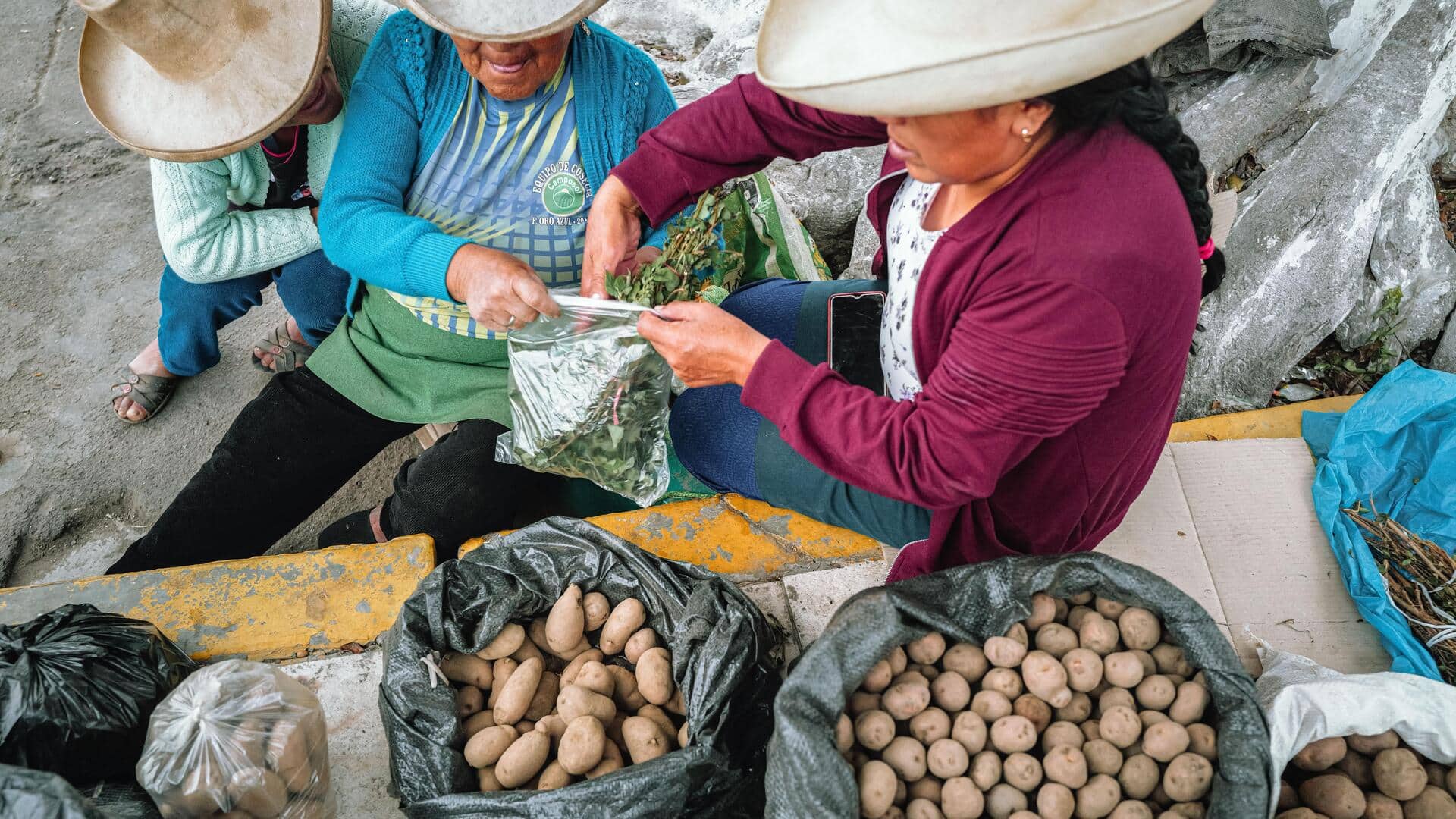
Surprising ways Peru celebrates potatoes
What's the story
Peru is famous for its rich cultural heritage, which is reflected in its unique potato traditions. The country, which grows over 4,000 varieties of potatoes, has a deep-rooted connection with this staple food. Potatoes are not just an important part of the Peruvian diet but also a part of its cultural identity. Here are four potato traditions that highlight Peru's culinary and cultural richness.
Festival
The potato festival celebration
Every year, various regions in Peru celebrate festivals dedicated to potatoes. These festivals highlight the importance of this tuber in local agriculture and cuisine.
The events include parades, music, dance performances, and cooking competitions centered around potatoes.
They serve as a platform for communities to come together and celebrate their heritage while educating visitors about the diverse potato varieties grown in Peru.
Cuisine
Traditional potato dishes
Peruvian cuisine features a plethora of traditional dishes that highlight potatoes as the star ingredient.
From causa, a layered dish made with mashed potatoes and fillings, to papa a la huancaina, boiled potatoes slathered with a spicy cheese sauce, these dishes highlight the versatility of potatoes in Peruvian cooking.
Each dish has its own regional twist, making it a culinary journey across the country.
Agriculture
Agricultural practices passed down through generations
The cultivation of potatoes in Peru has been passed down through generations, with indigenous communities playing a major role in preserving traditional agricultural practices.
These methods include crop rotation and natural fertilization techniques that ensure sustainable farming.
The knowledge is passed down through families, keeping the connection between the land and the people alive.
Culture
Cultural significance beyond food
In Peru, potatoes are more than just food; they are a part of cultural rituals and traditions.
They are used as offerings during festivals and ceremonies, symbolizing abundance and fertility.
This cultural significance emphasizes the deep-rooted connection between Peruvians and their agricultural heritage.