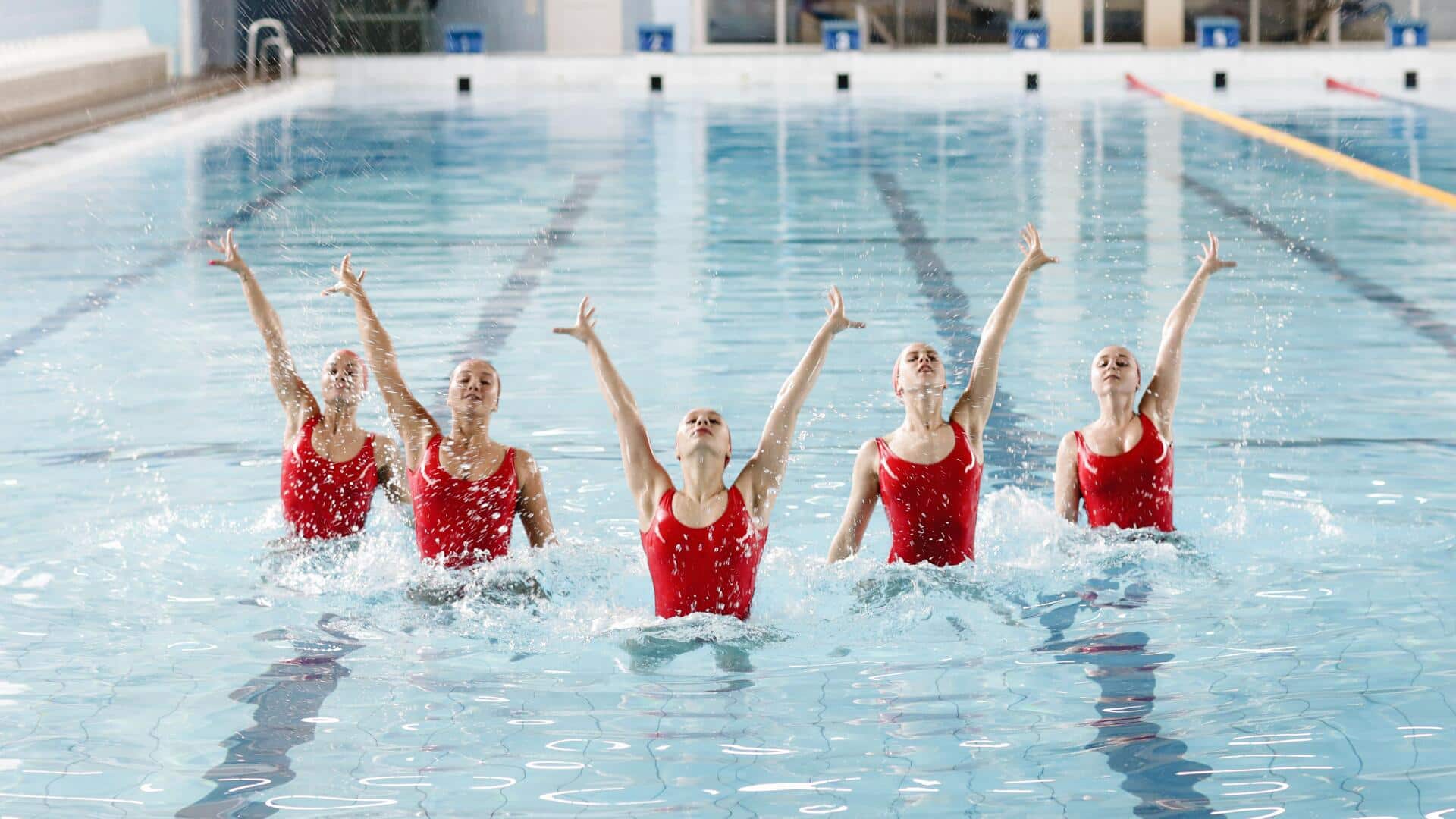
Rhythmic swimming: A unique workout with many benefits
What's the story
Rhythmic swimming, or synchronized swimming, is a unique combination of swimming, dance, and gymnastics. It is performed in water and requires a lot of skill, coordination, and endurance. Apart from being an artistic sport, rhythmic swimming has several health benefits that can improve physical and mental well-being. Here are five amazing health benefits of rhythmic swimming that may surprise you.
#1
Enhances cardiovascular health
Rhythmic swimming is an excellent cardiovascular workout. It keeps the heart pumping as swimmers perform routines in the water.
This regular aerobic exercise enhances blood circulation and increases lung capacity.
Regular participation can lead to lower resting heart rates and improved overall cardiovascular health.
#2
Builds muscular strength
The resistance offered by water is an important factor in building muscular strength through rhythmic swimming.
Swimmers use their muscles to perform various movements against this resistance, which helps in toning and strengthening muscles all over the body.
From arms to core to legs, every part gets a workout.
#3
Improves flexibility
Flexibility is an important aspect of rhythmic swimming, as athletes need to perform complex routines that require a wide range of motion.
The dynamic movements involved in the sport help stretch muscles and joints, improving flexibility over time.
This increased range of motion can help prevent injuries and improve overall mobility.
#4
Boosts mental health
Engaging in rhythmic swimming also has mental health benefits.
The concentration required for routines, coupled with the rhythmic nature of the sport, can be meditative. It reduces stress levels and enhances mood.
The social aspect of team routines also fosters camaraderie and support among participants.
#5
Enhances coordination skills
Rhythmic swimming requires precise timing and coordination between body movements and music beats or signals from coaches.
Practicing these routines regularly enhances coordination skills significantly, and it translates into better balance and motor control outside the pool as well.