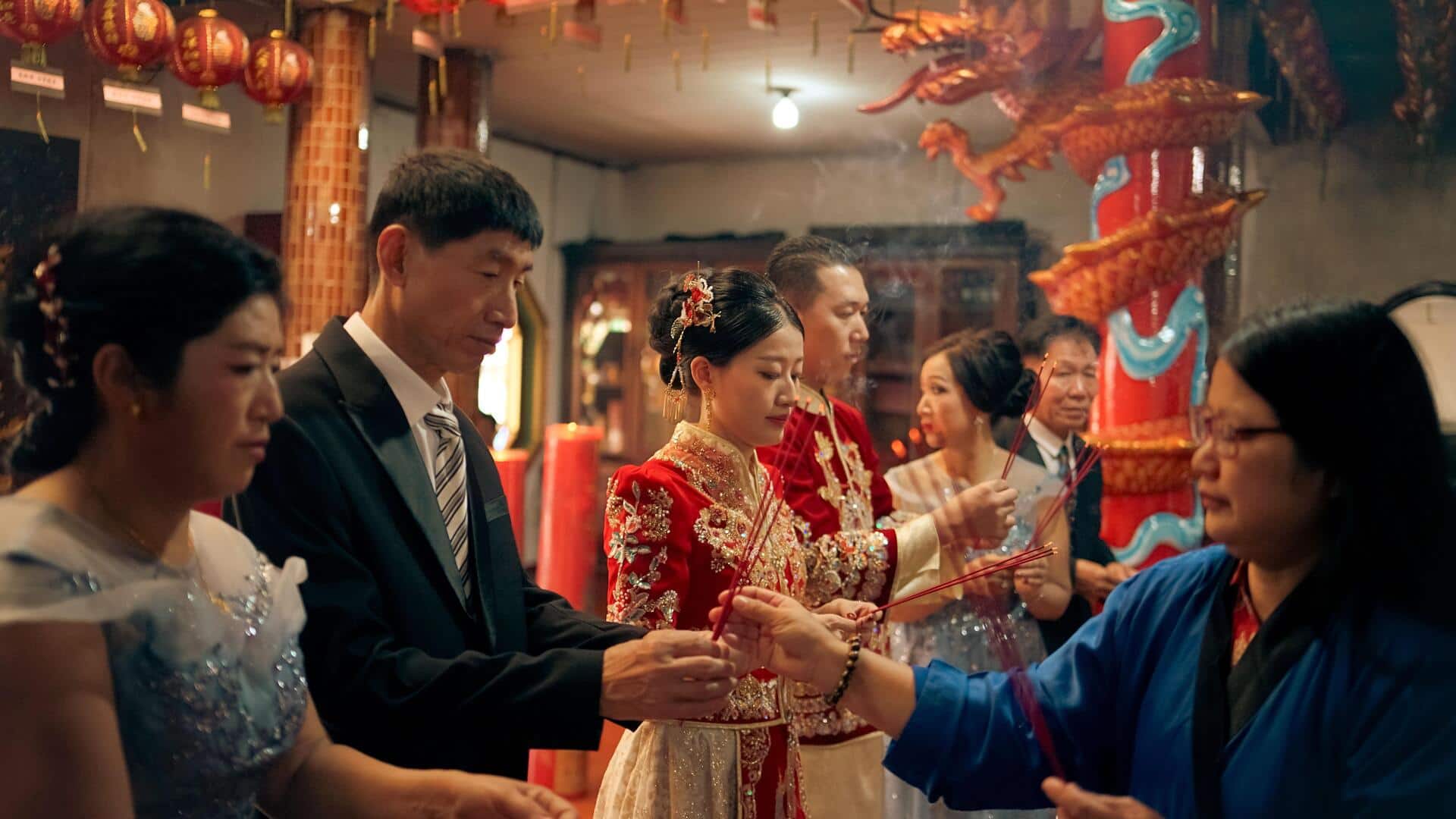
How traditional Chinese weddings are celebrated
What's the story
Chinese weddings are steeped in rich traditions and customs that have been passed down through generations. These age-old practices are not just a celebration of love, but also a homage to cultural heritage and family values. From the selection of auspicious dates to intricate rituals, each element has its own significance. Here are five ancient Chinese wedding customs that continue to be an integral part of marital celebrations today.
#1
The importance of auspicious dates
Choosing an auspicious date for the wedding is extremely important in Chinese culture.
Families consult lunar calendars and fortune tellers to find a date that is favorable according to their zodiac signs.
The right date is believed to bring good luck and prosperity to the couple's future together.
This practice highlights the importance placed on harmony with time and celestial influences in traditional Chinese beliefs.
#2
The role of betrothal gifts
Betrothal gifts, or guo da li, are exchanged between families before the wedding ceremony.
These gifts usually include items such as jewelry, tea sets, and other tokens of goodwill.
The value of these gifts is symbolic rather than monetary, representing respect between families and commitment to the marriage.
This custom emphasizes familial bonds and mutual respect in Chinese society.
#3
Red envelopes as symbols of luck
Red envelopes containing money are given as gifts during Chinese weddings, symbolizing luck and prosperity for the newlyweds.
The color red is auspicious in Chinese culture, representing happiness and good fortune.
Guests give these envelopes with well-wishes for a prosperous future together.
This tradition highlights community support for couples starting their journey together.
#4
Tea ceremony: A family ritual
The tea ceremony is a significant ritual where the bride and groom serve tea to their elders as a mark of respect and gratitude.
In return, elders give blessings or gifts like jewelry or money wrapped in red envelopes.
This custom reinforces family ties by acknowledging parental roles while welcoming new members into extended families.
#5
Bridal procession traditions
Traditionally, a bridal procession involves elaborate rituals, including carrying the bride in a sedan chair or palanquin, decorated with red cloths, symbolizing protection against evil spirits.
The groom waits at the venue, where they exchange vows under a canopy, surrounded by loved ones, who celebrate with music, dance, and feasting, marking the joyous union of two families.