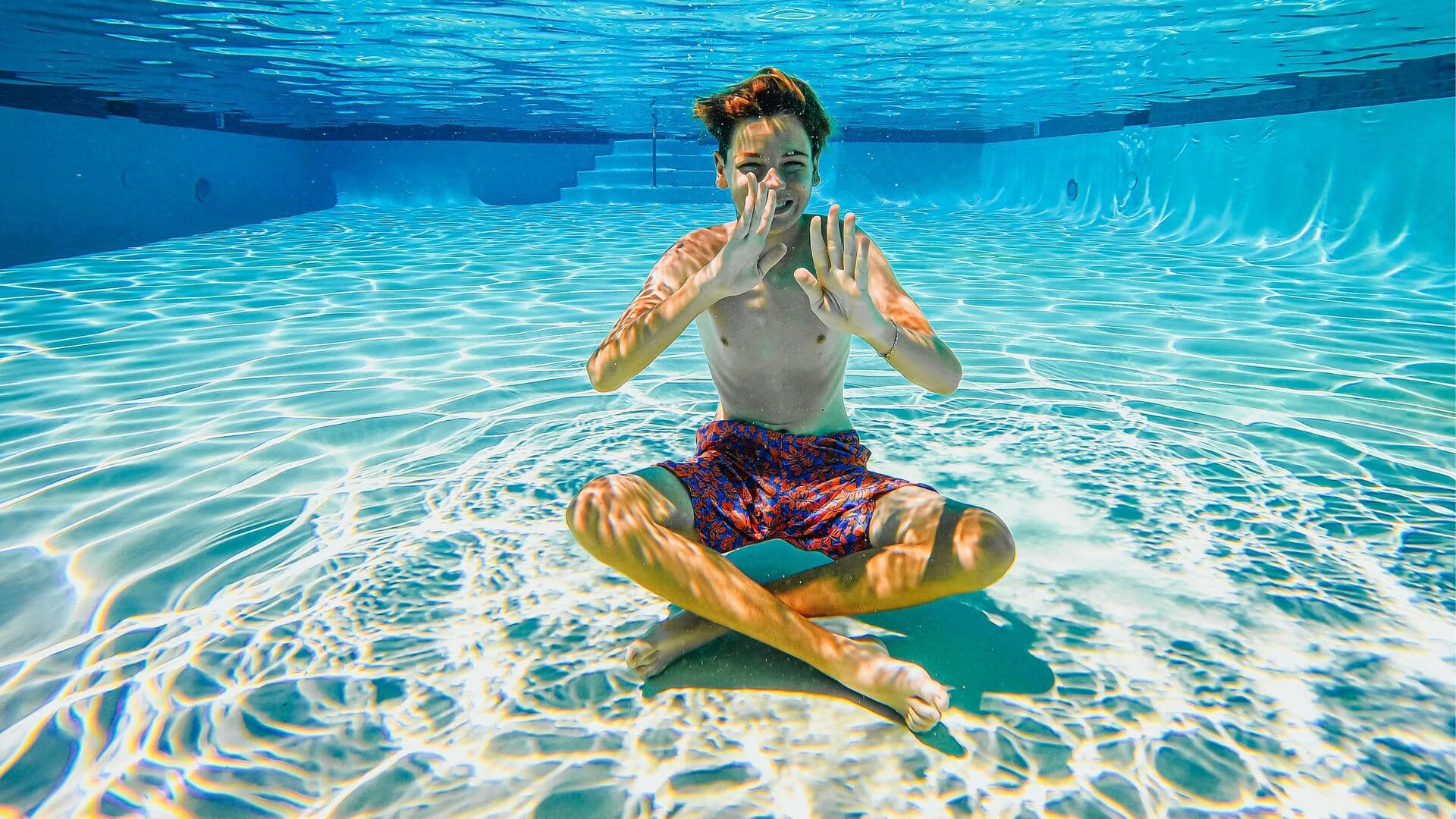
5 benefits of practicing tai chi underwater
What's the story
Practicing tai chi underwater is an innovative way to improve your health and well-being. The gentle movements of tai chi, combined with the resistance of water, provide a unique workout that can be beneficial for both physical and mental health. Here are five surprising benefits of practicing tai chi underwater that you may not have considered before.
#1
Enhanced muscle strength
The resistance offered by water makes tai chi exercises more effective in building muscle strength.
When you perform tai chi movements underwater, your muscles work harder to move against the resistance, leading to improved muscle tone and strength over time.
This benefit is especially useful for those looking to build strength without putting too much strain on their joints.
#2
Improved balance and coordination
Practicing tai chi underwater can significantly enhance balance and coordination.
The buoyancy of water helps stabilize the body while performing slow, deliberate movements.
This environment allows practitioners to focus on their posture and alignment, resulting in better balance skills that can translate into improved coordination in daily activities.
#3
Reduced stress levels
The calming nature of tai chi is amplified when practiced underwater.
The soothing effects of water, combined with the meditative movements of tai chi, help reduce stress levels effectively.
This practice encourages relaxation by lowering cortisol levels and promoting a sense of tranquility, making it an excellent way to manage stress.
#4
Increased flexibility
Water's natural resistance allows for a greater range of motion during tai chi exercises, which can help improve flexibility over time.
The gentle stretching involved in these movements helps loosen tight muscles and joints without causing discomfort or injury.
Practicing regularly can lead to increased flexibility and mobility.
#5
Enhanced cardiovascular health
Engaging in underwater tai chi provides cardiovascular benefits similar to other aerobic exercises, but with less impact on the joints.
The continuous movement required in this practice elevates heart rate moderately while improving circulation throughout the body.
Regular sessions may contribute positively towards maintaining heart health and overall endurance levels.