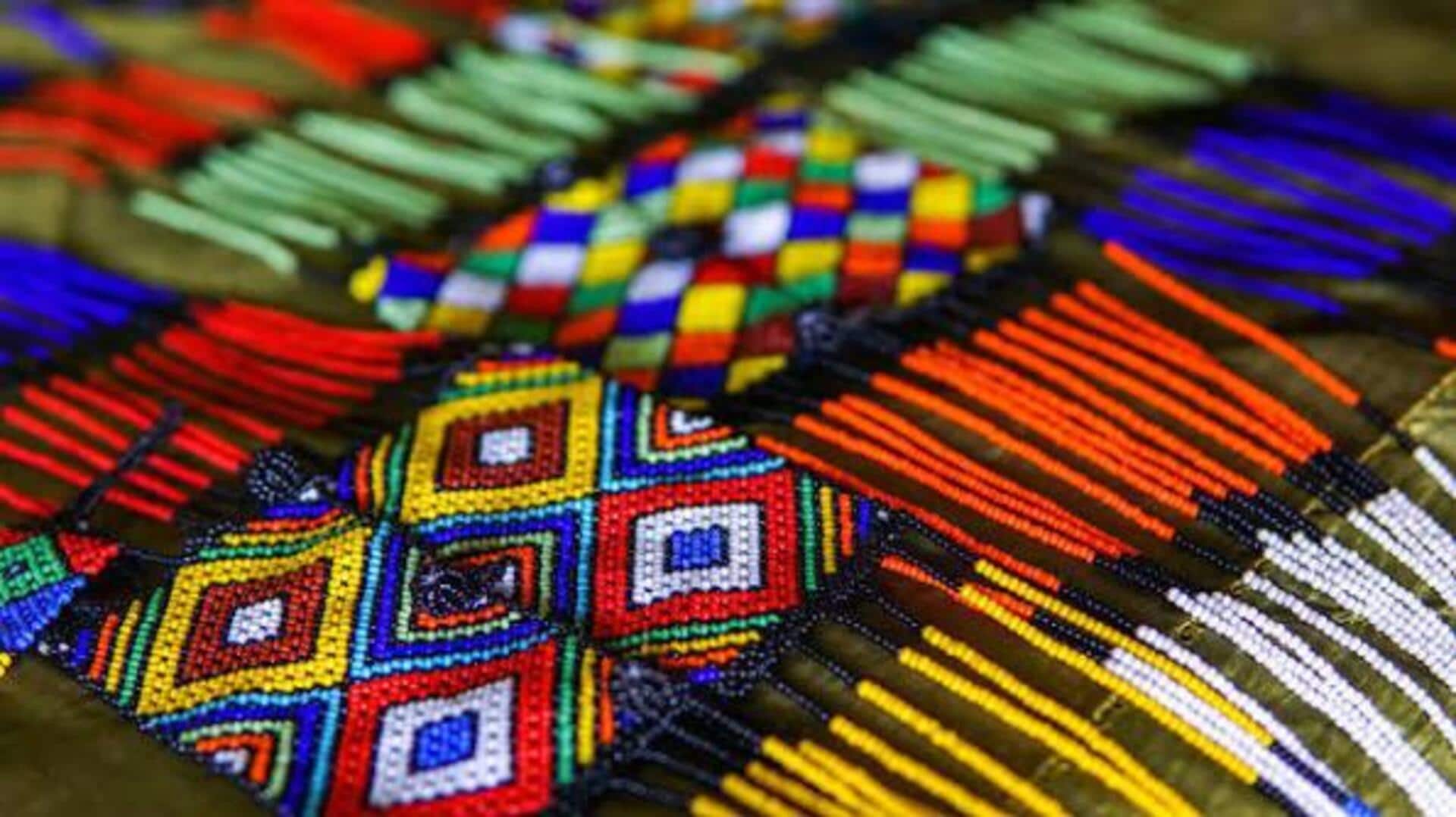
5 African cultures that celebrate beadwork
What's the story
African beaded jewelry is a fascinating world of cultural expression and artistry. Each piece tells a story, representing the traditions and values of different African communities. From the intricate patterns to the vibrant colors, these jewelry styles are not just adornments but also carry deep cultural significance. Exploring these styles offers a glimpse into Africa's rich heritage and diverse artistic traditions.
Maasai style
Maasai beadwork: A symbol of identity
Maasai beadwork is famous for its bright colors and geometric patterns.
The Maasai people of Kenya and Tanzania use beads to signify social status, age, and marital status.
Each color has a meaning; red may symbolize bravery, while blue could represent energy.
The intricate designs are worn during ceremonies and rituals, making them an important part of Maasai identity.
Zulu style
Zulu beaded necklaces: A mark of status
Zulu beaded necklaces are known for their bold designs and symbolic meanings.
Worn mainly by women, these necklaces indicate social standing or life events, like marriage or initiation into adulthood.
The patterns can also signify protection or fertility blessings.
Zulu beadwork is characterized by its use of white beads for purity and black beads for strength.
Tuareg style
Tuareg Cross: A desert symbol
The Tuareg people of North Africa wear the famous Tuareg cross as a mark of their nomadic lifestyle in the Sahara Desert.
Made from silver or other metals, the cross is said to symbolize faith and protection against the harsh desert environment.
The design is often engraved with intricate patterns that reflect Tuareg artistry.
Ashanti style
Ashanti Gold weights: Historical significance
Ashanti gold weights were used in Ghana to measure gold dust before currency was introduced.
These small sculptures made from brass or bronze depict animals or human figures that hold cultural significance for the Ashanti people.
While they served practical purposes, they also represented wealth and power within the Ashanti Kingdom.
Ndebele style
Ndebele painted beads: Vibrant artistry
The Ndebele community in South Africa is famous for its colorful painted beads, which are a part of their vibrant culture.
These beads are used to embellish clothing and accessories, adding a pop of color to traditional attire.
The Ndebele patterns are a feast for the eyes, and a reflection of the community's artistic expression.