5 kitchen hygiene tips every beginner should know
What's the story
Maintaining hygiene in the kitchen is essential for health and wellness. For beginners, it may seem overwhelming, but with a few simple habits, you can ensure a clean and safe cooking environment. Here are five easy kitchen hygiene tips that are perfect for beginners. These tips will help you keep your kitchen organized, reduce the risk of foodborne illnesses, and create a pleasant cooking space.
Tip 1
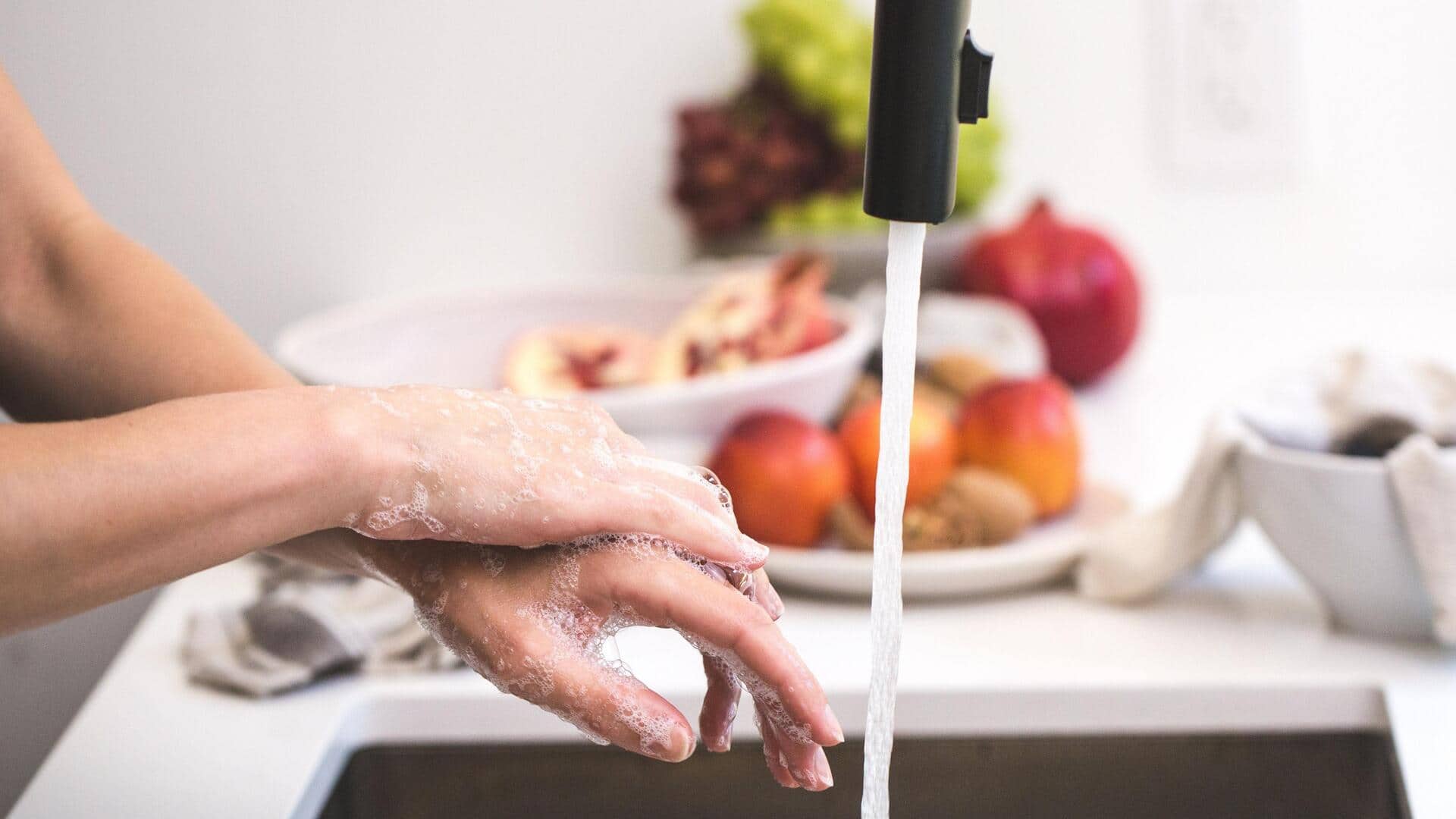
Always wash your hands
Washing hands is the most important part of kitchen hygiene.
Always wash your hands with soap and water before and after handling food. This practice prevents the transfer of bacteria from hands to food items.
Keep a handwashing station near the sink to make it easy to wash hands frequently during meal preparation.
Tip 2
Keep surfaces clean
Keeping surfaces clean is key to keeping your kitchen hygienic.
Wipe down countertops, tables, and cutting boards with a disinfectant after every use.
Do not forget to sanitize surfaces that come in contact with raw food items, as they are more prone to contamination.
A clean surface prevents cross-contamination and keeps your food safe.
Tip 3
Store food properly
Proper food storage is essential to keep it fresh and safe from contamination.
Always store perishable items in the refrigerator at or below four degrees Celsius (39 degrees Fahrenheit).
Use airtight containers for dry goods to keep them fresh and prevent pests from getting in.
Label containers with dates so you know when they were stored.
Tip 4
Separate raw and cooked foods
Separating raw and cooked foods is key to preventing cross-contamination.
Always use separate cutting boards for raw seafood and vegetables/fruits.
Store raw foods on lower shelves in the refrigerator to prevent juices from dripping onto other items.
This practice keeps your meals safe from harmful bacteria.
Tip 5
Regularly clean kitchen tools
Cleaning kitchen tools regularly is important to prevent the spread of bacteria.
Wash knives, spatulas, and measuring cups after every use with hot soapy water or in a dishwasher if possible.
Pay special attention to cleaning reusable cloths or sponges, as they can harbor germs if not cleaned properly.