Surprising health benefits of slackline balancing
What's the story
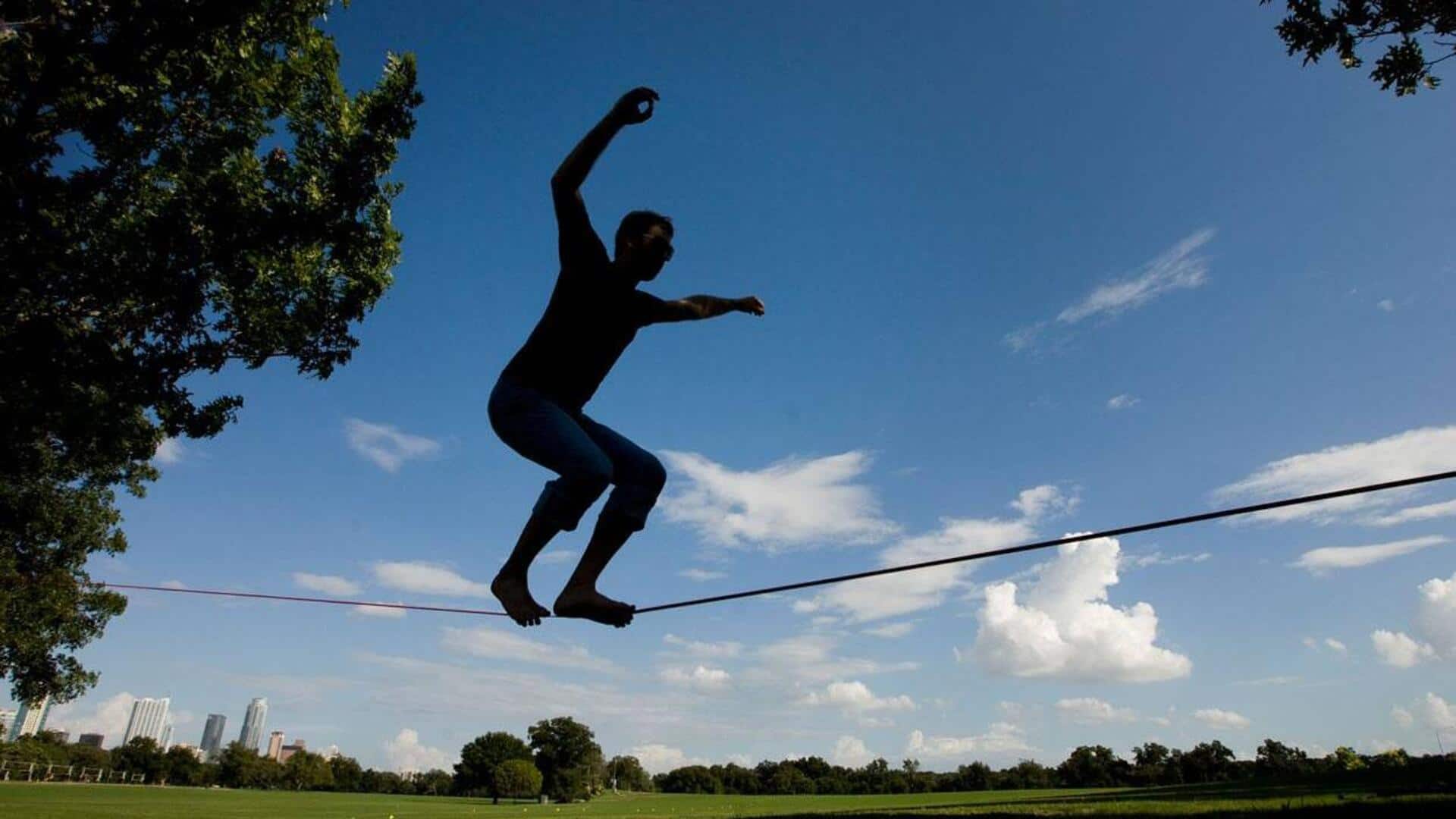
Slackline balancing, a fun activity that involves walking on a narrow, flexible piece of webbing anchored between two points, is becoming increasingly popular. It not only improves balance and coordination but also has a number of health benefits. From improving core strength to enhancing mental focus, slacklining can be an effective way to stay fit. Here are five surprising health benefits of slackline balancing.
Core Power
Improves core strength
Slacklining requires constant adjustments to maintain balance, which engages the core muscles.
This continuous engagement helps strengthen the abdominal and lower back muscles over time.
A strong core is essential for overall stability and can improve performance in other physical activities.
Mind Focus
Enhances mental focus
The concentration required to walk on a slackline is intense. It improves mental focus and attention span.
Practicing this activity regularly can help sharpen cognitive functions and improve one's ability to concentrate on tasks outside of slacklining.
Heart health
Boosts cardiovascular health
While slacklining may not seem like a cardiovascular workout, it does elevate your heart rate as you try to maintain balance.
This mild aerobic activity can improve cardiovascular health by increasing blood circulation and promoting heart health.
Flexibility gain
Increases flexibility
Walking on a slackline involves a range of motion that stretches different muscle groups.
This helps improve flexibility over time, making it easier to perform daily activities and reducing the risk of injuries related to tight muscles or joints.
Mindful movement
Promotes mindfulness
Slacklining is an activity that requires you to be present in the moment, which is at the core of mindfulness practices.
It encourages you to focus on your breathing and body movements, which reduces stress levels and promotes relaxation.
This mindful approach not only improves your mental well-being but also makes you more aware of your body's needs and responses during the activity.