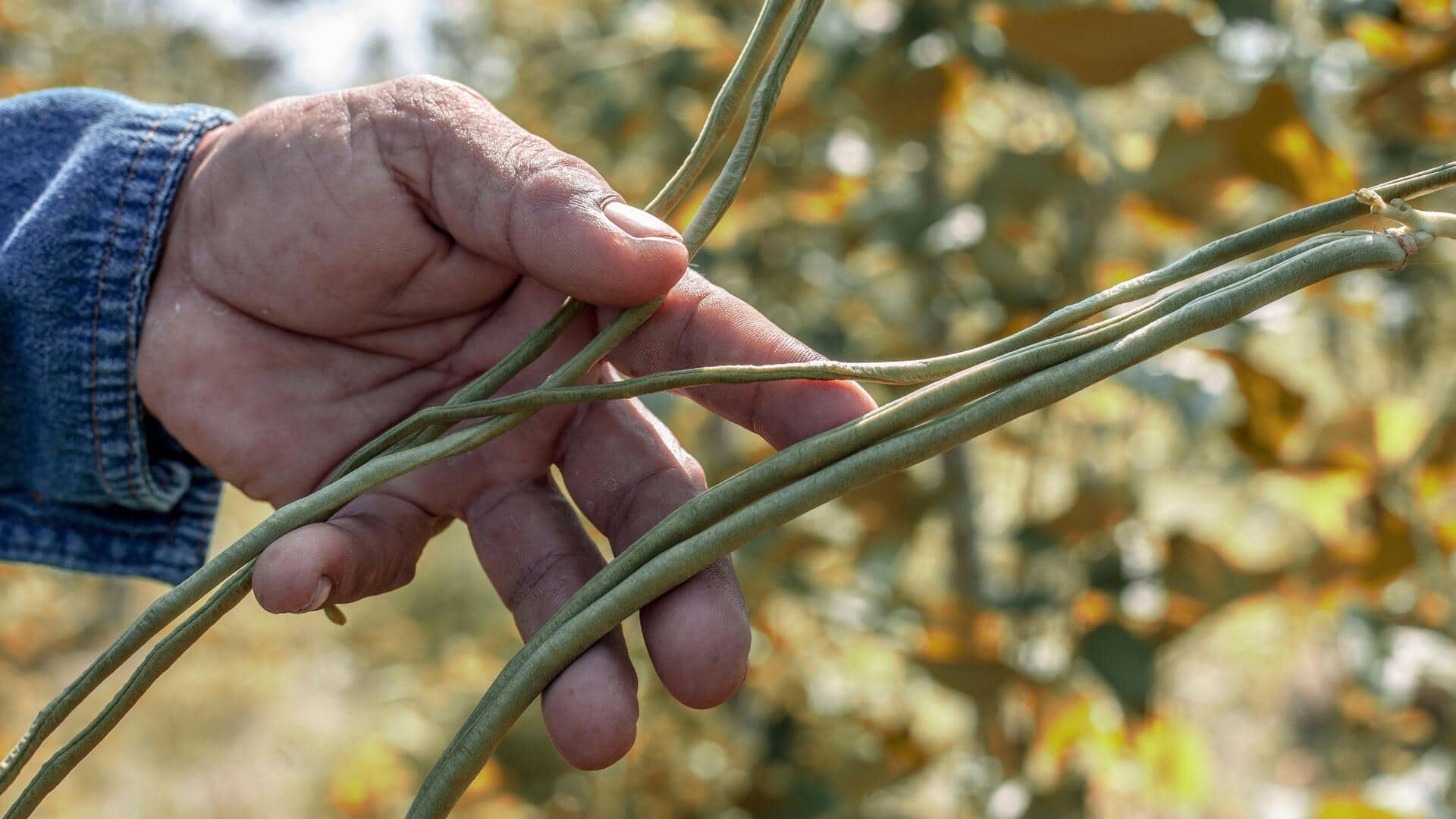
Healthy eating? Start with these 4 heritage beans
What's the story
Heritage beans are a staple in many African cuisines, offering unique flavors and nutritional benefits. These beans have been cultivated for generations, often using traditional methods that preserve their distinct characteristics. They are not just essential for traditional dishes but also provide a rich source of protein and fiber. Exploring these heritage beans can enhance culinary experiences while supporting sustainable agriculture practices.
#1
Cowpeas: A versatile legume
Cowpeas are a staple in many African countries. They are famous for their adaptability to different climates and soils.
Cowpeas can be used in stews, soups, or salads. They are also rich in protein and essential nutrients such as iron and folate.
Cowpeas can also be used to make flour for baking or thickening agents for sauces.
#2
Bambara groundnuts: Nutrient-rich seeds
Bambara groundnuts are drought-resistant seeds that grow well in poor soil conditions.
They are packed with protein, fiber, and essential minerals such as calcium and magnesium.
These nuts can be boiled or roasted as snacks or ground into flour for baking.
Their high oil content makes them an excellent source of healthy fats.
#3
Tepary beans: Hardy drought survivors
Tepary beans are famous for their drought resistance, thriving in arid regions where other crops fail.
They come in various colors, including white, brown, and black.
Tepary beans are high in protein and low in fat, making them an ideal choice for health-conscious consumers.
They can be used in soups or stews, or as a side dish with rice or vegetables.
#4
Adzuki beans: Sweet-flavored legumes
Adzuki beans are small red legumes with a slightly sweet flavor profile that complements both savory and sweet dishes alike.
They are commonly used in traditional desserts like puddings or cakes but also pair well with savory ingredients like tomatoes or spices when cooked into curries or casseroles.
Adzuki beans provide good amounts of dietary fiber along with vitamins B1 (thiamine) and B2 (riboflavin).