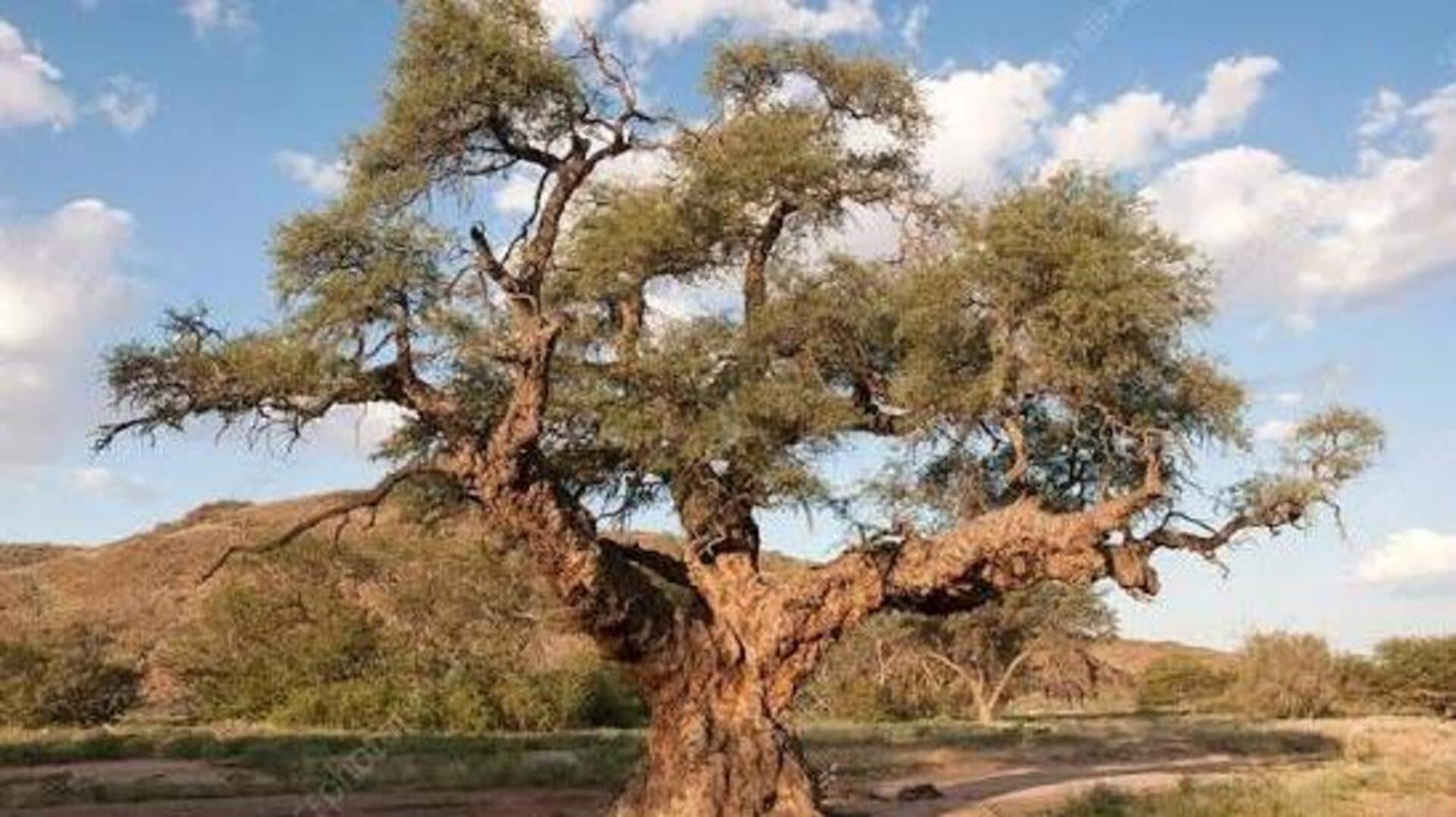
Camel thorn: Why this tree matters in Africa
What's the story
The African camel thorn tree, a resilient species found across the continent, offers a range of practical uses that benefit local communities and ecosystems. Its adaptability to harsh environments makes it an invaluable resource in many regions. Here are five innovative uses of this remarkable tree, highlighting its contributions to daily life and environmental sustainability.
Tip 1
Natural water filtration system
The African camel thorn tree's roots also serve as a natural water filtration system.
The dense network of roots helps filter impurities from water passing through them, making it cleaner for consumption.
This property is especially useful in arid regions where access to clean water is limited.
By utilizing these natural filters, communities can improve their water quality without relying on expensive technology.
Tip 2
Sustainable fuel source
The wood of the African camel thorn tree is dense and burns slowly, making it an excellent source of fuel.
In many rural areas, the tree provides a sustainable alternative to conventional fuels such as charcoal or kerosene.
Using this wood for cooking and heating reduces dependence on nonrenewable resources and helps preserve local forests.
Tip 3
Soil erosion control
Due to their deep root systems, African camel thorn trees play a vital role in controlling soil erosion.
They anchor the soil firmly, preventing it from being washed away by rain or wind.
This is particularly important in areas prone to desertification, as it helps maintain soil health and supports agricultural productivity.
Tip 4
Traditional medicine applications
Various parts of the African camel thorn tree have been used in traditional medicine for centuries.
The bark and leaves are often used to treat ailments such as headaches or digestive issues.
While scientific research on these medicinal properties is still ongoing, the tree remains an integral part of cultural healthcare practices across Africa.
Tip 5
Crafting materials for artisans
Artisans widely use the wood of the African camel thorn tree for crafting purposes, owing to its durability and unique grain patterns.
These characteristics make it perfect for making furniture, decorative items, and tools.
The use of this wood not only supports local craftsmanship but also promotes sustainable practices by making the most of readily available resources.