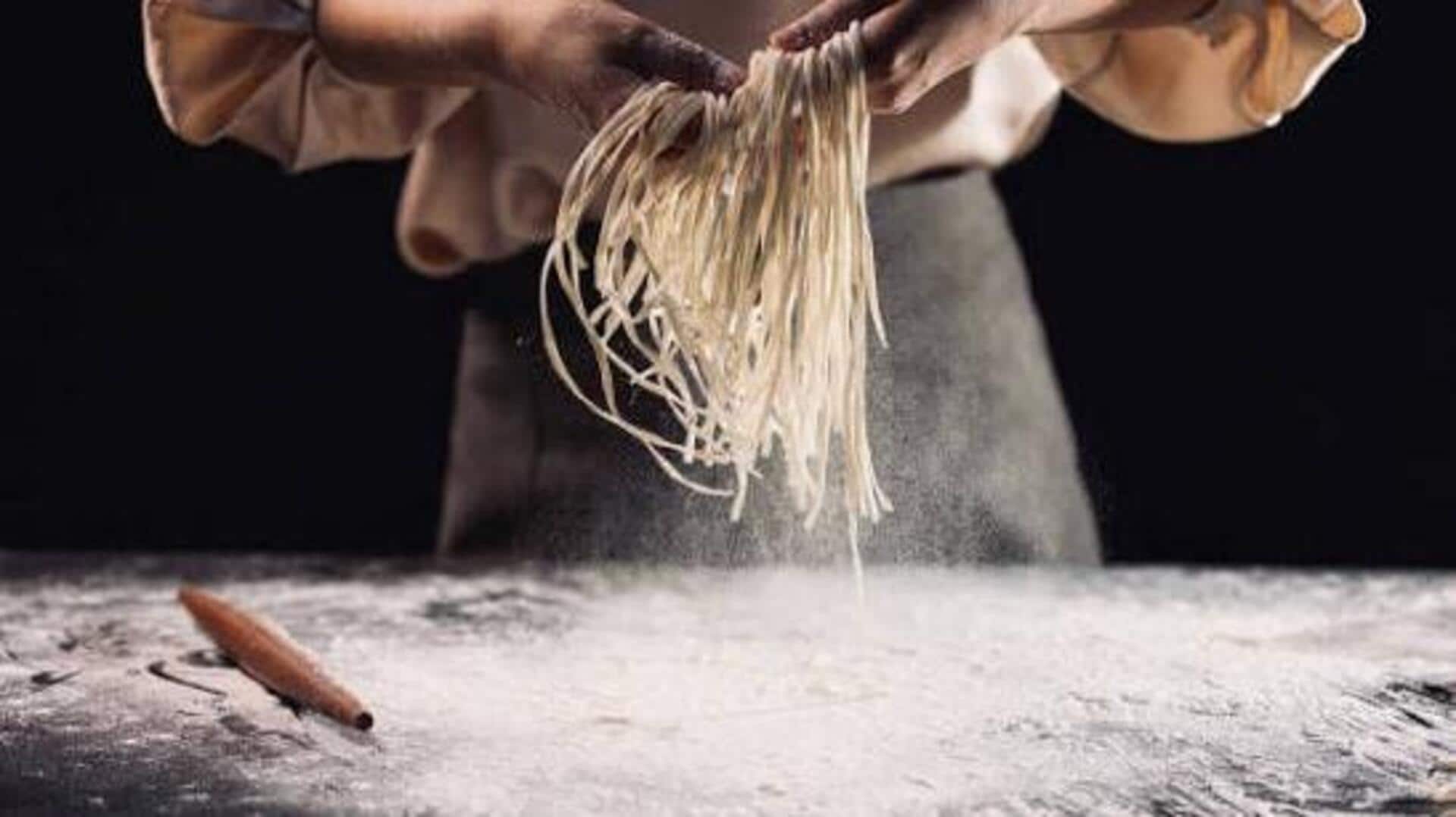
How to make the perfect handmade noodles
What's the story
Crafting handmade noodles is an art that requires precision and the right ingredients. The texture and flavor of your noodles depend largely on the ingredients you choose. While there are many options, five ingredients stand out as essential for making perfect handmade noodles. These ingredients not only enhance the taste but also ensure that your noodles have the right consistency and elasticity. Here are five must-have ingredients for your noodle-making journey.
Flour
High-quality flour
High-quality flour is the foundation of any good noodle recipe.
It is important to choose flour with a high protein content, as it helps develop gluten, giving the noodles their chewy texture.
All-purpose flour or bread flour works well, as they provide the right balance of protein and starch.
Avoid using cake flour, as its low protein content will result in soft and fragile noodles.
Water
Water temperature
Water is another key ingredient in noodle making. The temperature of the water can greatly affect the dough's consistency.
For most noodle recipes, lukewarm water is ideal, as it helps dissolve salt and other additives evenly without affecting gluten formation.
Cold water can be used for certain types of noodles where a firmer texture is desired.
Salt
Salt for flavor
Salt is an important ingredient that adds flavor to your noodles. It also strengthens gluten structure during kneading, making your noodles more elastic.
Use fine sea salt or kosher salt for precise measurement and even distribution throughout the dough.
A general rule of thumb is one teaspoon per cup of flour used.
Baking soda
Baking soda for elasticity
Baking soda is also an important ingredient that increases the elasticity of handmade noodles.
It raises the pH level in the dough, which helps in breaking down proteins and making them stretchier when rolled out or cut into shapes.
Use baking soda sparingly, as too much can alter the taste negatively.
Cornstarch
Cornstarch for dusting
Cornstarch is also a handy ingredient when it comes to preventing your rolled-out dough from sticking to surfaces or each other while storing or cooking them later on.
Just dust lightly over surfaces before laying down sheets of pasta dough, ensuring easy separation when needed, without altering the texture or taste significantly.