These elements used in Indian wedding rituals are so significant
What's the story
Indian weddings are a beautiful blend of culture, traditions, and rituals, with each region having its own unique practices. Among these, the use of natural elements is common, symbolizing prosperity, fertility, and harmony. These elements are not just decorative but also hold deep cultural significance. Here's a look at five natural elements commonly used in Indian wedding rituals.
#1
Mango leaves for prosperity
Mango leaves are a staple in Indian weddings, especially during the ceremony of toran at the entrance of homes.
The leaves are considered auspicious and symbolize prosperity and new beginnings.
They are often strung together and hung at doorways to ward off evil spirits and welcome good fortune.
The vibrant green color of mango leaves adds a fresh touch to the decor, while holding cultural importance.
#2
Rice for fertility and abundance
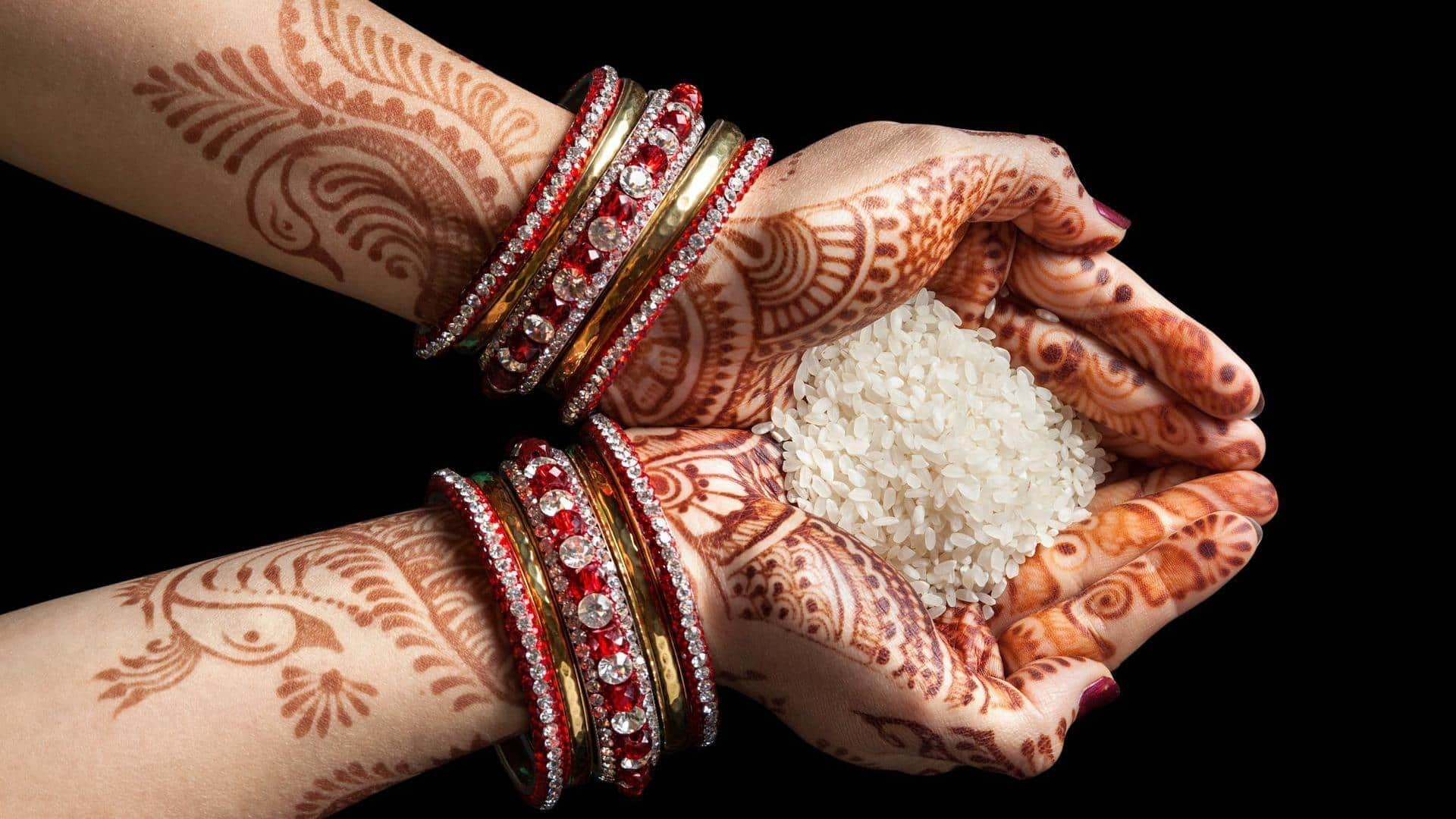
Rice is an integral part of Indian wedding rituals, representing fertility, prosperity, and abundance.
During the ceremony of kanyadaan, rice is often offered as a blessing for the couple's future life together.
It is also used in various other rituals where it is thrown or sprinkled to invoke blessings from deities.
The act of using rice signifies the wish for a bountiful life filled with prosperity.
#3
Coconut for purity and auspiciousness
Coconuts are considered extremely auspicious in Indian culture and are commonly used in wedding ceremonies. They symbolize purity, fertility, and good fortune.
During weddings, coconuts are often offered to deities or exchanged between families as a sign of goodwill.
The act of breaking or offering coconuts is believed to remove obstacles from the couple's path, ensuring a smooth journey ahead.
#4
Turmeric for auspiciousness
Turmeric holds a special place in Indian weddings as it is considered auspicious and purifying.
It is used in rituals such as haldi, where a paste is applied to the bride's and groom's bodies before their wedding day.
This ritual signifies cleansing them of impurities, while blessing them with beauty and health.
The vibrant yellow color of turmeric adds to its symbolic importance during these ceremonies.
#5
Flowers for beauty and blessings
Flowers have always been an integral part of Indian weddings, contributing beauty and fragrance to the celebrations.
They are used in garlands worn by brides and grooms, or as offerings at altars during prayers.
Flowers symbolize divine blessings, love, joy, and harmony between families coming together through marriage.
Their presence enhances both aesthetic appeal and spiritual significance within these events.