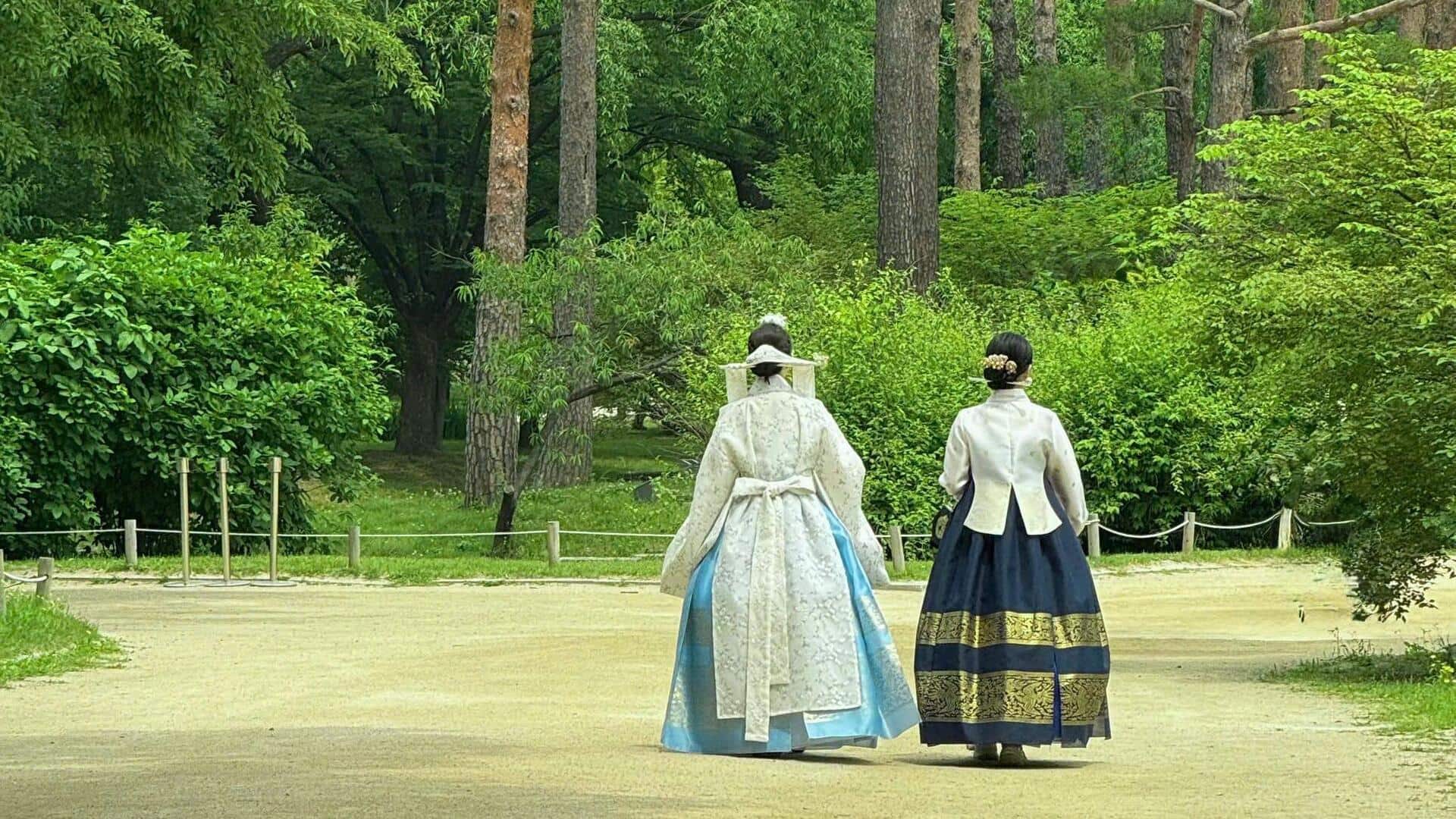
The story behind Korea's traditional hanbok
What's the story
The hanbok, a traditional Korean attire, is famous for its vibrant colors and simple lines. But, there's more to this garment than just its beauty. The hanbok has a rich history and cultural significance that many may not be aware of. From its origins to the symbolism of its colors, here are five surprising facts about the hanbok that highlight its importance in Korean culture.
#1
Origins date back over 600 years
The hanbok's history dates back over 600 years, making it one of the oldest garments still worn today.
It was first worn during the Three Kingdoms period and has since evolved in design and style.
Despite modern influences, the hanbok remains a staple during traditional ceremonies and festivals in Korea.
#2
Symbolism in color choices
Each color worn in a hanbok has its own meaning.
Red symbolizes good fortune, blue represents hope, yellow stands for earth, and white signifies purity.
These colors were chosen carefully to convey specific messages or wishes for the wearer during important events like weddings or celebrations.
#3
Seasonal variations exist
Just like fashion trends around the world, hanboks also have seasonal variations.
In summer, lighter fabrics like ramie are used to keep cool, while winter sees heavier materials like silk or wool blends being used for warmth.
These variations ensure comfort without compromising on tradition.
#4
Modern adaptations are popular
In recent years, we've seen a surge in modern adaptations of the hanbok. Designers have started creating contemporary versions that blend traditional elements with modern aesthetics.
These adaptations are especially popular among younger generations who want to preserve cultural heritage while embracing modernity.
#5
Wearing Hanbok is not just for special occasions
While hanboks are traditionally worn during special occasions like weddings or holidays, they are increasingly worn on a daily basis by some Koreans as a form of cultural pride.
This trend highlights a growing appreciation for traditional attire even in everyday life situations, beyond just formal events.