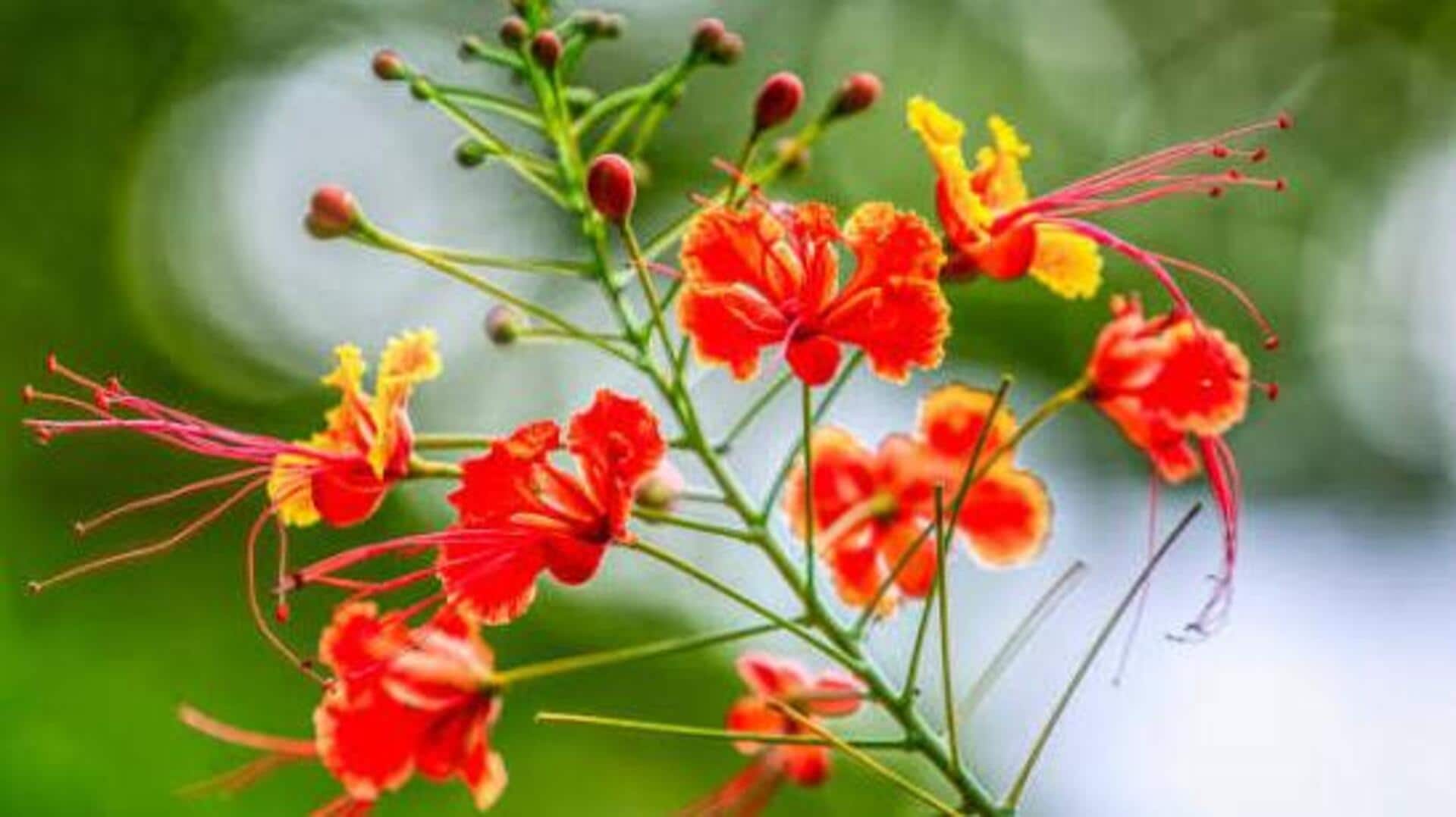
Ever heard of peacock flower?
What's the story
African peacock flower, with its vibrant blooms and unique characteristics, is more than just a pretty face in the garden. This plant, native to Africa, has found its way into various uses beyond ornamental purposes. From traditional medicine to modern applications, the African peacock flower offers a range of benefits that may surprise many. Here are five surprising uses of this fascinating flower.
#1
Traditional medicinal practices
In traditional African medicine, the leaves and flowers of the peacock flower are used for their healing properties.
They are often used in herbal remedies to treat ailments such as skin conditions and digestive issues.
The anti-inflammatory properties of the plant make it a popular choice for natural treatments.
Locally, it is applied topically or consumed as a tea to harness its health benefits.
#2
Natural dye source
The vibrant colors of the African peacock flower can be used as a natural dye for textiles.
The pigments extracted from the petals provide rich hues that are eco-friendly alternatives to synthetic dyes.
Artisans use these natural dyes in traditional fabric-making processes, preserving cultural heritage while promoting sustainable practices.
#3
Ornamental landscaping
Beyond its traditional uses, the African peacock flower is also a favorite in ornamental landscaping.
Its bright colors and unique foliage make it a stunning choice for gardens and public spaces.
The plant's adaptability to different climates makes it an excellent choice for adding a pop of color to landscapes across the world.
#4
Attracting pollinators
The African peacock flower is an excellent source of nectar, attracting various pollinators like bees and butterflies.
By planting these flowers, gardeners can encourage biodiversity in their local ecosystems.
This not only helps in sustaining pollinator populations but also improves the health of surrounding plants through increased pollination rates.
#5
Educational purposes
Due to its unique characteristics and ecological importance, the African peacock flower is often used in educational programs focusing on botany and conservation.
Schools and institutions use this plant to teach about plant biology, ecosystems, and environmental sustainability.
Its inclusion in curricula helps raise awareness about the importance of preserving native flora.