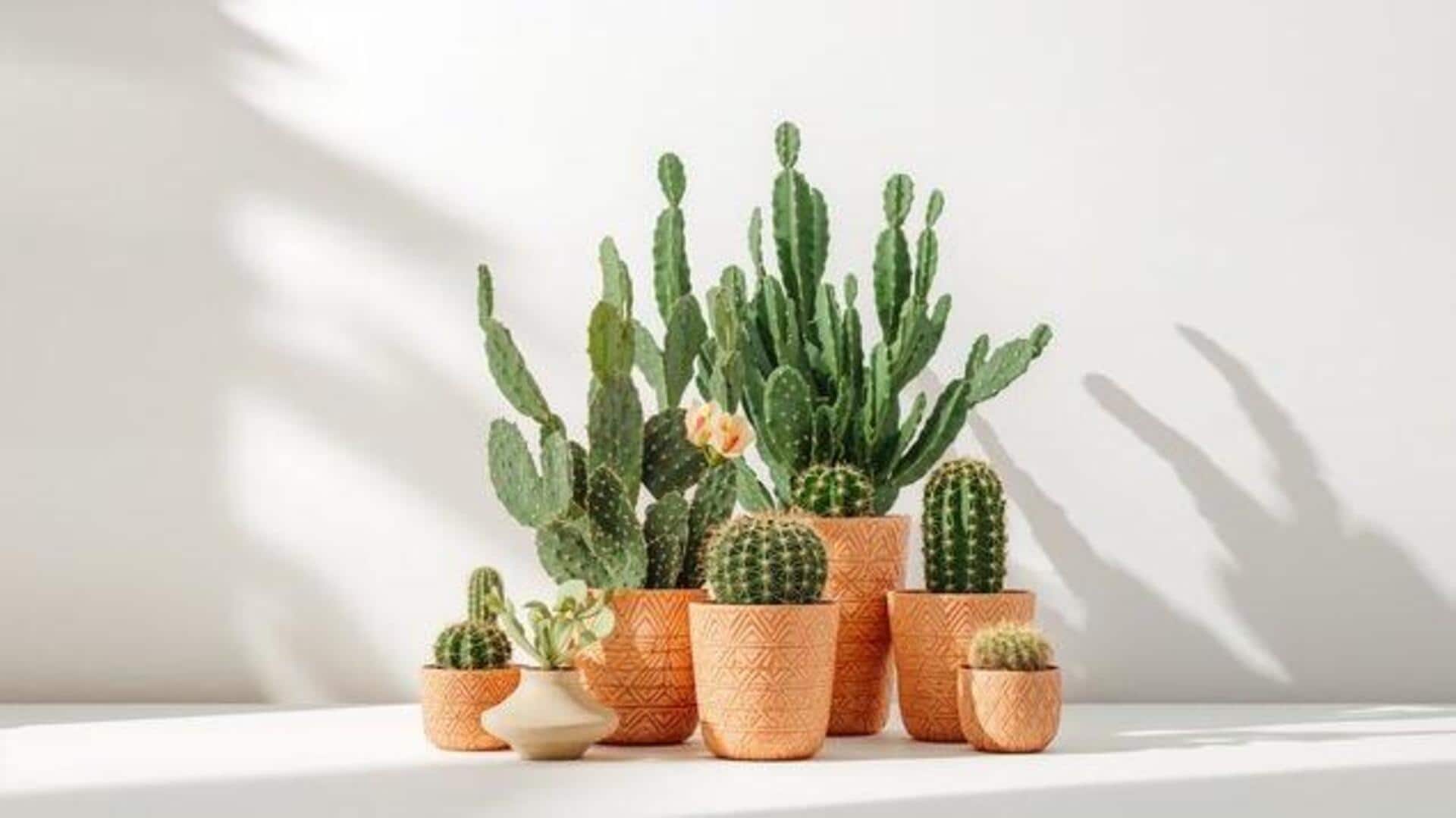
How to keep your indoor cactus healthy
What's the story
Cacti are some of the most low-maintenance plants, making them perfect for indoor gardens. These resilient beauties require little water and can flourish in a range of light conditions. However, to keep your cactus healthy and thriving, you need to know a few things. Here are five surprising ways to keep your indoor cactus healthy, ensuring it stays vibrant and strong all year round.
Tip 1
Water wisely
Overwatering is the quickest way to kill a cactus. Let the soil dry out completely between waterings.
Depending on humidity and temperature, this could mean watering every two to three weeks.
When you do water, soak the soil thoroughly, but make sure there's no standing water at the bottom of the pot.
Tip 2
Choose the right soil
Cacti need well-draining soil to prevent root rot.
Use a potting mix specifically designed for succulents, or make your own by mixing regular potting soil with sand or perlite.
This ensures that excess moisture drains quickly, while still providing essential nutrients.
Tip 3
Provide adequate light
Cacti thrive in bright light conditions.
Place your cactus near a south or west-facing window, where it can receive direct sunlight for most of the day.
If natural light is insufficient, consider using grow lights to supplement exposure, especially during shorter days in winter months.
Tip 4
Monitor temperature changes
Cacti prefer warm temperatures between 20 degrees Celsius and 30 degrees Celsius during the day, and cooler nights around 10 degrees Celsius to 15 degrees Celsius.
Avoid placing them near drafts or heating vents that could cause drastic temperature fluctuations.
Tip 5
Fertilize sparingly
While cacti do not need much fertilizer, occasional feeding can help them grow better during their active growing season, spring and summer.
Use a diluted liquid fertilizer formulated for succulents every four to six weeks, but skip fertilizing during fall and winter, when growth naturally slows down.