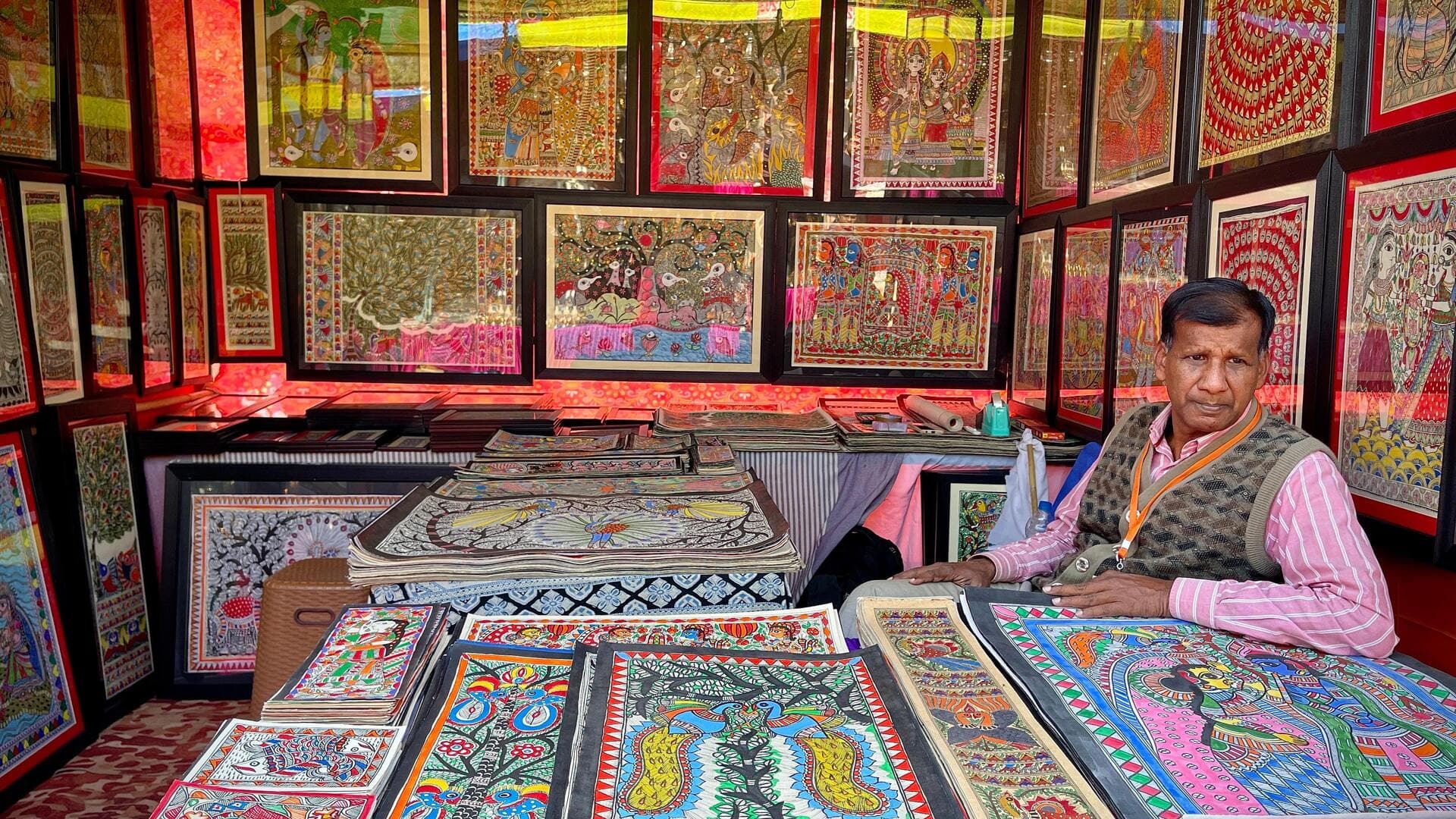
Phad painting: Traditional Indian art form with rich narratives
What's the story
Phad painting is a traditional art form that hails from Rajasthan, India. These paintings are known for their vibrant colors and intricate details, often depicting mythological stories and folk tales. The term "Phad" refers to a cloth on which the paintings are made. This art form is not just a visual treat but also a cultural heritage that has been passed down through generations.
#1
Historical roots of Phad painting
Phad painting dates back to the sixth century, making it one of the oldest art forms in India. Traditionally, these paintings were made on large pieces of cloth, which were used as scrolls during performances called Phad natak. The artists, called chitrakars, would narrate stories through their paintings while singing songs related to the scenes depicted.
#2
Techniques and materials used
Phad paintings are made using natural colors sourced from plants and minerals. The artists use a simple brush made from bamboo sticks with fine hair at the end to create detailed images. The process involves multiple steps, including preparing the canvas by coating it with a mixture of clay and cow dung to give it texture.
#3
Themes depicted in Phad paintings
The themes of Phad paintings are mostly mythological or historical, with stories of deities or local heroes. The most common subjects are scenes from the Ramayana or Krishna's life. Apart from these, some paintings also depict daily life activities or social issues, giving a glimpse into the culture and traditions of Rajasthan.
#4
Preservation efforts for Phad art
In recent years, there have been efforts to preserve this dying art form by promoting it through exhibitions and workshops. Organizations have been working with artists to keep traditional techniques alive, while also encouraging innovation in design and storytelling methods. This way, new generations can appreciate this unique cultural treasure without losing its essence.