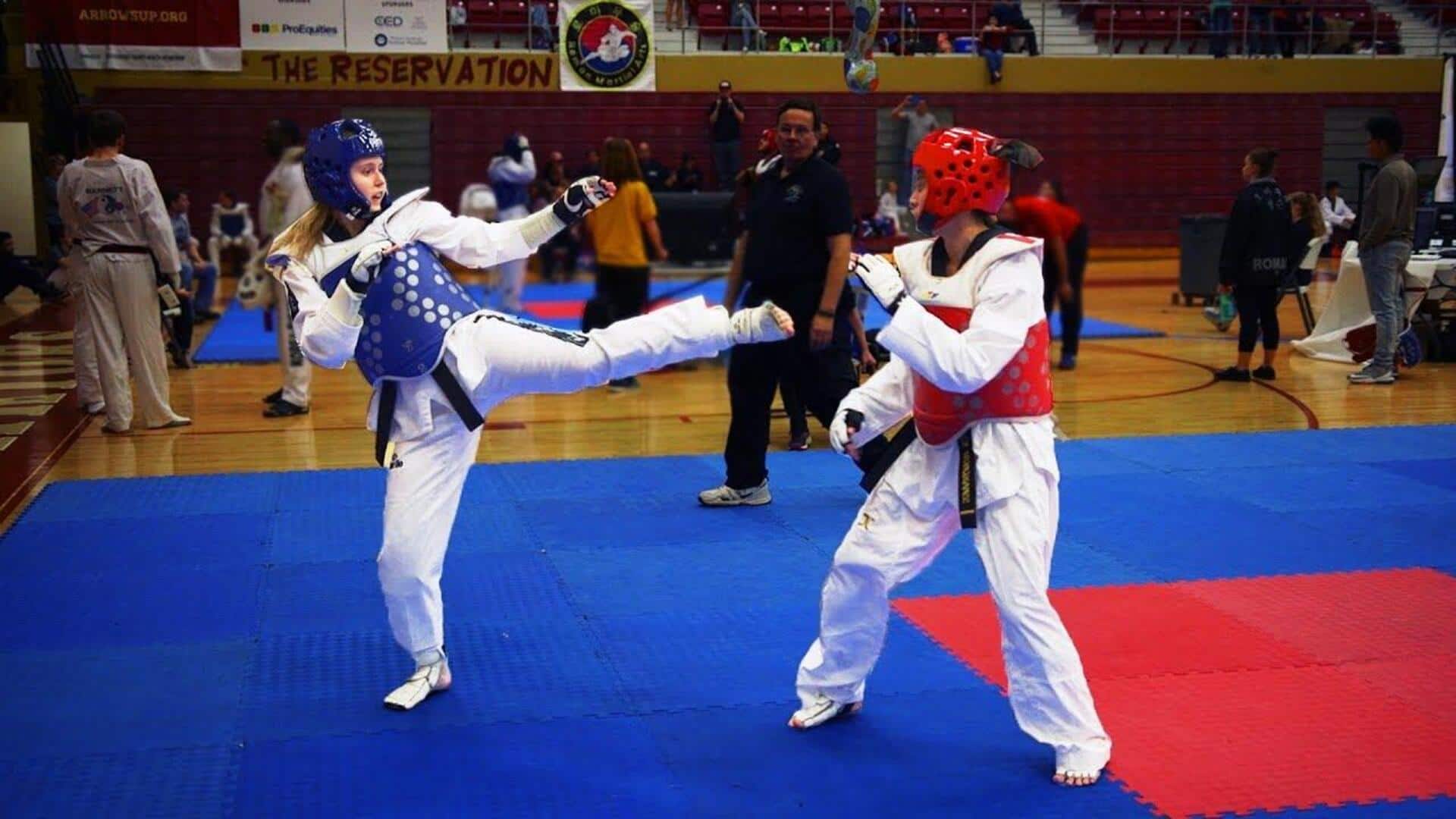
What is martial arts sparring?
What's the story
Martial arts sparring is often seen as a way to hone combat skills, but it offers a lot more than just physical training. The practice can improve mental health in a number of ways, providing both psychological and emotional benefits. From reducing stress to boosting confidence, sparring can be a powerful tool for mental well-being. Here are five surprising ways martial arts sparring can help improve your mental health.
Stress reduction
Enhances stress relief
Engaging in martial arts sparring can be an effective way to relieve stress.
The physical activity involved helps release endorphins, which are natural mood lifters.
This process can significantly reduce levels of cortisol, the hormone associated with stress.
As participants focus on techniques and movements during sparring sessions, they often find themselves immersed in the moment, allowing them to temporarily escape from daily pressures and worries.
Confidence building
Boosts self-confidence
Regular participation in martial arts sparring can greatly boost self-confidence.
As practitioners learn new techniques and see their own improvement over time, they develop a stronger sense of self-efficacy.
Successfully navigating sparring sessions also reinforces belief in one's abilities to handle challenges both inside and outside the dojo.
This newfound confidence often translates into other areas of life, enhancing overall self-esteem.
Focus enhancement
Improves focus and concentration
Martial arts sparring demands high levels of focus and concentration.
Participants must stay alert to their opponent's moves while planning their own strategies simultaneously.
This mental engagement sharpens cognitive skills over time, improving attention span and concentration levels outside the practice environment as well.
The ability to maintain focus under pressure is a valuable skill that can benefit various aspects of daily life.
Social interaction
Fosters social connections
Sparring provides an opportunity for social interaction among practitioners who share similar interests in martial arts.
These interactions help form bonds with others who understand the challenges faced during training sessions or competitions alike.
Building friendships within this community provides emotional support networks that contribute positively towards mental health by reducing feelings of isolation or loneliness.
Emotional control
Teaches emotional regulation
Through martial arts sparring, one learns to control emotions, like anger or frustration, that may arise during practice.
This is done by focusing on breathing techniques and maintaining composure in the face of adversity.
These skills translate to everyday situations, where emotional regulation is required.
This results in a calmer demeanor and better decision-making abilities when confronted with stressful scenarios.