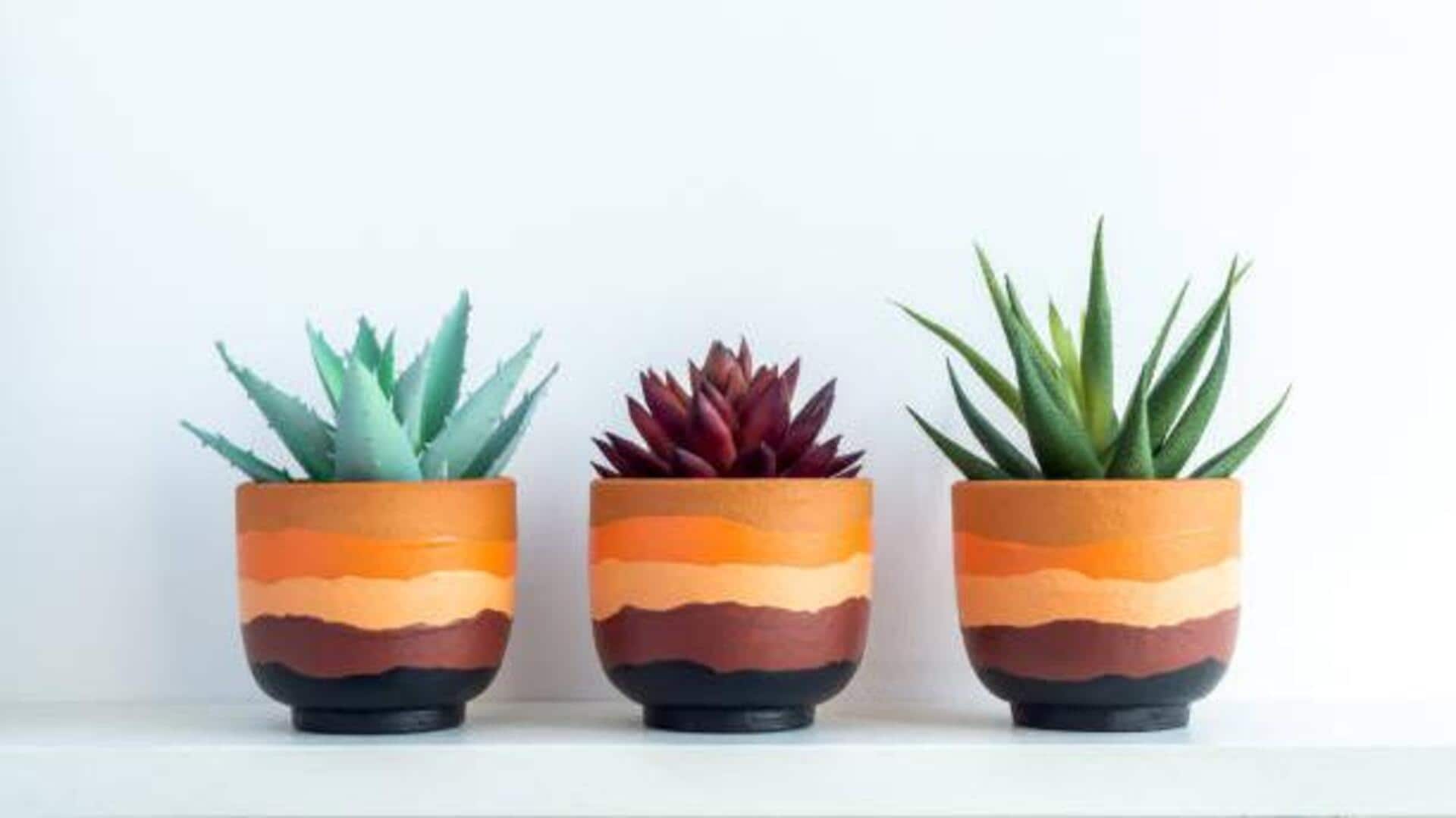
African clay planters: A unique choice for plant lovers
What's the story
African clay plant holders are a beautiful blend of art and nature. These handmade beauties, crafted by artisans across the continent, reflect the rich cultural heritage and diverse ecosystems of Africa. Each piece is unique, showcasing traditional techniques and designs that have been passed down through generations. Not only do these plant holders beautify your space, but they also support sustainable practices and local communities.
#1
The art of handcrafting
The process of making African clay plant holders is painstaking and requires a lot of skill. Artisans use locally sourced clay to ensure that the materials are environmentally friendly. The clay is shaped by hand or with simple tools to create intricate patterns and designs. Once shaped, the holders are sun-dried or fired in kilns to make them durable. This traditional method preserves the authenticity of each piece.
#2
Cultural significance in design
Designs on African clay plant holders often have cultural significance, reflecting the history and traditions of different communities. Common motifs include geometric patterns, animal figures, or symbols representing fertility and growth. These designs not only beautify the holders but also tell stories or convey messages important to the artisans' culture.
#3
Supporting local communities
Buying African clay plant holders also means supporting local artisans and their communities. Many of these craftsmen work in cooperatives that provide fair wages and empower them economically. By buying these products, consumers help sustain traditional craftsmanship while contributing to community development initiatives.
#4
Eco-friendly gardening solutions
Using clay plant holders from Africa is an eco-friendly option for gardening lovers who want to reduce their carbon footprint. Made from natural materials without any harmful chemicals or processes, these holders are biodegradable and sustainable. They also promote eco-conscious gardening practices by encouraging people to use recyclable materials instead of plastic or synthetic alternatives.