Discover 5 unique features of Japanese bathhouses
What's the story
Japanese public bathhouses, or sento, are an integral part of the country's culture and history. These communal baths are not only places for cleanliness but also for socializing and relaxation. The architecture of these bathhouses is unique, reflecting traditional Japanese aesthetics and functional design. Here are five unique features that make Japanese public bathhouse architecture stand out.
#1
Natural materials in design
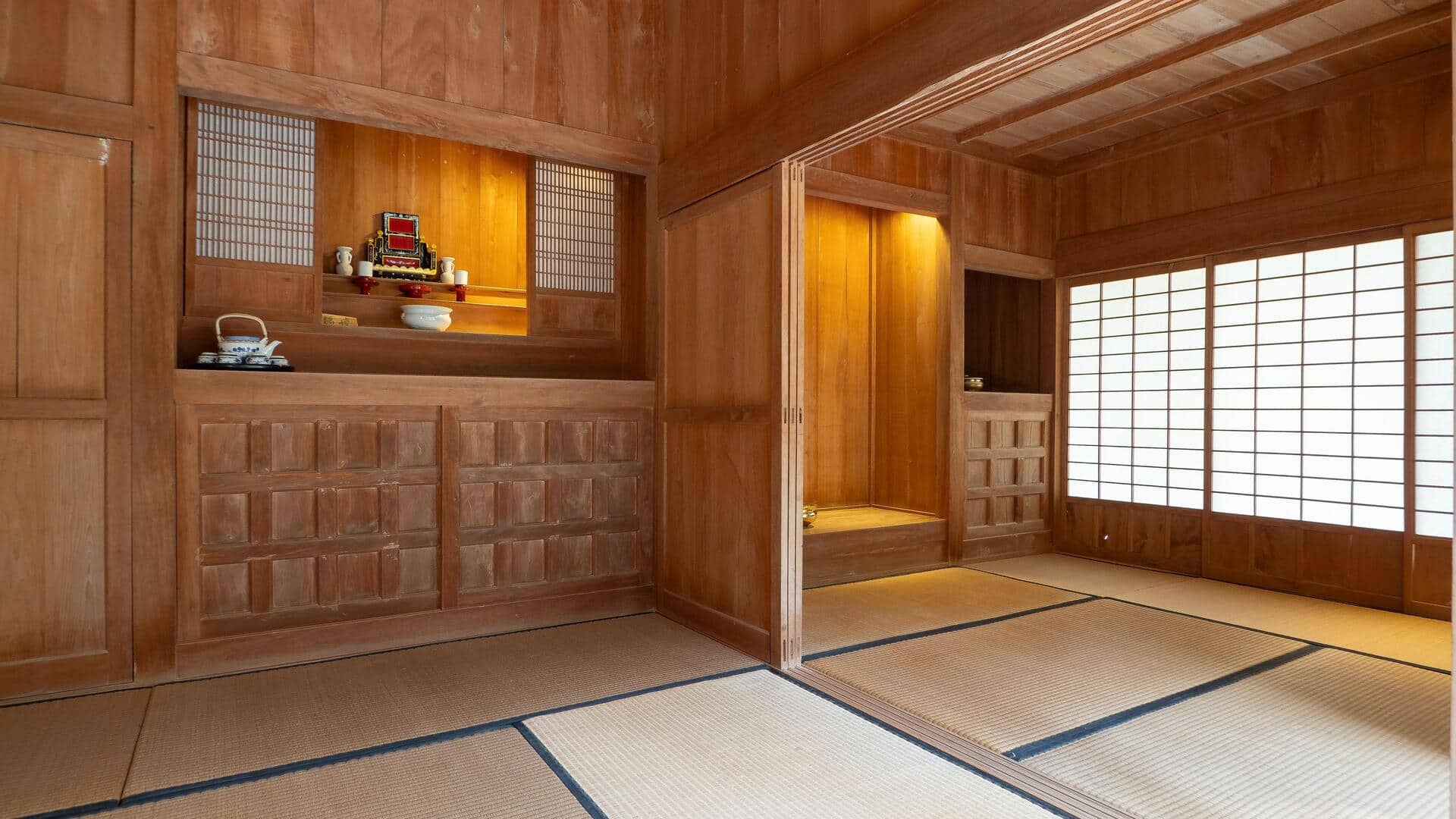
Japanese public bathhouses often use natural materials like wood, stone, and bamboo in their construction.
These elements create a calming atmosphere that promotes relaxation. The use of these materials also reflects the Japanese philosophy of harmony with nature.
Wooden beams and stone pathways are common sights in these bathhouses, adding to their rustic charm.
#2
Tatami mat flooring
Tatami mats are traditional Japanese flooring made from rice straw and covered with woven rush grass.
In sento, tatami mats provide a soft surface for visitors to walk on before entering the bathing area.
The mats also help maintain cleanliness by absorbing moisture and dirt from feet.
Their presence adds an authentic touch to the bathhouse experience.
#3
Sliding doors (fusuma)
Sliding doors, or fusuma, are a staple in Japanese architecture, including public bathhouses.
These doors are made from lightweight materials like wood or paper and slide open instead of swinging outwards.
This design saves space and allows for flexible room configurations within the bathhouse.
Fusuma also provides privacy between different areas while maintaining an open feel.
#4
Engawa (veranda) spaces
Engawa refers to narrow verandas that run along the exterior of traditional Japanese buildings, including sento.
These spaces act as transitional zones between indoors and outdoors, allowing natural light and fresh air to flow into the interiors.
Visitors can relax on engawa while enjoying views of surrounding gardens or landscapes without leaving the comfort of the bathhouse.
#5
Asymmetrical layouts
Unlike Western designs that favor symmetry, Japanese public bathhouses often have asymmetrical layouts. This is to create a more organic flow in the space.
The layout is designed to consider the natural contours of the land and the needs of the visitors.
The design is not just functional, but also adds to the aesthetic appeal of the bathhouses, making them unique and inviting.