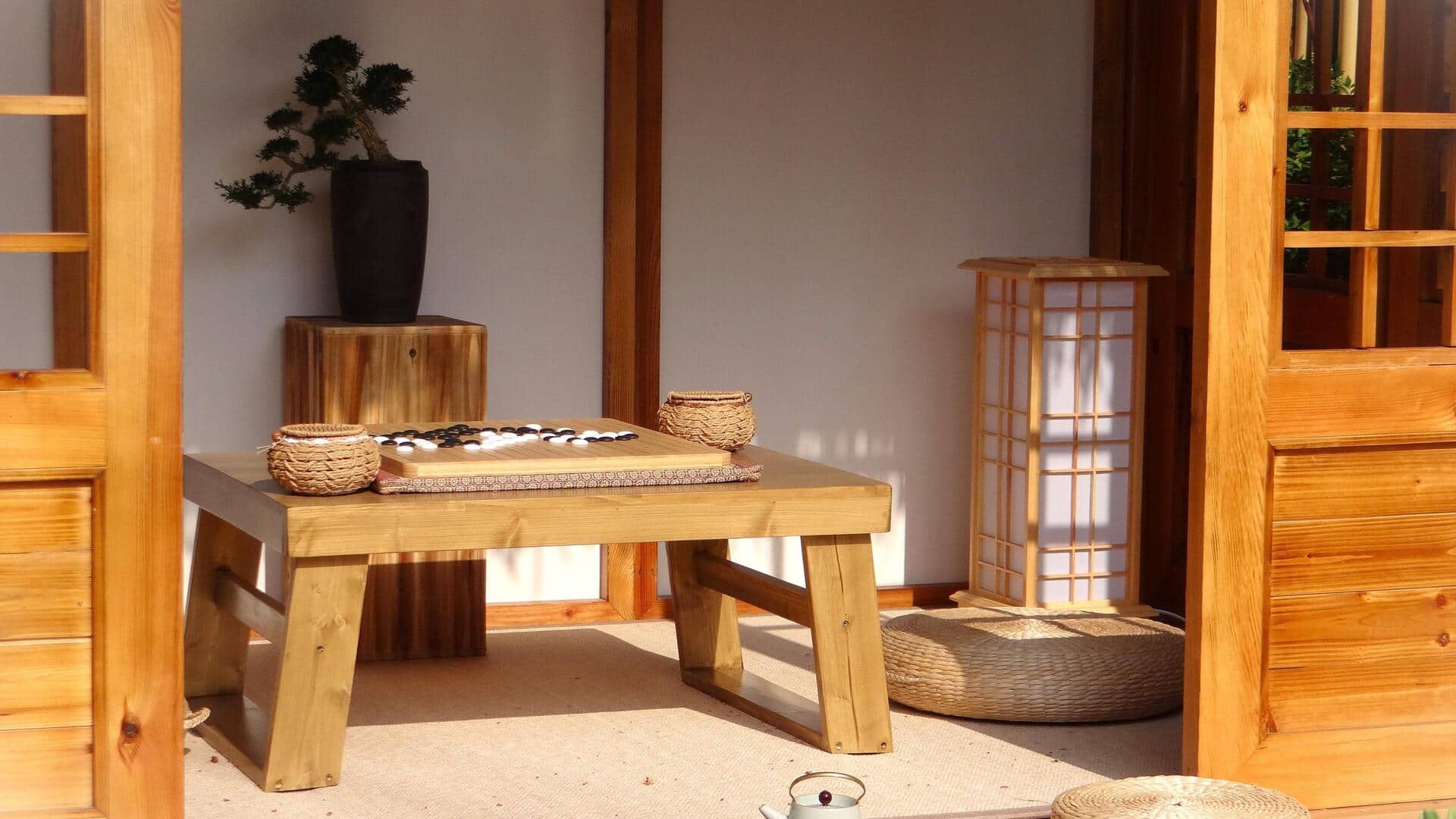
5 things that make Japanese architecture unique
What's the story
Japanese architecture is known for its harmony with nature and minimalism. The techniques used in traditional Japanese buildings are not just functional but also aesthetic. They reflect a deep understanding of materials, environment, and cultural values. From the use of natural light to intricate joinery, these techniques have stood the test of time and continue to inspire architects around the world. Here are five unique Japanese architectural techniques that highlight this timeless craftsmanship.
#1
Tatami mat flooring
Tatami mats are traditional floor coverings made from rice straw and rush grass. They provide natural insulation and are easy to maintain.
Tatami mats are usually used in rooms meant for relaxation or meditation, as they provide a soft yet firm surface.
The size of each mat is standardized, which makes it easy to arrange them in various room layouts.
This technique emphasizes simplicity and functionality.
#2
Shoji screens for natural light
Shoji screens are sliding doors or windows made from wooden frames covered with translucent paper.
They let natural light filter into spaces while maintaining privacy.
The design allows for flexible room configurations and creates an airy atmosphere indoors.
Shoji screens also contribute to energy efficiency by reducing the need for artificial lighting during the day.
#3
Irimoya roofs for weather resistance
Irimoya roofs feature a combination of hipped and gabled designs, providing excellent weather resistance.
This technique is particularly useful in regions with heavy rainfall or snowfall, as it allows for efficient water drainage and structural stability.
The design also adds an aesthetic appeal, blending traditional elements with practical functionality.
#4
Kintsugi art of repair
Kintsugi is the art of repairing broken pottery with lacquer mixed with powdered gold, silver, or platinum.
This technique celebrates imperfections by highlighting them instead of hiding them away.
Kintsugi embodies the Japanese philosophy that values resilience and beauty in flaws, making each repaired piece unique.
#5
Tatoko joinery techniques
Tatoko joinery techniques involve complex interlocking wood joints without the use of nails or metal fasteners.
This method ensures durability while allowing wood to expand and contract naturally with changes in humidity levels.
The craftsmanship requires precision cutting skills passed down through generations, ensuring structural integrity over time.