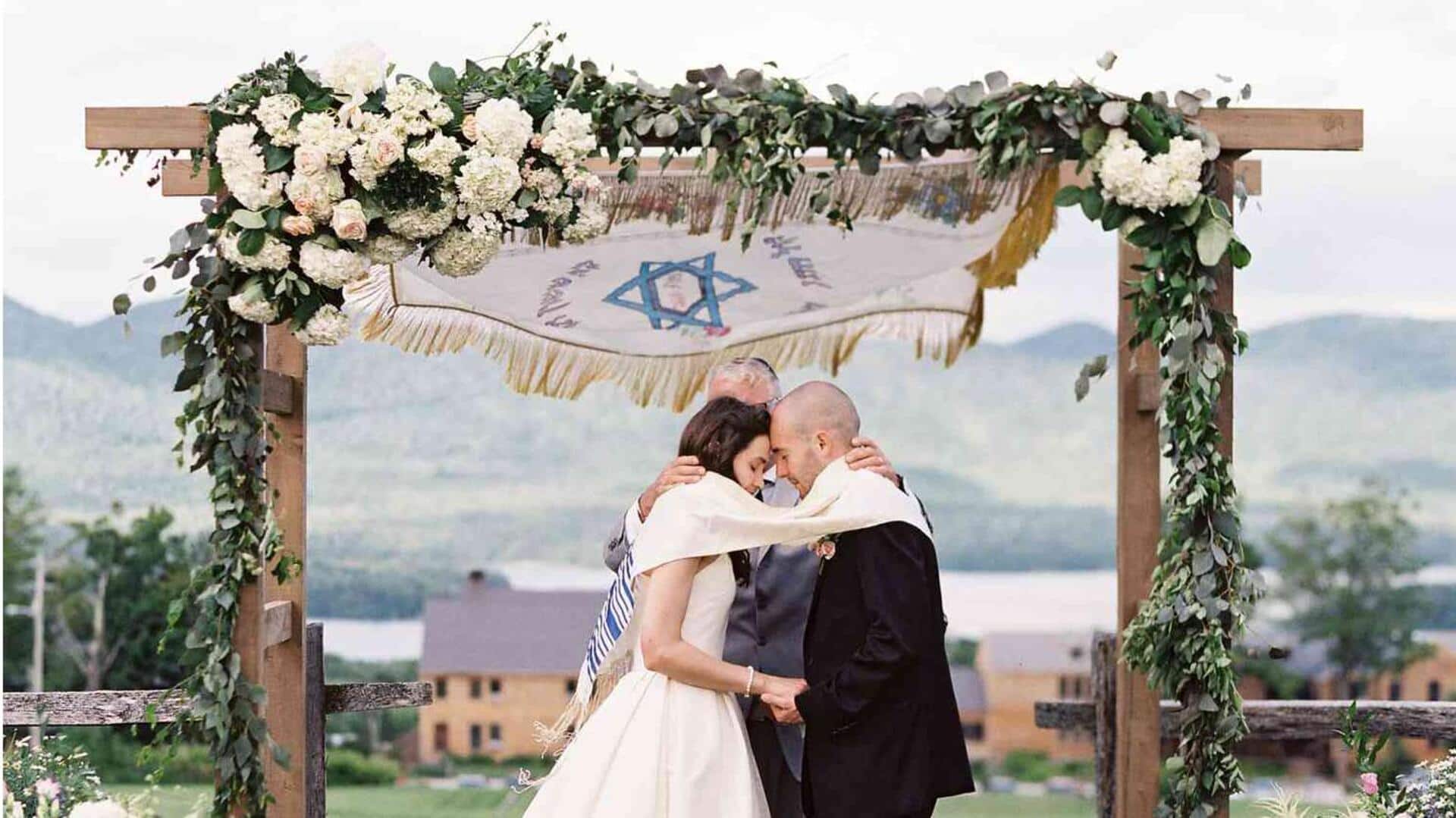
The important role of canopies or chuppah in weddings
What's the story
Wedding canopies, or chuppahs, are an integral part of marriage ceremonies in many cultures. They symbolize shelter and protection for the couple. Every tradition has its own unique take on the canopy, making it a fascinating subject. From the materials used to the way they are decorated, these traditions reflect cultural values and beliefs. Here's a look at five unique wedding canopy traditions from around the world.
#1
The Jewish chuppah tradition
The chuppah is an important part of Jewish wedding ceremonies. It consists of a canopy supported by four poles, symbolizing God's presence over the couple.
Traditionally, it is made of cloth or other materials that allow light to pass through, representing divine protection.
The open roof also signifies the couple's willingness to welcome all friends and family into their new life together.
#2
Indian mandap ceremonies
In Indian weddings, the mandap is a temporary structure where the ceremony takes place.
Decorated with flowers, leaves, and fabrics in vibrant colors, it represents the home the couple will build together.
The mandap is often elaborately designed with intricate patterns and symbols that hold cultural significance.
It serves as both a physical space for rituals and a symbolic representation of marital unity.
#3
African wedding canopies
In several African cultures, wedding canopies are used during marriage ceremonies to signify unity and protection.
These structures may be made from natural materials like bamboo or palm leaves, and are often adorned with colorful fabrics or beads unique to different tribes.
They symbolize community support for the union between two individuals.
#4
Middle Eastern Bedouin tents
Bedouin weddings in Middle Eastern regions often employ tents similar to traditional Bedouin dwellings as part of their ceremonies.
These tents provide shelter from harsh weather conditions while also serving as symbolic homes for newlyweds-to-be.
Decorated with intricate textiles and patterns unique to Bedouin culture, these tents represent hospitality, family ties, and cultural heritage.
#5
Latin American Casita Canopies
In Latin America, some regions feature casita-style canopies at weddings. These small house-like structures symbolize warmth and security within marriage.
Constructed from locally sourced materials, they are adorned with bright colors and patterns representing regional traditions.
This makes each casita unique while maintaining a common theme of love, protection, and community support.