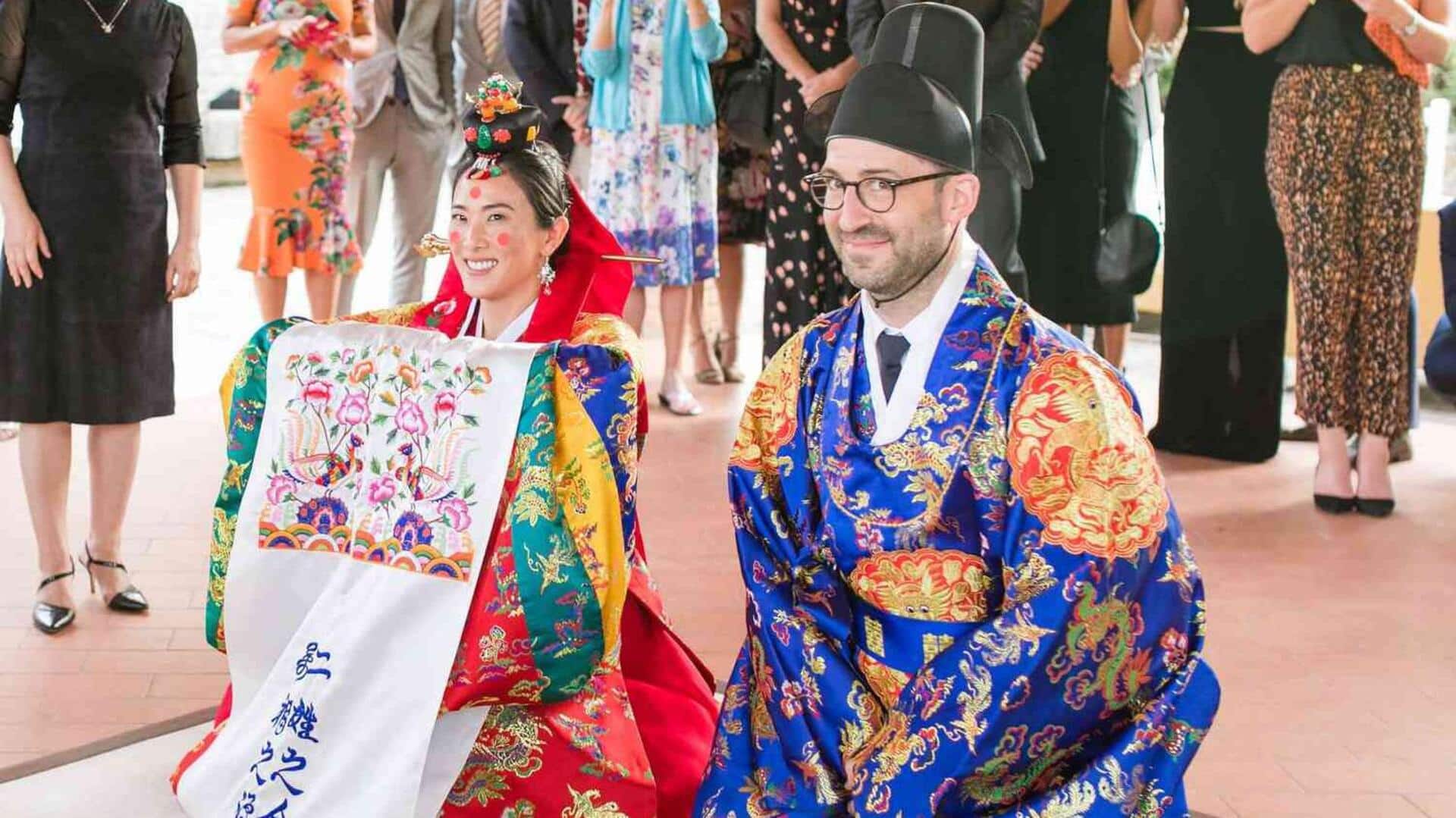
South Korea's wedding traditions are unique
What's the story
South Korean weddings are a beautiful blend of traditional customs and modern-day practices. These ceremonies are not just a celebration of love but also a deep-rooted cultural heritage. From colorful attire to symbolic rituals, South Korean weddings give a glimpse of the country's rich history and values. Here are five unique traditions that make these weddings so special and memorable.
#1
The Hanbok attire
The hanbok is the traditional Korean attire worn during weddings. The colorful garments symbolize purity and joy.
For brides, the hanbok is usually red and green, while grooms wear blue and white.
The attire is designed to be simple yet elegant, allowing the couple's love to take center stage.
Wearing hanboks also pays homage to the ancestors, making it an integral part of the ceremony.
#2
The Pyebaek ritual
Pyebaek is a traditional ritual where the bride offers dates and chestnuts to her groom's family members. This act symbolizes fertility and prosperity in marriage.
The groom's family catches the dates as they are thrown by the bride, signifying how many children they hope for the couple to have.
Pyebaek strengthens family bonds and highlights the importance of familial support in a marriage.
#3
The tea ceremony
The tea ceremony is another important ritual in a South Korean wedding.
In this, the couple serves tea to their parents as a sign of respect and gratitude.
The act signifies their willingness to uphold family values and traditions after marriage.
It also serves as an opportunity for parents to offer advice or blessings for their future together.
#4
The wedding procession
The wedding procession, or "sangyeon," is a symbolic journey from one family home to another, representing the transition from singlehood to married life.
The couple walks under an archway made of branches tied with ribbons, symbolizing protection from evil spirits on their way to happiness together.
#5
The Wedding Feast
After completing all rituals, guests gather around tables filled with traditional dishes such as kimchi stew or rice cakes, prepared especially for this occasion.
Sharing food among loved ones strengthens community ties while celebrating new beginnings between two families uniting through marriage vows exchanged earlier during ceremonies held earlier that day.