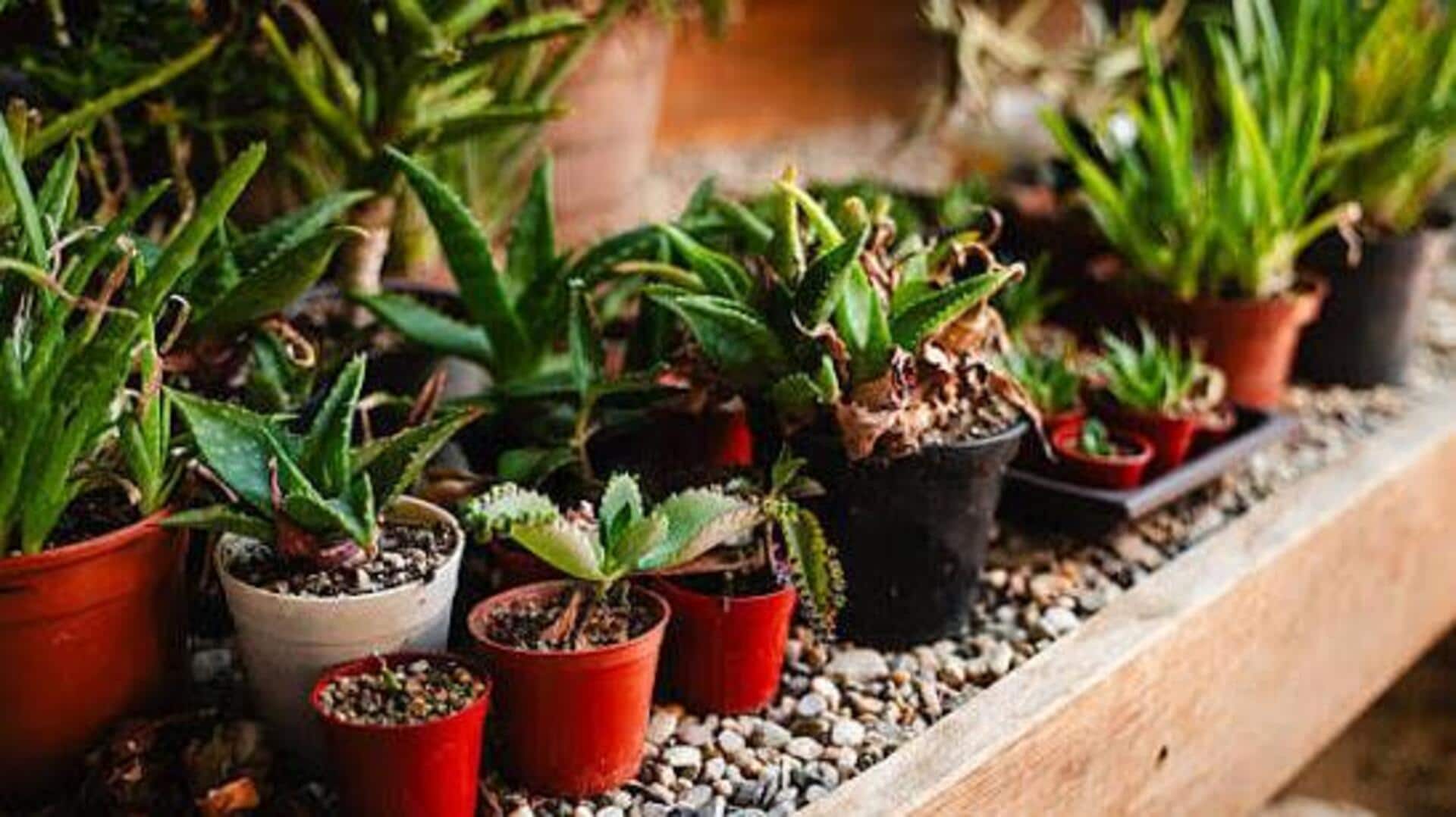
Plant roots struggling? These materials may help
What's the story
Aerating plant roots is critical for healthy growth, but it can be done using some unusual materials. These alternatives can improve soil structure and root health without the need for expensive equipment or products. By using these materials, gardeners can promote better air circulation and drainage in the soil, leading to healthier plants. Here are five unusual materials that can help aerate plant roots effectively.
Tip 1
Expanded clay pellets
Expanded clay pellets are small, lightweight balls made from natural clay.
They are commonly used in hydroponics, but can also be used in soil mixes to improve aeration.
The porous nature of these pellets allows air to circulate around the roots while retaining moisture.
They are also pH-neutral, making them suitable for a variety of plants.
Using expanded clay pellets in your potting mix can significantly enhance root health.
Tip 2
Perlite granules
Perlite is a volcanic glass that is heated until it expands into small white granules.
These granules create air pockets in the soil, improving drainage and preventing compaction.
Perlite is particularly useful for container gardening, as it keeps the soil light and well-aerated.
Mixing perlite with potting soil helps maintain an optimal environment for plant roots by ensuring sufficient oxygen levels.
Tip 3
Pumice stones
Pumice stones are lightweight volcanic rocks with a porous structure that promotes aeration in soils.
They provide excellent drainage while retaining some moisture, making them ideal for succulents and cacti that require well-draining conditions.
Pumice stones do not break down over time, like some organic materials, ensuring long-lasting benefits for root aeration.
Tip 4
Coconut coir fibers
Coconut coir fibers are derived from coconut husks and make an excellent organic alternative to peat moss.
These fibers improve soil structure by increasing porosity and water retention capabilities, without causing compaction over time.
Coconut coir also contains beneficial nutrients that support plant growth while enhancing airflow around roots.
Tip 5
Charcoal pieces
Charcoal pieces, especially activated charcoal, are known for their porous nature, which helps absorb impurities from the soil and allows air to pass through easily.
This improves overall root health by keeping the environment clean and well-ventilated.
Charcoal is especially useful in indoor plants, where stagnant air can be a problem.